

Custom Packaging Solutions
Premium quality packaging tailored to your brand. From cosmetic boxes to luxury rigid packaging, we deliver excellence since 2010.
This is the title

Hey there, I'm Mike!
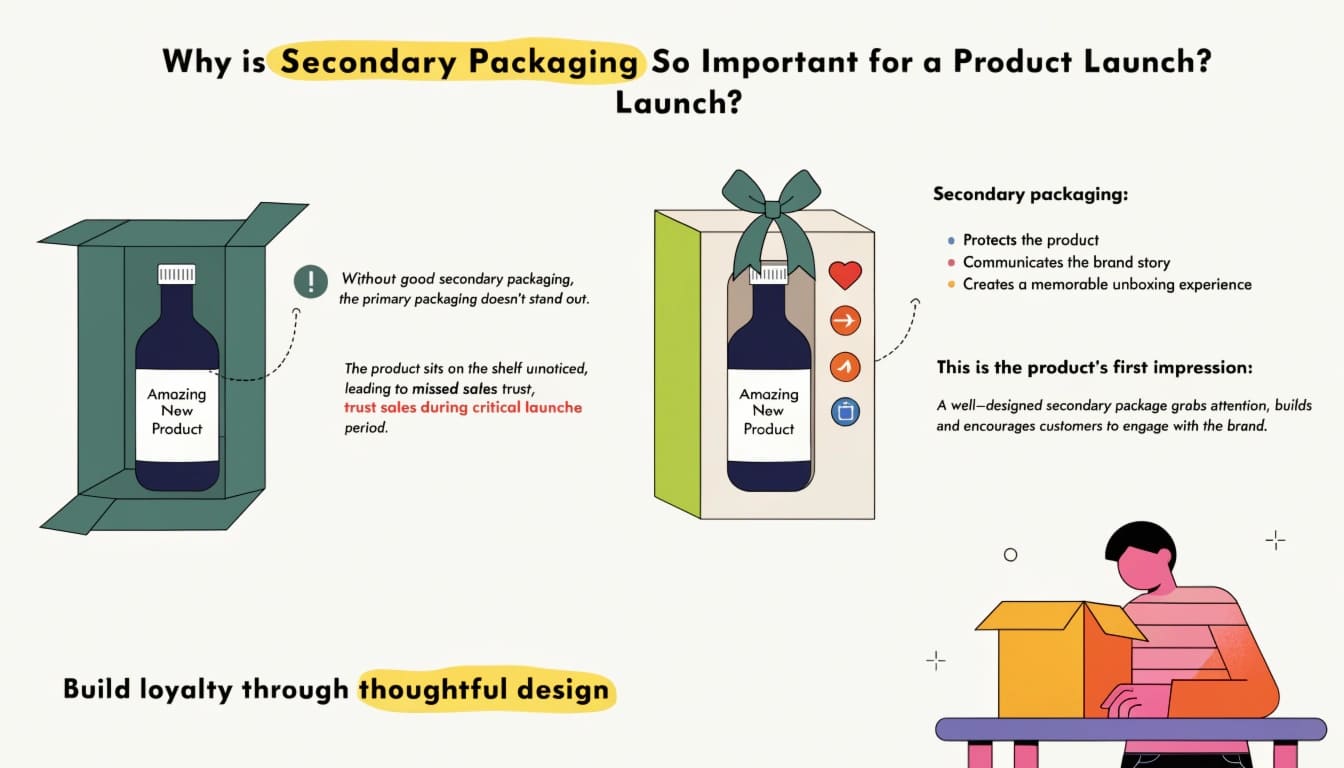
Why is Secondary Packaging So Important for a Product Launch?
Your amazing new product sits on the shelf completely unnoticed. Your primary bottle is perfect, but it's hidden, failing to tell a story or grab attention, costing you crucial launch sales.
Secondary packaging is vital because it's your product's first handshake with the customer. It protects the item, communicates your brand story, and creates the memorable unboxing experience that ultimately drives sales and builds loyalty.
I've seen so many brands spend a fortune developing the perfect serum, only to put its beautiful bottle in a cheap, flimsy box. It's like buying a diamond ring and presenting it in a plastic bag. It instantly lowers the value. The outer box is not just for protection; it's the stage for your product. It sets the expectation for everything inside and is often the only thing a customer sees before they decide to buy. Let's break down why this 'outer layer' is often the most important part of your launch strategy.
What is secondary packaging mainly used for?
You think the outer box is just for logistics, a simple carton to ship your product. This narrow view makes you miss its true purpose: to attract, inform, and persuade your customer right at the shelf.
Secondary packaging is mainly used to brand, protect, and sell the product. It provides a large canvas for marketing, holds crucial information, and creates the first physical brand interaction that convinces a customer to purchase.
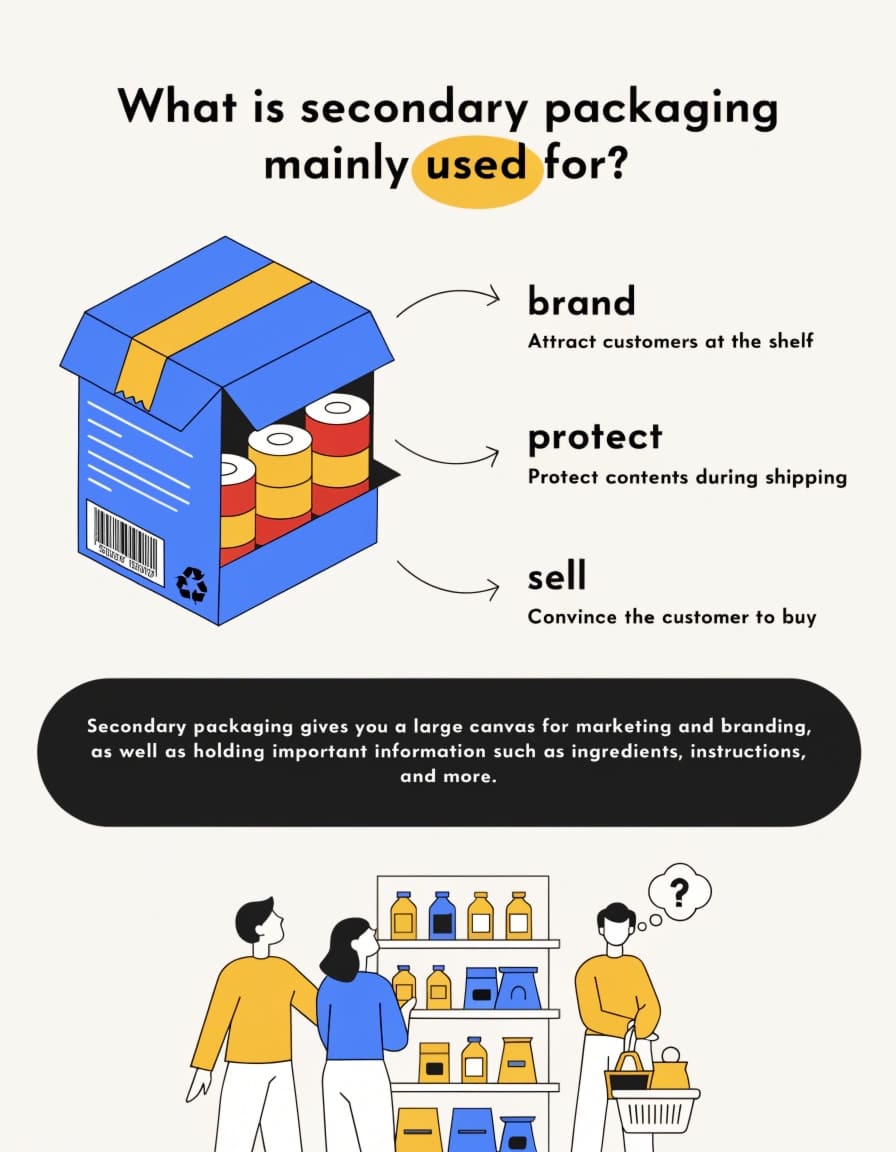
When I talk to new clients, the first thing I do is clarify what we're actually making. The terminology matters. When we talk about primary packaging, we usually mean the cosmetic glass bottles or plastic bottles. When we talk about secondary packaging, we mean the outer packaging of the product. For example, a paper box! . This distinction is critical because they serve different primary roles. The bottle's job is to hold the product effectively. The box's job is to sell the product. It acts as a mini-billboard on the shelf, using its space to display your logo, key benefits, and brand aesthetic. It's also the main structural protection, ensuring the primary container arrives in perfect condition.
| Function | Why It Matters |
|---|---|
| Marketing | It's the first visual element a customer sees. A great design grabs attention. |
| Information | Provides space for ingredients, instructions, and your brand story. |
| Protection | Protects the often fragile primary container during shipping and on the shelf. |
| Brand Experience | Creates the "unboxing" moment and reinforces the perceived value of the product. |
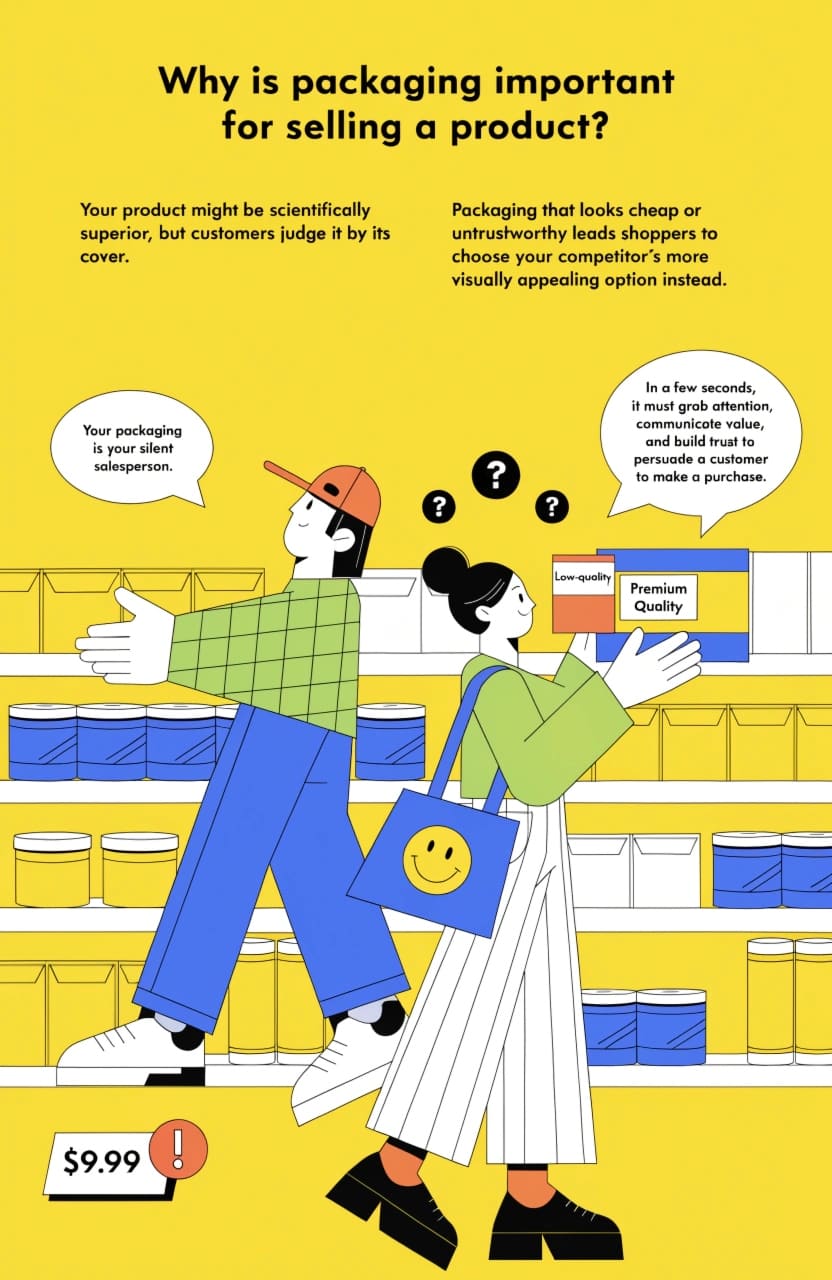
Why is packaging important for selling a product?
Your product might be scientifically superior, but customers judge it by its cover. Packaging that looks cheap or untrustworthy leads shoppers to choose your competitor's more visually appealing option instead.
Packaging is your silent salesperson. In a few seconds, it must grab attention on a crowded shelf, communicate your brand's unique value, and build enough trust to persuade a customer to make a purchase.
I've been in this business long enough to know this for a fact: great packaging sells products. It’s not just my opinion; I have seen the sales data before and after a brand invests in a redesign. The outer packaging is extremely important. Good packaging can boost product sales and enhance the company's reputation . Think about when you shop. You are faced with dozens of choices. What makes you pick one up? It's the packaging. It conveys quality, trustworthiness, and brand values instantly. A minimalist, recycled paper box tells a different story than a brightly colored, high-gloss box with gold foil. Your secondary packaging is the face of your product online, in social media posts, and on the retail shelf. For most customers, the packaging is the product until they get it home.
What is the main difference between primary and secondary packaging?
You are designing your product but are confused about what "primary" and "secondary" mean. This lack of clarity makes it difficult to budget properly or explain your needs to a manufacturer.
The main difference is direct contact. Primary packaging directly touches the product (e.g., the bottle holding a lotion). Secondary packaging is the exterior layer that holds the primary package (e.g., the box the bottle comes in).
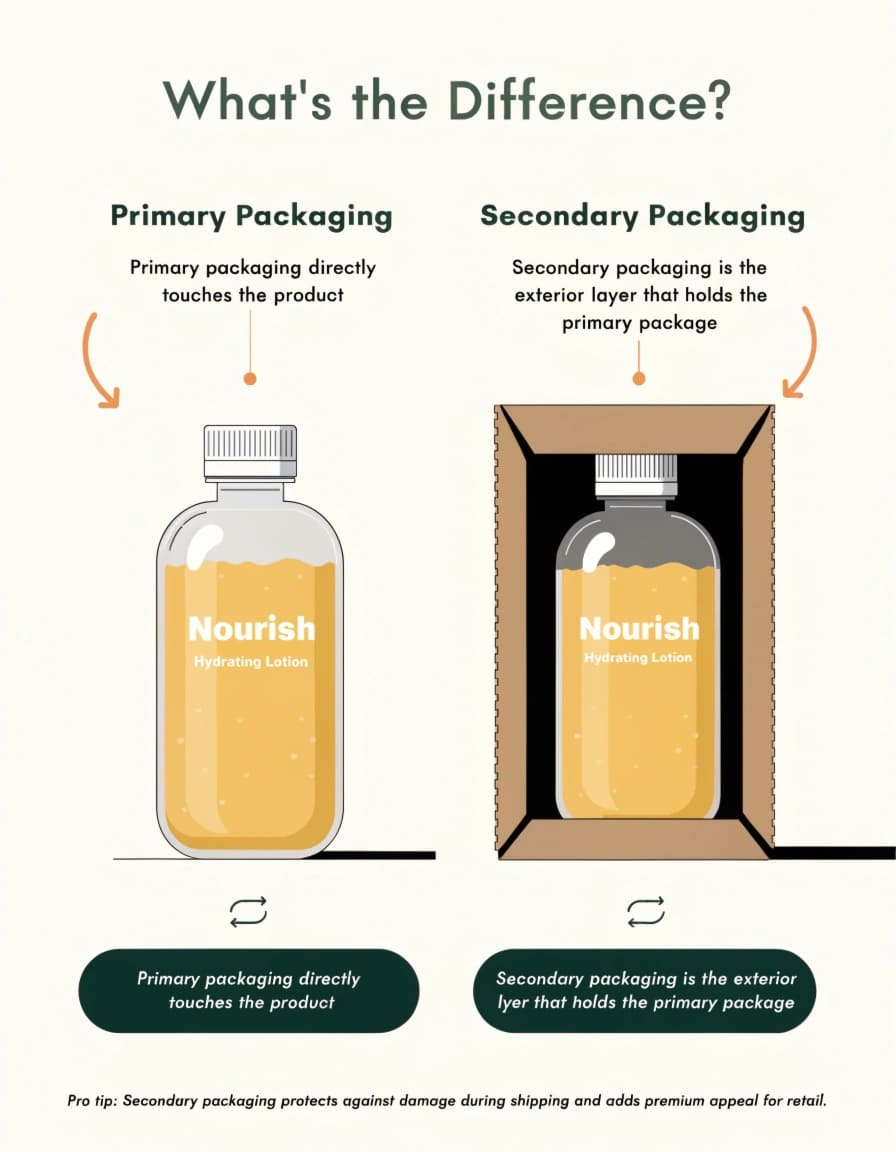
This is a foundational concept in my field. Understanding this difference is key for any product designer or brand owner.
-
Primary Packaging
This is what contains, protects, and preserves the finished product. Its main focus is functional and must be made from materials that will not react with the product itself. The customer interacts with this packaging during the entire life of the product.
- Examples: A glass serum bottle, a lipstick tube, a mascara wand, a plastic jar for cream.
-
Secondary Packaging
This is the packaging on the outside of the primary packaging. Its main job is branding, display, and logistics. It's what gets thrown away after opening, but its role in the sale is massive. It creates the first impression and the unboxing experience.
- Examples: The paper box your serum bottle comes in, the cellophane wrap around a perfume box.
Think of it this way: the primary packaging is the product's home. The secondary packaging is the beautiful front door and marketing billboard for that home.
What are the secondary packaging products?
You know you need a "box," but you're unaware of the different types and what they communicate. This limits your design options and can result in choosing a package style that doesn't fit your brand's quality or budget.
Secondary packaging products range widely in style and price. The most common are folding cartons for everyday items, gift boxes for sets, and high-end rigid boxes for luxury positioning, each offering a different level of quality.
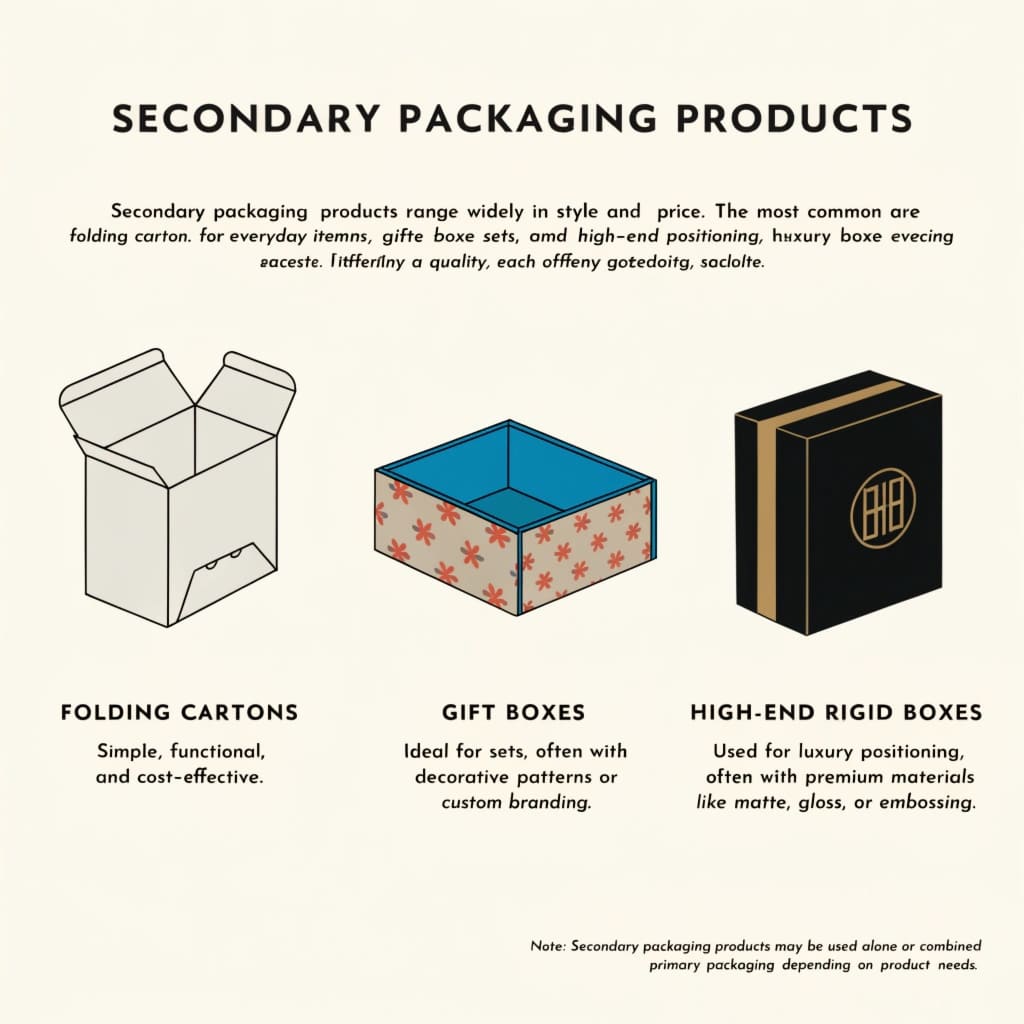
When a brand comes to me, we don't just talk about "a box." We discuss their brand positioning and budget to find the right type of box. For secondary packaging, we often choose between folding cartons, gift boxes, and rigid boxes. The most expensive option is the rigid box . Each has a purpose.
| Box Type | Description | Best For |
|---|---|---|
| Folding Carton | Made from paperboard that is printed, cut, and folded. Lightweight and cost-effective. | Individual items like lipstick, face cream, or soap. The standard retail box. |
| Gift Box | Often a more complex folding carton or a simpler two-piece box, designed to look more presentable. | Holiday sets, promotional bundles, or products intended for gifting. |
| Rigid Box (Set-up Box) | A thick, heavyweight board that is not collapsible. Offers superior protection and a premium, heavy feel. | High-end luxury cosmetics, perfumes, and expensive skincare. |
The choice you make here directly impacts how a customer perceives your product's value. A $100 cream in a thin folding carton feels wrong, while a $20 lotion in a heavy rigid box might feel overpriced. Matching the box style to your product's price point and brand identity is essential for a successful launch.
Conclusion
Secondary packaging is not an afterthought; it is a vital sales and marketing tool. It protects your product, tells your brand story, and creates the first impression that secures a successful launch.
More to read
# Which is Better for Packaging Mockups: Laser or Inkjet?
Which is Better for Packaging Mockups: Laser or Inkjet? You need to create a physical
2025 year the most welcome packaging box color trends
This year, packaging trends are making a bold statement with Radiant Red taking the limelight
5 Important Things to Consider for Luxury Products Packaging?
5 Important Things to Consider for Luxury Products Packaging? You've created a premium product, but