

Custom Packaging Solutions
Premium quality packaging tailored to your brand. From cosmetic boxes to luxury rigid packaging, we deliver excellence since 2010.
This is the title

Hey there, I'm Mike!
What is a die cut1 in custom packaging2?
You have a vision for a uniquely shaped box, but the technical jargon is confusing. Terms like "die cut1" feel like a barrier, preventing you from bringing your creative packaging ideas to life.
A die cut1 is a process that uses a sharp, custom-made steel blade, like a cookie cutter, to cut a specific shape from paper or cardboard. It's how we create custom boxes3, windows, and inserts.
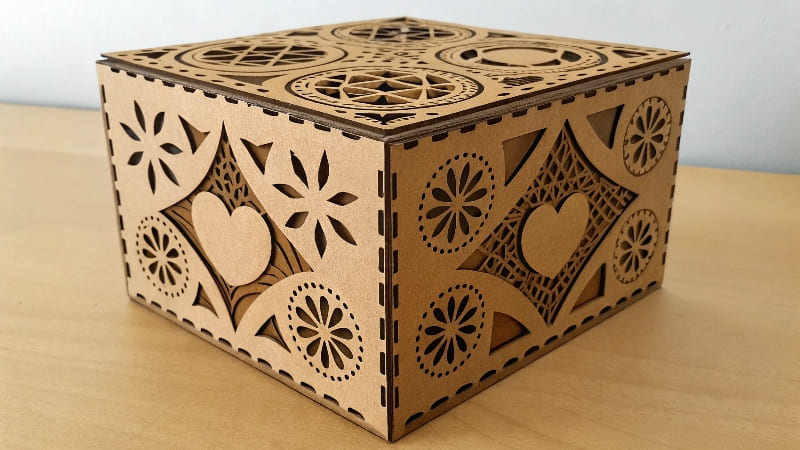
My entire career is built on molds and dies. I started on the factory floor, fascinated by how a simple tool could press a flat sheet of paper and, in an instant, turn it into the complex blank for a beautiful box. It's the step where packaging gets its structure and personality. Understanding die cut1ting isn't just for manufacturers; it's the key for designers to unlock true creativity in their packaging. It's the bridge between a design on a screen and a physical product in a customer's hand.
What are die cut1s used for?
Your standard square box is boring and your product gets lost on the shelf. You need packaging with unique features that protect the product and create an exciting unboxing experience.
Die cuts are used to create any shape imaginable. This includes custom box structures, windows to see the product, unique handles4, pop-up elements, or perfectly fitted inserts that hold items securely.
<sup id=](https://wansapackaging.com/wp-content/uploads/2025/10/what-are-die-cuts-used-for-your-st.jpg) 4, windows, and unusual shapes." title="Uses for Die Cutting in Packaging" />
4, windows, and unusual shapes." title="Uses for Die Cutting in Packaging" />
The power of die cut1ting is its versatility. It's how we move beyond a simple cube. At its core, a die-cut is the process of cutting the shape of a box according to the traced die-line shape . The "die line" is the blueprint a designer like Jacky creates on the computer. Our job is to create a physical die that follows that blueprint perfectly. This allows us to create an infinite variety of features that can make a package stand out. It’s not just about the outside shape; it’s about crafting the entire user experience from the moment they touch the box.
Common Die-Cut Features
| Feature | Purpose |
|---|---|
| Custom Box Shape | Creates a unique silhouette that matches the brand or product. |
| Window Cutout | Allows customers to see the product inside the box. |
| Inserts/Dividers | Securely holds multiple items or a single fragile product in place. |
| Handles | Makes the packaging easier to carry, turning a box into a retail bag. |
| Special Closures | Creates unique tuck flaps or locking mechanisms for a premium feel. |
What is meant by die cut1ting?
The term "die cut1ting" sounds technical and complex. This makes it hard for you to confidently discuss your design needs with a packaging manufacturer, fearing you'll misunderstand the process.
Die cutting is the physical manufacturing process of pressing a sharp steel rule die onto paperboard to cut it into a specific shape. The same die can also contain duller blades to create perfect fold lines (creases).
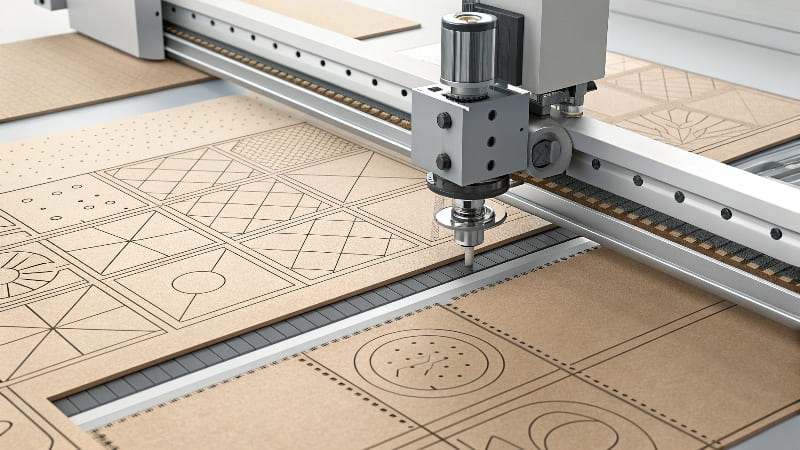
This process is all about precision. The die itself is a wooden board with steel blades and rules embedded in it. Some blades are sharp for cutting, others are rounded for creasing. The challenge is ensuring every cut and every fold is perfect, especially on luxury rigid boxes5. A crucial rule I teach every new operator is that the die-cut blade must be precise. The die mold cannot be made too deep, as it will cut through both the face paper and the greyboard . For high-end packaging, we often die-cut a thin, printed paper wrap that gets applied to a thick, sturdy greyboard. If the blade cuts too deep, it ruins the entire piece. That is why the setup and calibration of the die-cutting press are so critical. It requires a lot of experience to get it just right.
What is an example of die cut1ting?
You understand the definition, but you can't picture how die cut1ting works with everyday products. You need concrete examples to help you see the possibilities for your own packaging.
A perfect example is any folding carton6, like a cosmetic or cereal box. It is produced as a single, flat die-cut piece with all the necessary cuts and creases, allowing it to be easily assembled.
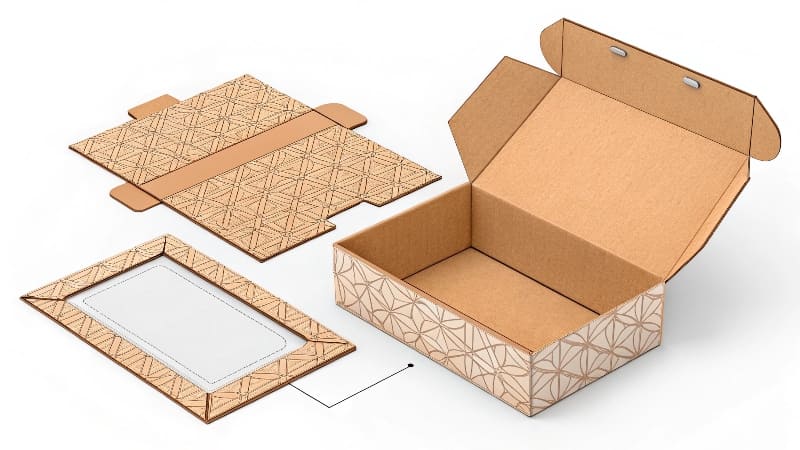
Once you know what you're looking for, you see die cut1ting everywhere. It’s the invisible engineering behind almost all paper-based packaging. That box of perfume you bought? The main box, the inner platform holding the bottle, and even the promotional sleeve around it are all separate die-cut pieces. Every single piece starts as a large printed sheet of paperboard that gets fed into a die-cutting press. That one single press of the custom die stamps out the final shape, complete with all the cutouts, tuck flaps, and fold lines needed. This efficiency is what makes complex packaging affordable to produce at scale. It ensures that the first box and the ten-thousandth box are absolutely identical, which is essential for brand consistency.
| Packaging Type | Die-Cut Component |
|---|---|
| Pizza Box | The entire box structure is a single die-cut piece. |
| Toy Packaging | The carton itself, plus the window cutout7 for the plastic film. |
| Luxury Gift Box | The paper wrap that covers the box is precisely die-cut. |
| Shipping Box Insert | The corrugated insert holding the product is die-cut for a snug fit. |
What is die-cut vs laser cut?
You've heard about laser cutting8 and wonder if it's a better option. Choosing the wrong method could mean paying too much for mass production9 or getting poor quality on a prototype.
Die cutting uses a physical blade and is very fast and cheap for large quantities. Laser cutting uses a focused beam of light, offering incredible precision for small runs or complex prototypes but is slower and more expensive per piece.
This is a key decision point for designers and businesses. I often get asked this question. My first response is to clarify that die cut1ting includes regular and laser die cut1ting; laser die cut1ting is more precise . This can be confusing. What this often means is that a laser is used to cut the wooden board that holds the steel blades of the die. This allows for an extremely precise and complex die tool to be made.
However, when comparing it as a production method, we are talking about two very different approaches. Traditional die cut1ting is a physical, high-pressure stamping process. Laser cutting is a thermal, non-contact process. For a designer like Jacky needing a few highly detailed prototypes, a laser cutter is perfect. But for a client who needs 20,000 retail boxes, the speed and cost-effectiveness of traditional die cut1ting are unbeatable.
| Feature | Die Cutting | Laser Cutting |
|---|---|---|
| Setup Cost | High (for custom die) | Low (digital file) |
| Cost Per Piece | Very low at high volume | High |
| Speed | Very fast | Slow |
| Best For | Mass production (1000+ units) | Prototypes, small runs, intricate details |
| Edge Finish | Clean, pressed edge | Slightly burned or sealed edge |
Conclusion
Die cutting is the essential process that turns flat paper into custom-shaped packaging. Understanding it allows you to create truly unique and effective designs for your products.
Explore this link to understand how die cuts can transform your packaging ideas into reality. ↩
Discover the advantages of custom packaging and how it can enhance your brand's visibility and appeal. ↩
Find out how custom boxes are crafted and the impact they have on product presentation. ↩
Find out how handles can make packaging more user-friendly and appealing. ↩
Discover the characteristics of luxury rigid boxes and how they elevate product presentation. ↩
Learn about folding cartons and their role in efficient packaging solutions. ↩
Learn how window cutouts can improve customer engagement by showcasing products. ↩
Explore the pros and cons of die cutting versus laser cutting for your packaging needs. ↩
Learn how die cutting enables efficient mass production of packaging at scale. ↩
More to read
# Which is Better for Packaging Mockups: Laser or Inkjet?
Which is Better for Packaging Mockups: Laser or Inkjet? You need to create a physical
2025 year the most welcome packaging box color trends
This year, packaging trends are making a bold statement with Radiant Red taking the limelight
5 Important Things to Consider for Luxury Products Packaging?
5 Important Things to Consider for Luxury Products Packaging? You've created a premium product, but