

Custom Packaging Solutions
Premium quality packaging tailored to your brand. From cosmetic boxes to luxury rigid packaging, we deliver excellence since 2010.
This is the title

Hey there, I'm Mike!
What materials are used for custom boxes with handles1?
You have a beautiful, but slightly heavy, gift set. Watching a customer struggle to carry it out of the store is painful. Their awkward juggle undermines the premium experience you worked so hard to create.
Custom boxes with handles primarily use sturdy paperboard2 or corrugated cardboard3 for the box structure. The handles themselves can be integrated (die-cut from the box) or attached, using materials like ribbon, rope, or plastic.
<sup id=](https://wansapackaging.com/wp-content/uploads/2025/09/what-materials-are-used-for-custom-bo.jpg) 4 in a cardboard box, a soft ribbon handle on a gift box, and a sleek plastic handle on a cosmetic set box." title="Various Handle Materials on Custom Boxes" />
4 in a cardboard box, a soft ribbon handle on a gift box, and a sleek plastic handle on a cosmetic set box." title="Various Handle Materials on Custom Boxes" />
A handle turns a package from a simple container into a portable, convenient product. From my years at Wansa Packaging, I've seen that a handle does more than just help a customer carry something. It elevates the entire product. A gift box with a handle5 is convenient for the customer, and because of this feature, it takes the box's quality to the next level . It's a small detail that makes a huge difference in perception and practicality.
What material is used for a packaging box?
You're trying to explain your box idea to a manufacturer, but you keep saying "cardboard." You're not sure if that's the right term, making you feel less confident in your communications.
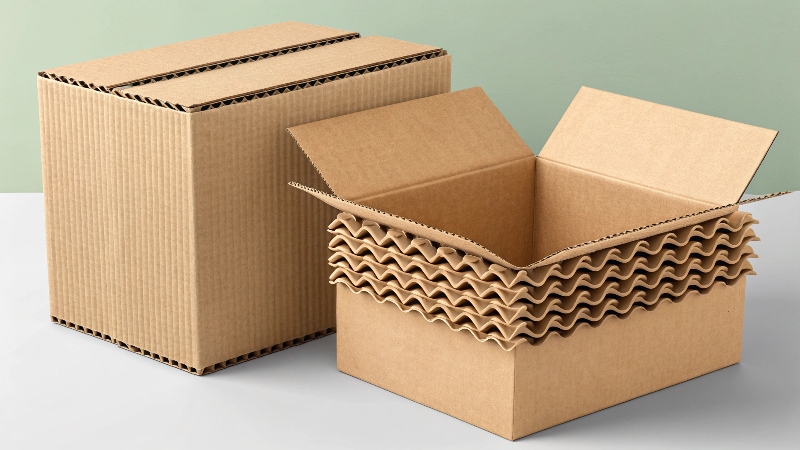
The two primary materials for packaging boxes are paperboard (or cardstock) and corrugated cardboard3. Paperboard is a single layer of thick paper, while corrugated has a wavy layer for added strength.
<sup id=](https://wansapackaging.com/wp-content/uploads/2025/09/what-material-is-used-to-make-a-box-.jpg) 3." title="Paperboard vs. Corrugated Cardboard Materials" />
3." title="Paperboard vs. Corrugated Cardboard Materials" />
Understanding the difference between these two materials was a breakthrough moment for me early in my career. It’s the key to matching the right box to the right job. A designer like Jacky knows that choosing between them depends on a balance of strength, weight, and the desired print finish. Each has a specific role to play in the packaging world. One is the artist's canvas, the other is the reliable protector.
Choosing Your Box Material
| Material | Best For | Key Feature |
|---|---|---|
| Paperboard | Retail packaging, food boxes, cosmetic boxes. | A smooth, flat surface that is perfect for high-quality, vibrant printing. |
| Corrugated Cardboard | Shipping boxes, e-commerce mailers, retail displays. | An internal wavy layer (flute) provides excellent strength and cushioning for protection. |
For a lightweight box of tea sold in a supermarket, we would use paperboard. For shipping that tea to the store, or for creating a box with an integrated handle6 to carry a heavier item, we would turn to corrugated cardboard3 for its structural integrity.
How to make handles for cardboard boxes?
You know you want a handle, but you're not sure what your options are. You don't want to pick one that looks cheap or won't be strong enough to hold your product.
Handles are made in two main ways: die-cut directly into the box material (integrated) or attached as a separate piece. Attached handles, like ribbons or plastic, often create a more premium feel.
<sup id=](https://wansapackaging.com/wp-content/uploads/2025/09/how-to-make-handles-for-cardboard-bo.jpg) 7 handles threaded through eyelets." title="Premium Attached Ribbon Handles on a Gift Box" />
7 handles threaded through eyelets." title="Premium Attached Ribbon Handles on a Gift Box" />
When we make gift boxes with handles, our main choices are materials like silk ribbon7 or PVC handles8 . The choice really depends on the brand's image and the product's weight. An integrated handle6 is cost-effective and practical, often seen on "briefcase" style boxes for trade shows. But for a true gift experience, an attached handle is much better. It adds a touch of elegance and tactile quality that a simple cutout can't match.
Common Handle Types
- Integrated Handles: A die-cutting machine simply punches a handle shape out of the main body of the box. This is common on corrugated boxes. It's strong and efficient but offers a more basic look.
- Attached Handles: These are added to the box during assembly and signal a higher level of quality.
- Ribbon Handles: Grosgrain or silk ribbon7 is threaded through holes or slots in the box. This creates a soft, luxurious feel9, perfect for fashion or cosmetic gift sets.
- Rope Handles: Twisted paper or cotton rope gives a sturdy, often rustic or nautical, feel. They are very strong and comfortable to hold.
- Plastic (PVC) Handles: These are molded for comfort and can give the box a modern, durable look. They click into place and are excellent for heavier items.
What material is used to make a box?
You see the final box, but you're curious about the process. What are "paperboard" and "corrugated cardboard3" actually made from? Understanding the raw materials can help you make more sustainable choices.
Boxes are made from paper pulp10, which comes from wood chips or recycled paper products. This pulp is pressed and dried to create paperboard or linerboard, the fundamental components of all cardboard boxes.
Thinking about the journey from a tree to a finished box on a shelf still fascinates me. It’s a process of transformation. At its core, nearly every paper-based box starts life as cellulose fibers. These fibers are mixed with water to create a slurry called pulp. This pulp is then spread across giant screens and run through massive, heated rollers that press out the water and form it into giant rolls of paper. If it's made in a single, thick layer, it becomes paperboard. To make corrugated cardboard3, we take thinner rolls of this paper, called linerboard, and glue them to another roll that has been shaped into waves, the "fluting" or "medium." This simple sandwich construction is what gives a shipping box its incredible strength. It's a clever piece of engineering that turns simple paper into a durable protective structure.
What material is commonly used for packaging?
You've been focused on the box, but you realize it's just one part of the puzzle. What other materials are out there, and where does your handled box fit into the overall picture?
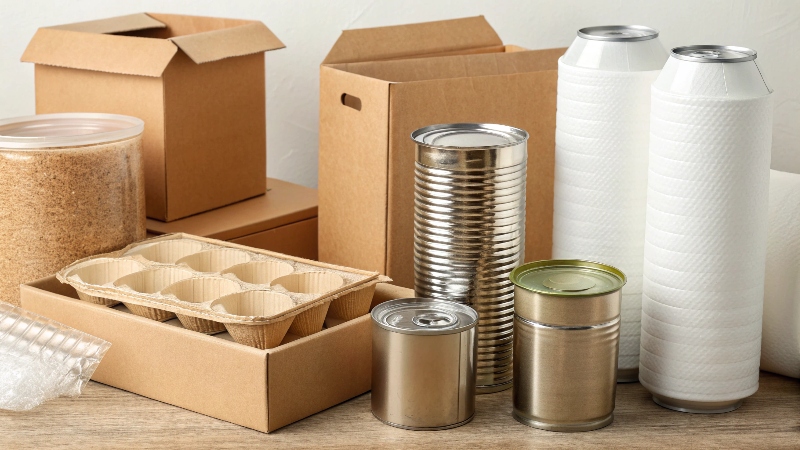
Paper and cardboard are the most common materials for secondary packaging11 (boxes). For primary packaging12 (what touches the product), plastics, glass, and metal are also extremely common and essential.
A handled box is rarely the primary package. Its job is to carry other items. For instance, gift boxes with handles almost always contain a set of products, like a cosmetic series . This makes it easy for the customer to buy everything together . In this case, the plastic tubes and glass jars for the cosmetics are the primary packaging12. The beautiful handled box that holds them all is the secondary packaging11. It's important to see how these materials work together.
Common Packaging Materials
| Material | Primary Role | Example |
|---|---|---|
| Paper / Cardboard | Secondary Packaging | A handled gift box, a shoe box. |
| Plastic | Primary Packaging | Water bottles, lotion tubes, shrink wrap. |
| Glass | Primary Packaging | Serum bottles, jam jars, wine bottles. |
| Metal | Primary/Secondary | Soda cans, cookie tins. |
Thinking this way helps you, and a designer like Jacky, design a complete and effective packaging system from the inside out.
Conclusion
The materials for handled boxes range from simple cardboard to elegant ribbons and plastics. Choosing the right one adds crucial convenience for your customer and significantly boosts your product's perceived value and quality.
Explore how custom boxes with handles enhance customer experience and product perception. ↩
Learn about the advantages of sturdy paperboard in creating durable packaging solutions. ↩
Discover why corrugated cardboard is a popular choice for shipping and protection. ↩
Learn about the efficiency and design benefits of die-cut handles in boxes. ↩
Discover how gift boxes with handles improve customer experience and product value. ↩
Find out the process and benefits of using integrated handles in packaging. ↩
Learn why silk ribbon adds a touch of luxury to gift packaging. ↩
Discover the durability and modern appeal of PVC handles for boxes. ↩
Explore the elements that contribute to a luxurious packaging experience. ↩
Understand the raw materials and process behind creating paper pulp for packaging. ↩
Explore the role of secondary packaging in enhancing product appeal and convenience. ↩
Learn about the significance of primary packaging in product safety and presentation. ↩
More to read
# Which is Better for Packaging Mockups: Laser or Inkjet?
Which is Better for Packaging Mockups: Laser or Inkjet? You need to create a physical
2025 year the most welcome packaging box color trends
This year, packaging trends are making a bold statement with Radiant Red taking the limelight
5 Important Things to Consider for Luxury Products Packaging?
5 Important Things to Consider for Luxury Products Packaging? You've created a premium product, but