


Custom Packaging Solutions
Premium quality packaging tailored to your brand. From cosmetic boxes to luxury rigid packaging, we deliver excellence since 2010.
This is the title

Hey there, I'm Mike!
Which packaging is best for the environment?
You want to make a responsible choice, but every material claims to be "eco-friendly." It's confusing, and you're worried about picking packaging that harms the environment more than it helps.
Paper-based packaging, especially from FSC-certified1 or recycled sources, is generally the best for the environment. It is renewable, widely recyclable2, and biodegradable3, offering a strong, circular solution for most products.
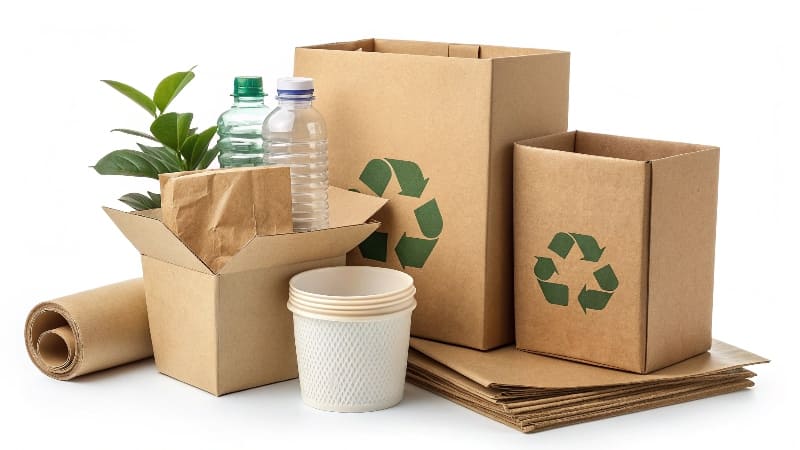
The question of "what is best" is one I get almost every day. There isn't a single magic material that solves every problem. The answer always depends on the product, its journey, and the end-of-life plan for the package. However, after years of making all kinds of boxes, I can tell you that paper and cardboard consistently come out on top for their balance of protection, renewability, and recyclability. The key is choosing the right kind of paper.
What type of packaging is most environmentally friendly?
You see options from recycled plastic to compostable4 corn-based materials. With so many choices, it’s hard to know which one truly has the lowest environmental impact5.
Paper and cardboard are the most environmentally friendly packaging types for most applications. They come from a renewable resource (trees), have the highest recycling rates globally, and biodegrade naturally.
In my experience as a manufacturer, the greenest options are often the simplest. Generally, natural papers6 like kraft paper or unbleached paper7, which have not had other pigments added, are very eco-friendly. These materials have a raw, authentic look that customers associate with sustainability. Unlike plastics, which rely on fossil fuels, paper comes from a managed, renewable resource. Its biggest advantage is the infrastructure that supports it. Almost every community has paper recycling programs8, ensuring the material can have many lives. Bioplastics, in contrast, often need special industrial composting facilities that are not widely available, meaning they often end up in landfills anyway. Paper’s lifecycle is simple and effective.
Material Environmental Snapshot
| Material | Pros | Cons |
|---|---|---|
| Paper/Cardboard | Renewable, high recycling rate, biodegradable3. | Not waterproof without coatings, can be heavier than plastic. |
| Recycled Plastic | Reduces plastic waste, uses less energy than virgin plastic. | Low recycling rate, can only be recycled a few times, sheds microplastics. |
| Glass | Infinitely recyclable2 without quality loss. | Heavy, fragile, and energy-intensive to produce and transport. |
What type of packaging is best for reducing environmental waste?
You want to minimize your company's footprint. The goal is not just to be recyclable2, but to create as little waste as possible from the very beginning.
Right-sized packaging made from a single material (a "mono-material9") is best for reducing waste. A custom-fit box eliminates the need for plastic fillers and is far easier for consumers to recycle.
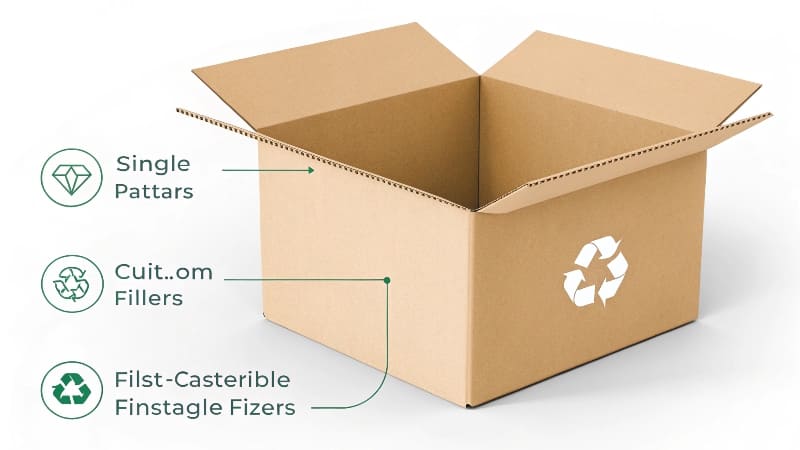
Reducing waste starts on the design table. It’s about using less material in a smarter way. The enemy of sustainable packaging is empty space, which forces you to use wasteful void fillers like bubble wrap or air pillows. The best solution is a custom-fit box. For both folding cartons and corrugated boxes, we generally use unbleached paper7 because it's more eco-friendly. We often refer to this as recycled paper . Using this natural, often-recycled paper to create a box that perfectly cradles the product is the most effective way to reduce waste. You eliminate plastic fillers, and because the whole package is just one material (paper), the consumer doesn't have to separate components to recycle it. It’s a simple, elegant solution.
What is an eco-friendly way of packaging?
You know the materials, but you wonder about the bigger picture. What does a truly sustainable packaging process look like from start to finish?
An eco-friendly way of packaging is a holistic approach. It involves using sustainable materials10 (like FSC-certified1 paper), minimalist structural design, non-toxic inks, and an efficient, localized supply chain to reduce transport emissions11.
<sup id=](https://wansapackaging.com/wp-content/uploads/2025/09/what-is-an-eco-friendly-way-of-packag.jpg) 12 diagram for packaging: from sustainable forest to factory to consumer and back to recycling." title="The Eco-Friendly Packaging Process" />
12 diagram for packaging: from sustainable forest to factory to consumer and back to recycling." title="The Eco-Friendly Packaging Process" />
Being eco-friendly isn't just one thing; it's a series of conscious choices. Of course, it starts with the paper. As I've said, natural papers6 like unbleached kraft are the foundation. But then you have to consider the next step: the printing. An eco-friendly approach means using soy-based or water-based inks instead of traditional petroleum-based ones. These have a much lower environmental impact5 and make the paper easier to de-ink during recycling. It also extends to the design itself. Can you design the box to fold in a way that eliminates the need for glue? Can you print recycling instructions clearly on the box? This entire mindset, from forest to final fold, is what defines a truly eco-friendly way of packaging.
What is the best biodegradable3 packaging?
You see "biodegradable3" on many products, but you’ve heard that it can be misleading. You want to choose a material that truly breaks down naturally and returns to the earth without causing harm.
Untreated paper and cardboard are the best and most reliable biodegradable3 packaging options. They are made from plant fibers that decompose naturally in a home compost pile or even in a landfill without releasing toxins.
"Biodegradable" simply means a material can be broken down by living organisms. However, some materials, like PLA bioplastics, require very specific industrial composting conditions to biodegrade. If they end up in a landfill, they can last for years and release methane. This is where simple, natural paper shines. For folding cartons and corrugated boxes , we frequently use unbleached, natural-colored papers. These materials are not only eco-friendly to produce, but they are also perfectly biodegradable3 . Because they don’t contain plastic coatings, harmful bleaches, or toxic pigments, they break down cleanly. You could tear one up and put it in your home garden compost. This makes natural paper one of the few packaging materials that has a safe, guaranteed end-of-life path, no matter where it ends up.
Conclusion
For truly eco-friendly packaging, paper-based materials like unbleached kraft are your best choice. They are renewable, recyclable2, and truly biodegradable3, providing a responsible solution that helps protect our planet.
Explore the significance of FSC certification in ensuring sustainable forestry practices. ↩
Learn about recycling processes and how to properly recycle various materials. ↩
Understand the science behind biodegradable materials and their environmental impact. ↩
Understand the differences between compostable and biodegradable materials. ↩
Find tools and resources to evaluate the sustainability of packaging choices. ↩
Find out why natural papers are a sustainable choice for eco-friendly packaging. ↩
Learn about the advantages of unbleached paper in reducing environmental impact. ↩
Get involved in local recycling initiatives to support sustainable practices. ↩
Discover how mono-material packaging reduces waste and simplifies recycling. ↩
Explore the role of sustainable materials in creating eco-friendly packaging solutions. ↩
Explore strategies to lower transport emissions in the supply chain. ↩
Discover how a circular economy promotes sustainable practices in packaging. ↩
More to read
# Which is Better for Packaging Mockups: Laser or Inkjet?
Which is Better for Packaging Mockups: Laser or Inkjet? You need to create a physical
2025 year the most welcome packaging box color trends
This year, packaging trends are making a bold statement with Radiant Red taking the limelight
5 Important Things to Consider for Luxury Products Packaging?
5 Important Things to Consider for Luxury Products Packaging? You've created a premium product, but
