


Custom Packaging Solutions
Premium quality packaging tailored to your brand. From cosmetic boxes to luxury rigid packaging, we deliver excellence since 2010.
This is the title

Hey there, I'm Mike!
What packaging is used for candles?
You've perfected your candle's scent and pour, but now it's sitting naked on your desk. The wrong packaging can make it look cheap, or worse, allow it to break before it ever reaches your customer.
The most common and effective packaging for candles is a rigid or folding paperboard box1. This box is often custom-sized for a snug fit, and may include an interior insert for protection or a die-cut window to showcase the candle.
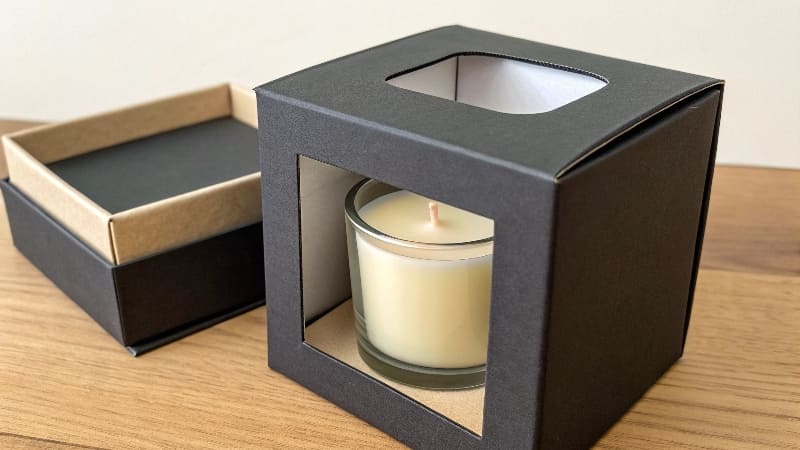
As a packaging maker, I've seen candles arrive in everything from simple bags to elaborate gift sets. The box is more than just protection; it's the first thing your customer experiences. It sets the tone for the scent and the quality within. A well-designed box elevates a simple candle into a luxurious gift. It communicates your brand's story through sight and touch before the customer even gets to the scent. Let's look at how to get that experience right.
How do I package my candles?
You have a fragile product that needs protection, but you also want it to look beautiful on a shelf. It's a tough balance to strike, and you're not sure where to start.
Start with a custom-fit folding paperboard box2 that is sturdy enough to protect the vessel. Consider adding a window to show the product3 and an internal insert to prevent movement during shipping.
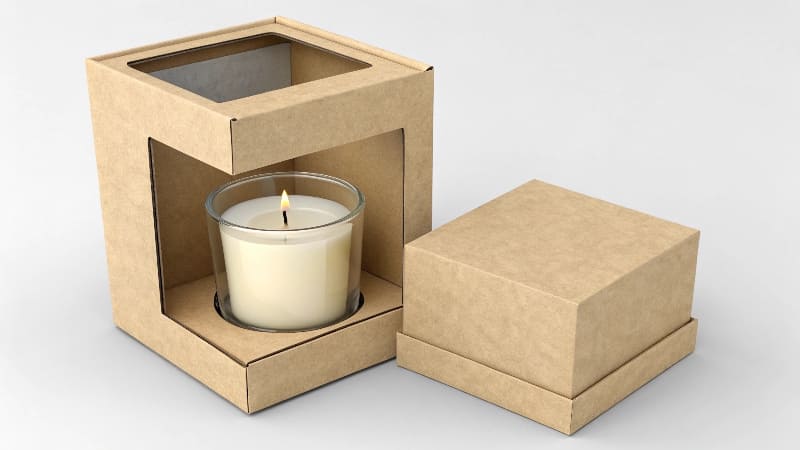
When my clients come to me for candle packaging, we focus on both protection and presentation. For retail, presentation is key. Generally, customers will choose paper boxes with a window to display the candle, adding a PDQ for bundled sales . A PDQ, or "Product Display Quickly4," is a retail-ready tray that holds multiple candles. A gift box with a window lets you see the candle inside. When you put that inside a PDQ, you can sell dozens of candles at once. This is important because our customers often buy more than 10 candles at a time, so they need a PDQ to package and display the candles .
Common Candle Packaging Methods
| Method | Description | Best For |
|---|---|---|
| Simple Folding Box | A standard, enclosed paperboard box. | E-commerce, subscription boxes, minimalist brands. |
| Box with Window | A box with a die-cut opening (usually covered with clear film). | Retail settings where customers want to see the product. |
| Box with Insert | A box containing an inner cardboard structure to hold the candle securely. | High-end or irregularly shaped candles, shipping. |
| Box with PDQ | Individual boxes placed within a larger display tray. | Wholesale, big-box retailers, point-of-sale displays. |
What type of container is best for candles?
You're focused on the box, but the candle vessel itself is critical. Choosing a material that cracks from heat or leaches chemicals will ruin your product and your brand's reputation.
Non-porous, heat-resistant materials are best. Glass jars, glazed ceramic pots5, and seamless metal tins6 are the safest and most popular choices for candle containers because they won't crack, leak, or absorb the wax.
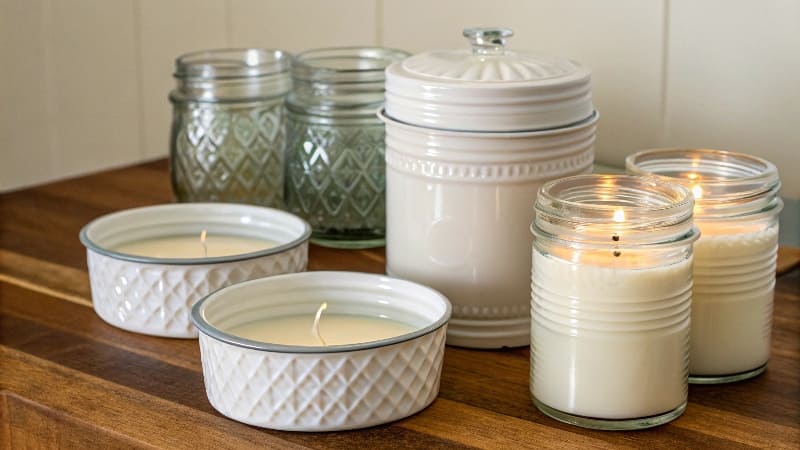
The container is part of the product. It has to be safe, and it has to match your brand's aesthetic. Glass is a classic for a reason. It’s non-porous, so the fragrance oil won't seep through, and customers can see the beautiful color and texture of your wax. High-quality, thick glass can handle the heat without any problems. Ceramics offer a more earthy, handcrafted feel, but you must ensure they are properly glazed on the inside to prevent the wax from absorbing into the porous material. Metal tins are great for a rustic or modern look and are very durable for shipping. Never use plastic containers, as they can melt. Also avoid any glass that isn't made for heat, like old drinking glasses, as they can shatter.
Candle Container Comparison
| Container | Pros | Cons |
|---|---|---|
| Glass Jars | Looks premium, shows off the wax, widely available. | Can be heavy and fragile. |
| Ceramic Pots | Unique, high-end, artisan feel. | Must be glazed, can be expensive. |
| Metal Tins | Durable, lightweight, good for travel candles. | Can get very hot to the touch. |
What are the legal requirements for candle boxes?
You're ready to sell, but you're terrified of legal issues. Missing a single required warning label could result in product recalls or, even worse, a lawsuit if an accident happens.
Legally, your candle packaging must have a warning label with fire safety symbols7, your business identity and location, and the net weight of the product8 in both ounces and grams.
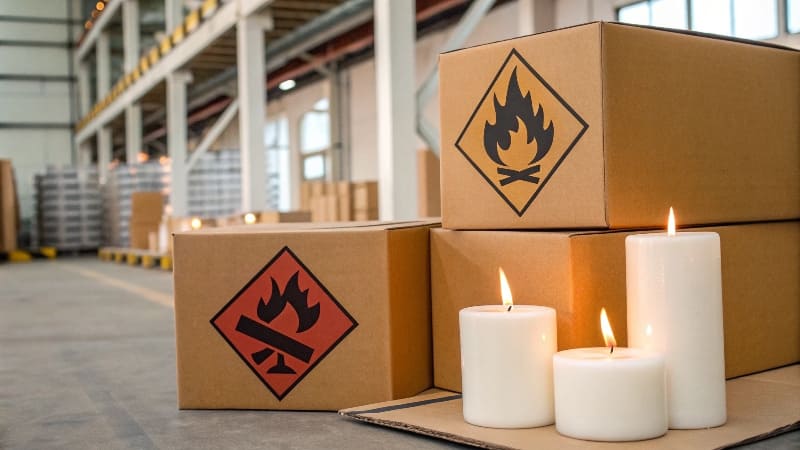
This is not something to guess about. The rules are in place for safety, and following them protects you and your customers. While regulations vary slightly by region (like CPSC in the US and CLP in the EU), the core requirements are consistent. You need what's often called a "cautionary label9." This isn't just text; it must include specific universal pictograms that show the main dangers. Think of it as a simple checklist. If you have the warning, the weight, and your address on every candle, you have covered the most critical legal bases. I always tell my clients to print this information directly on the bottom of the box so it can never get lost. It's a small detail that shows you are a professional and responsible brand.
Essential Labeling Checklist
| Element | What It Is | Example |
|---|---|---|
| Warning Statement | Text outlining basic safety rules. | "Burn within sight. Keep away from things that catch fire." |
| Safety Pictograms | Universal symbols for fire hazards. | A flame symbol, a symbol for keeping away from children, etc. |
| Net Weight | The weight of the wax, not the whole candle. | Net Wt. 8 oz / 227 g |
| Identity & Location | Your company name and city/state. | Your Brand Name, New York, NY |
What is the 84 rule for candles10?
You keep hearing other candle makers mention the "84 rule," and it sounds important. You feel out of the loop and worry it's a critical safety or design standard you're missing.
The "84 rule" has nothing to do with packaging or safety. It is a simple pricing formula some makers use to calculate wholesale and retail prices by multiplying costs by 2.2, then again by 2.2.

Let's clear this up right now: this is a business rule, not a safety rule. It's a quick and dirty way to figure out how much to charge for your candles to ensure you make a profit. It's not an official industry standard or a legal requirement. The formula helps you account for not just your material costs, but also your time, labor, overhead, and profit margin. Many small businesses use it as a starting point before adjusting their prices based on their specific brand positioning and market. If you are a luxury brand11, your multiplier might be higher. If you are a budget brand12, it might be lower. Don't worry about it for design or safety; just think of it as a helpful business tip.
The "84 Rule" Pricing Example
| Step | Calculation | Example |
|---|---|---|
| 1. Total Cost of Goods (COG) | (Vessel + Wax + Wick + Fragrance + Label + Box) | $5.00 |
| 2. Calculate Wholesale Price | COG x 2.2 | $5.00 x 2.2 = $11.00 |
| 3. Calculate Retail Price | Wholesale Price x 2.2 | $11.00 x 2.2 = $24.20 |
Conclusion
Packaging your candles in sturdy, well-designed boxes with windows and retail displays is key. Always use safe containers like glass or ceramic, and never forget the legally required safety labels on every box.
Explore this link to understand the benefits of using rigid or folding paperboard boxes for packaging. ↩
Learn how to design a custom-fit box that enhances your candle's presentation and protection. ↩
Discover the advantages of using windows in packaging to attract customers. ↩
Find out how PDQs can boost your candle sales and improve retail presentation. ↩
Understand the unique qualities of ceramic pots and their suitability for candles. ↩
Discover the benefits of using metal tins for a modern and durable candle container. ↩
Find out the essential elements of a candle warning label to ensure compliance and safety. ↩
Get guidance on accurately labeling the net weight of your candle products. ↩
Learn about the importance of cautionary labels in candle packaging for safety. ↩
Understand the 84 rule and how it can help you price your candles effectively. ↩
Explore the characteristics of luxury candle brands and how to position yours. ↩
Discover strategies for effectively marketing a budget candle brand. ↩
More to read
# Which is Better for Packaging Mockups: Laser or Inkjet?
Which is Better for Packaging Mockups: Laser or Inkjet? You need to create a physical
2025 year the most welcome packaging box color trends
This year, packaging trends are making a bold statement with Radiant Red taking the limelight
5 Important Things to Consider for Luxury Products Packaging?
5 Important Things to Consider for Luxury Products Packaging? You've created a premium product, but
