


Custom Packaging Solutions
Premium quality packaging tailored to your brand. From cosmetic boxes to luxury rigid packaging, we deliver excellence since 2010.
This is the title

Hey there, I'm Mike!
What is the most common size of a cardboard packing box?
You're trying to design packaging, but you're stuck on a basic question: what size should it be? Searching for a "standard" size feels like a shot in the dark, leading to costly mistakes.
For custom product packaging1, there is no "most common size." The best and most common practice is to create a box that is tailor-made to the exact dimensions of your product.
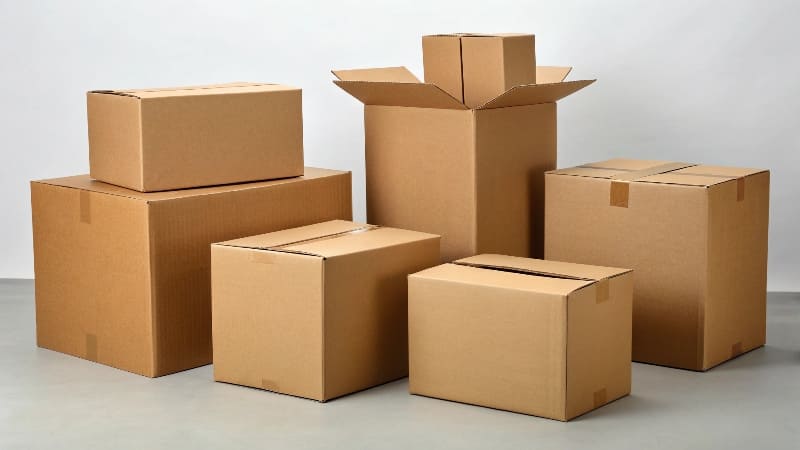
This is one of the first questions brand owners ask me. They think there must be a secret menu of standard sizes to choose from. But this thinking comes from the world of generic brown shipping boxes2. In the world of premium product packaging3, one-size-fits-all is a recipe for failure. Our product packaging boxes are always specially customized. The size of the box is determined by the customer's product dimensions4 because this ensures a perfect fit, a professional look, and cost efficiency5. It's not about finding a box your product fits into; it's about building a box specifically for your product.
What size is a normal packing box?
You're looking for a simple answer, a "normal" size to base your plans on. But using a generic box can make your product look lost and your brand seem unprofessional.
For retail product packaging, a "normal" size is a custom size. For general shipping, you will find stock boxes like 12x9x6 inches, but these are not designed for product presentation.
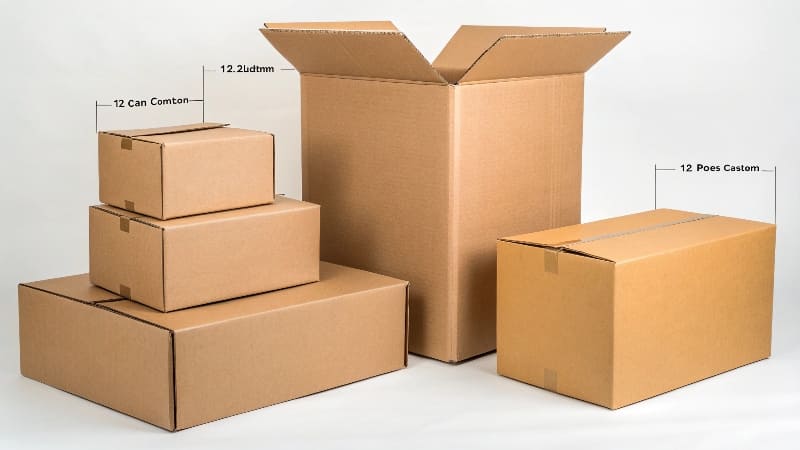
The concept of a "normal" box really doesn't exist in my world of custom manufacturing. The entire point of creating custom packaging is to move away from generic, ill-fitting solutions. As I always tell my clients, our packaging boxes are specially customized based on the budget and design requirements from the customer. Therefore, the general box size is decided by the customer's product dimensions4. There is no universal box size . A "normal" box for a lip balm would be tiny, while a "normal" box for a hairdryer would be quite large. The only thing that is normal is the process: measure the product, then design the box.
Custom-Fit vs. "Normal" Stock Box
| Feature | Custom-Fit Box | "Normal" Stock Box |
|---|---|---|
| Protection | Excellent. The product is held securely. | Poor. The product can move and get damaged. |
| Presentation | Premium and intentional. Looks professional. | Generic and cheap. Often requires messy void fill. |
| Shipping Cost | Optimized to reduce dimensional weight6 charges. | Often oversized, leading to higher shipping costs7. |
| Material Waste | Minimal. Uses only the material needed. | High. You pay for empty space and extra material. |
Is a 12x12x12 box considered a large box?
You see a 12x12x12 cube and wonder if it's too big or small for your needs. Guessing wrong about its size classification can lead to surprise fees from shipping carriers8.
A 12x12x12 inch box is usually considered a medium-sized box for shipping. However, carriers like FedEx or UPS define "large" based on dimensional weight6 rules, not just its appearance.
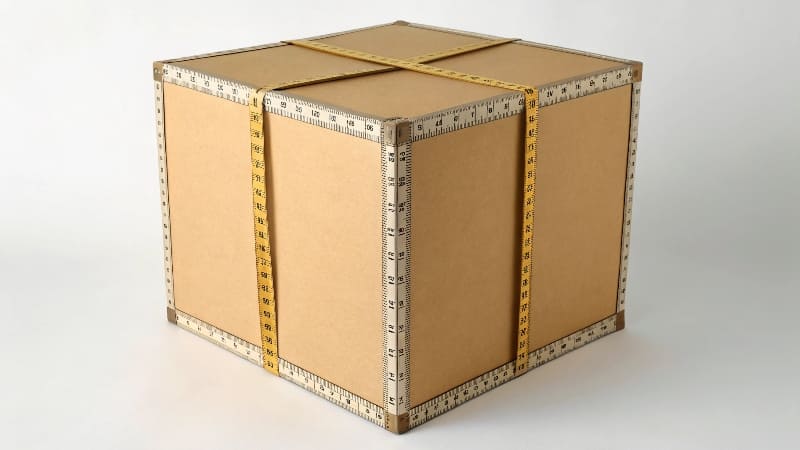
This question highlights a critical point for any e-commerce brand. Whether a box is "large" has less to do with how it looks and everything to do with how shipping carriers8 bill you. They use a system called dimensional weight6, or DIM weight. They calculate the volume of your box and divide it by a special number (called a DIM divisor). They then compare this dimensional weight6 to the actual weight of the package and charge you for whichever is higher. For example, a 12x12x12 box has a volume of 1,728 cubic inches. If the carrier's divisor is 139, its DIM weight is 12.4 pounds. If your product only weighs 3 pounds, you are still paying to ship over 12 pounds. This is why a custom-fit box9 is so important. Shaving just an inch off each dimension can drastically lower your shipping costs7 over thousands of orders.
What is the most efficient packing of boxes?
You want to pack efficiently, but you only focus on how fast you can assemble the box. You overlook the massive hidden costs of wasted paper and paying for oversized shipping dimensions.
The most efficient packing starts with designing the right-sized box. A perfect fit minimizes material waste10, eliminates the need for plastic void fill, and optimizes shipping costs7 by reducing dimensional weight6.

As a manufacturer, I think about efficiency on two levels. First, there's your efficiency in packing. But before that, there's my efficiency in production, which directly impacts your price. When we make your boxes, we lay out the flat pattern on a giant sheet of paperboard. The more patterns we can fit, the less waste there is, and the lower your cost. This is where a small size tweak can make a huge difference. For example, our printing press has a maximum sheet size. Our box dimensions11 can be any size, as long as the unfolded box does not exceed the maximum printing die-cut size of 1194mm . A box that is 600mm wide when unfolded might only fit one-across on our sheet. But if you can adjust your design to be 580mm wide, we might be able to fit two-across, cutting your material cost almost in half. True efficiency is a collaboration between your design needs and our manufacturing capabilities.
What is the size of a 10 kg carton box12?
You have a product that weighs 10 kg and you want to know what size box you need. This is a trap; assuming weight equals a specific size can lead to a damaged product.
There is no standard size for a 10 kg box. A box for 10 kg of steel parts will be very small, while a box for 10 kg of goose-down pillows will be huge.
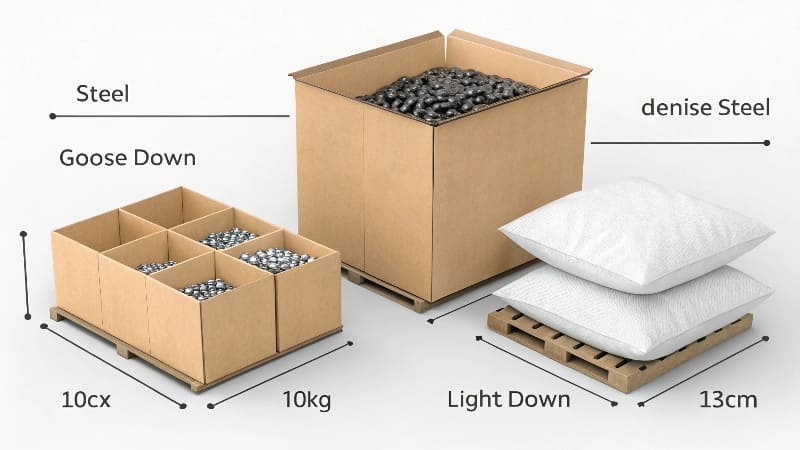
This question perfectly shows the difference between weight and volume (or density). The size of a box is determined by the volume of the product going inside it, not its weight. The weight is still very important, but it tells us a different part of the story. The weight determines the strength of the material we need to use, not the dimensions of the box itself. For a dense, 10 kg product like a small motor, you would need a small box made from incredibly strong, thick-walled corrugated board to prevent it from breaking through. For a light, 10 kg product like a large piece of foam, you would need a very large box made from a standard, thin-walled material. So, when you come to me with a new project, I need to know three things: the product's dimensions (for the box size), its weight (for the material strength), and its fragility13 (for any internal supports).
Conclusion
The most common box size is the one made specifically for your product. Custom sizing is not a luxury; it is the most professional, protective, and cost-effective packaging solution for your brand.
Explore how custom packaging can enhance your brand's image and protect your products. ↩
Understand the limitations of generic boxes and why custom solutions are often better. ↩
Learn about the characteristics that make packaging premium and how it affects consumer perception. ↩
Learn why accurate product dimensions are essential for effective packaging solutions. ↩
Discover how tailored packaging can save money in shipping and materials. ↩
Get insights into how dimensional weight affects shipping costs and packaging design. ↩
Explore the various factors that can affect shipping costs and how to optimize them. ↩
Learn how carriers classify box sizes and the implications for your shipping costs. ↩
Understand the benefits of using custom-fit boxes for product protection and presentation. ↩
Explore strategies for minimizing waste in packaging design and production. ↩
Learn about the importance of box dimensions in logistics and storage efficiency. ↩
Discover how product density affects the size of packaging needed for different items. ↩
Understand how the fragility of products impacts the choice of packaging materials and design. ↩
More to read
# Which is Better for Packaging Mockups: Laser or Inkjet?
Which is Better for Packaging Mockups: Laser or Inkjet? You need to create a physical
2025 year the most welcome packaging box color trends
This year, packaging trends are making a bold statement with Radiant Red taking the limelight
5 Important Things to Consider for Luxury Products Packaging?
5 Important Things to Consider for Luxury Products Packaging? You've created a premium product, but
