


Custom Packaging Solutions
Premium quality packaging tailored to your brand. From cosmetic boxes to luxury rigid packaging, we deliver excellence since 2010.
This is the title

Hey there, I'm Mike!
What is Cardboard?
You see cardboard everywhere, from moving boxes to product packaging. But this common term can be confusing, making it hard to choose the right material for your project.
Cardboard is a general name for heavy-duty paper-based products1. It includes everything from the thick, rigid paperboard2 used in luxury gift boxes3 to the corrugated fiberboard4 used for shipping cartons. It's defined by its strength and thickness.
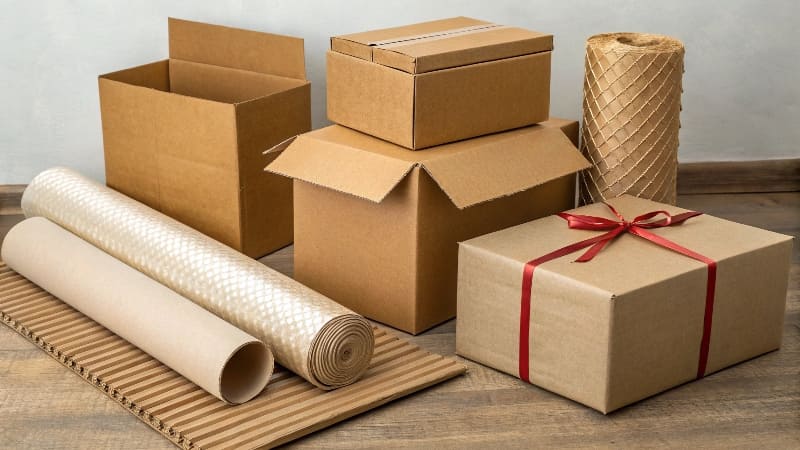
As someone who runs a packaging factory5, I can tell you that "cardboard" is a word we use carefully. To us, it represents a wide family of materials, each with a specific purpose. Cardboard is the main structural material for boxes; our boxes are formed by it. So customers naturally choose high-quality, high-end cardboard to customize their luxury boxes . Understanding the right type is the first step to creating packaging that truly shines.
What is cardboard made out of?
You assume cardboard is just recycled brown paper, but its actual composition is more complex. Not knowing this can make it hard to select a material with the right look and feel.
Cardboard is made from wood pulp6. This pulp can come from fresh-cut trees or, more commonly, from recycled materials7 like old paper and cartons. This pulp is processed, pressed, and dried into thick sheets.
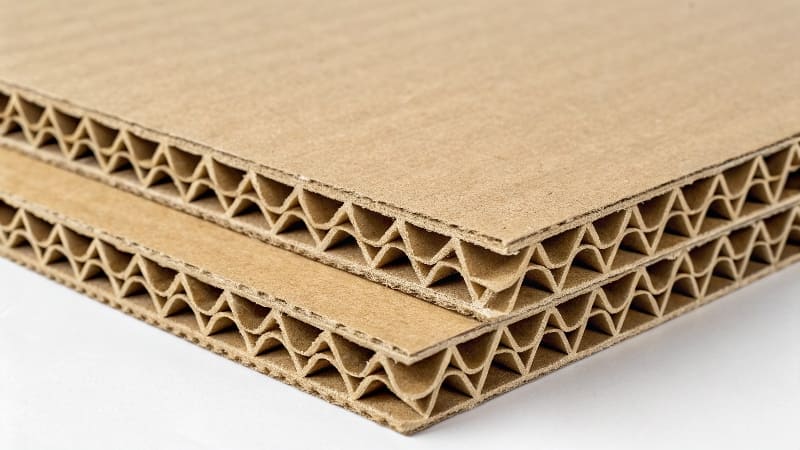
In my factory, we primarily work with a type of cardboard often called greyboard8 or paperboard, especially for high-end cosmetic boxes. For these products, the material's composition is key. Cardboard is often a composite made of a surface paper laminated onto a greyboard8 core. The inside is typically gray, but white-lined versions are also available. We usually mount a 200gsm coated paper or art paper onto the greyboard8, with the final choice depending on the customer's budget and desired finish . This process gives us the best of both worlds.
The Anatomy of a High-End Box
The rigid board we use for luxury boxes is a layered product engineered for both strength and beauty.
| Component | Material | Purpose |
|---|---|---|
| Core Board | Greyboard (recycled, compressed paper) | Provides the rigid structure, strength, and thickness. |
| Liner Paper | Thin paper on the inside | Covers the raw greyboard8 for a cleaner interior look. |
| Wrap Paper | High-quality printed paper | Laminated to the outside for branding, color, and texture. |
The greyboard8 gives the box its sturdy, unbendable structure. Then, we wrap it in a beautifully printed paper to create the final, premium look and feel.
What are the three types of cardboard?
You need a strong box, but terms like "corrugated" and "paperboard" are confusing. Choosing the wrong one can lead to damaged products or packaging that feels cheap and flimsy.
The three most common types are: 1) Corrugated Fiberboard (for shipping), 2) Paperboard (for folding cartons9 like cereal boxes), and 3) Chipboard or Greyboard (a dense board for rigid boxes and backings).
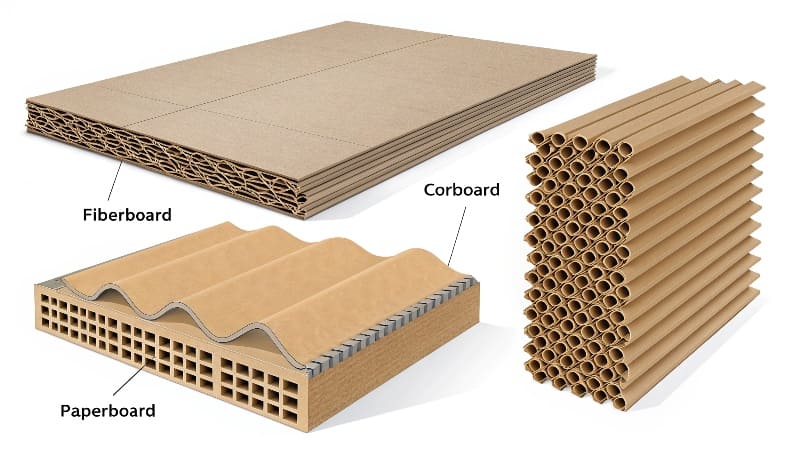
Choosing the right type is the most important decision for any packaging project10. My clients love using rigid paperboard2 for their boxes because they value its thickness, which gives a feeling of sturdiness. Furthermore, the surface after lamination is very smooth, providing a high-end texture11 when touched. That solid feel is what separates premium packaging from standard retail boxes.
Choosing the Right Board for Your Project
Each type has a distinct job to do.
| Type | Composition | Key Feature | Common Uses |
|---|---|---|---|
| Corrugated Fiberboard | A wavy "flute" layer between two flat liners. | High strength-to-weight ratio; excellent for cushioning. | Shipping boxes, moving boxes, pizza boxes. |
| Paperboard | A single layer of pressed paper pulp. | Smooth, printable surface; easily folded. | Cereal boxes, cosmetic folding cartons9. |
| Chipboard / Greyboard | Densely compressed recycled paper. | Very rigid and thick; not easily bent. | Rigid gift boxes, book covers, backing pads. |
For us, the most important material is rigid paperboard2 . We use it in thicknesses ranging from 2mm to 5mm to build the core structure of luxury boxes. It's an eco-friendly material and can be FSC certified12. This is what gives a cosmetic or jewelry box its durability and substantial, high-quality feel.
Is cardboard just paper?
Thinking that cardboard and paper are the same can lead to design mistakes13. You might expect a paper's flexibility when you're actually working with a rigid board, causing production issues.
No, cardboard is a type of paper, but it's defined by its much greater thickness and weight. Any paper stock above a certain thickness (around 0.25 mm or 250 gsm) is generally considered a paperboard or "cardboard."
<sup id=](https://wansapackaging.com/wp-content/uploads/2025/09/is-cardboard-just-paper-thinking-t.jpg) 8 to show the difference." title="The Difference Between Paper and Cardboard" />
8 to show the difference." title="The Difference Between Paper and Cardboard" />
The line between paper and paperboard is one of the most fundamental concepts in my industry. While both start as wood pulp6, the manufacturing process makes them completely different materials to work with. You cannot fold and glue a 2mm rigid board with the same machines or techniques you would use for a 150gsm sheet of paper. Everything from the design of the cutting die to the type of glue we use has to be adjusted based on the material's thickness and rigidity.
The Line Between Paper and Board
Weight and thickness are the defining factors.
| Material | Typical Weight (GSM) | Key Characteristic | Common Example |
|---|---|---|---|
| Paper | 80 - 150 gsm | Thin and flexible. | Office paper, flyers. |
| Cardstock | 170 - 250 gsm | Stiff but still easily bendable. | Postcards, business cards. |
| Paperboard | 250+ gsm | Thick and rigid. | Cereal boxes, rigid box structures. |
In luxury packaging, we use both. We take a thick, rigid paperboard2 for the structure and laminate a sheet of thinner, high-quality paper onto its surface to achieve a perfect, printable finish.
What is the difference between boxboard14 and cardboard?
You see the terms "boxboard14" and "cardboard" and think they're interchangeable. This can lead to miscommunication with a manufacturer when you try to specify the material for your packaging.
"Cardboard" is a vague, everyday term. "Boxboard" is a more precise industry name for a specific type of paperboard used to make folding cartons9 (like a toothpaste box) and rigid boxes.
<sup id=](https://wansapackaging.com/wp-content/uploads/2025/09/what-is-the-difference-between-boxbo.jpg) 14) next to a large corrugated shipping box (cardboard)." title="Difference between Boxboard and Cardboard" />
14) next to a large corrugated shipping box (cardboard)." title="Difference between Boxboard and Cardboard" />
When you talk to a manufacturer, being specific is crucial. If a client just asks for "a cardboard box," my first question is always, "What kind?" Do they mean a brown corrugated shipper, or do they mean a high-end rigid gift box? The materials and construction processes are worlds apart. A key insight is that greyboard8 is a finished product, whereas a board can be a semi-finished product . This means we purchase greyboard8 as a complete raw material to begin our box construction.
Speaking the Language of Packaging
Here are the terms we use in the factory:
- Corrugated Fiberboard: This is what most people mean when they say "cardboard." It has the wavy inner layer and is used for shipping.
- Folding Boxboard (FBB): This is the single-ply material used for retail packaging that folds flat, like a box for a phone case.
- Greyboard / Chipboard: This is a thick, dense board made from recycled materials7. It's the finished raw material we use as the strong core for luxury gift boxes3.
Being specific ensures we create exactly what you have in mind.
Conclusion
Cardboard is not one material, but a family of paper-based products. Understanding the difference between corrugated, paperboard, and greyboard8 is the key to selecting the perfect, professional packaging for your product.
Explore this link to understand the various applications and benefits of heavy-duty paper-based products in packaging. ↩
Understand the advantages of rigid paperboard in creating sturdy and high-quality packaging. ↩
Discover the materials and design elements that make luxury gift boxes stand out in the market. ↩
Learn about the uses and advantages of corrugated fiberboard, a popular choice for shipping and packaging. ↩
Discover the functions and processes involved in a packaging factory and its importance in the industry. ↩
Gain insights into the production of wood pulp and its significance in creating cardboard products. ↩
Find out how recycled materials contribute to sustainable cardboard production and packaging. ↩
Explore the properties and applications of greyboard in various packaging solutions. ↩
Discover the various uses of folding cartons in retail packaging and their design features. ↩
Get tips on selecting the best materials for your packaging project to ensure quality and effectiveness. ↩
Learn about the design elements that contribute to a premium feel in packaging materials. ↩
Understand the significance of FSC certification in promoting sustainable forestry practices in packaging. ↩
Learn about common pitfalls in packaging design and how to avoid them for better results. ↩
Explore the distinctions between boxboard and cardboard, and their specific applications in packaging. ↩
More to read
# Which is Better for Packaging Mockups: Laser or Inkjet?
Which is Better for Packaging Mockups: Laser or Inkjet? You need to create a physical
2025 year the most welcome packaging box color trends
This year, packaging trends are making a bold statement with Radiant Red taking the limelight
5 Important Things to Consider for Luxury Products Packaging?
5 Important Things to Consider for Luxury Products Packaging? You've created a premium product, but
