

Custom Packaging Solutions
Premium quality packaging tailored to your brand. From cosmetic boxes to luxury rigid packaging, we deliver excellence since 2010.
This is the title

Hey there, I'm Mike!
What is a great packaging label1 example?
You need a label for your product, but you don't know where to start. A poorly designed label can make a great product look cheap and untrustworthy, costing you sales.
A great packaging label1 example is one that clearly displays the brand, the product name, and essential information on high-quality material2. The design must be eye-catching and easy to read.
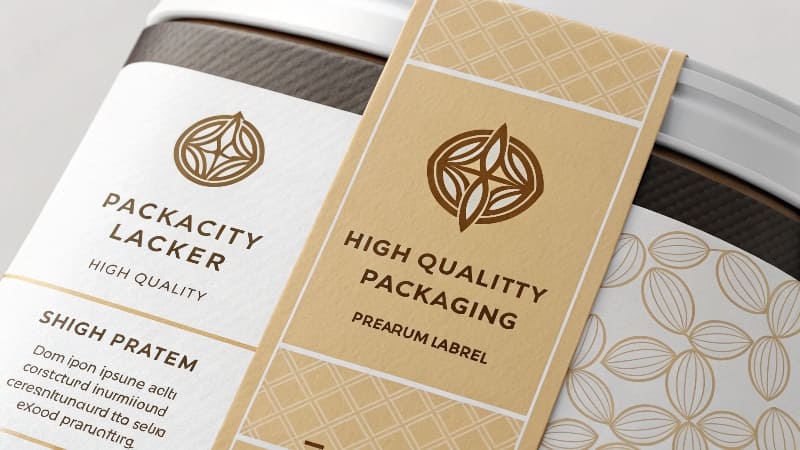
I've seen so many clients with amazing products fail because they treated the label as an afterthought. I remember one project for a small cosmetics company. Their product was fantastic, but their original label was just black text on a white sticker. It looked generic. We redesigned it, using a textured paper and a simple foil stamp for their logo. The product inside didn't change, but their sales tripled. The new label communicated the quality that was already there. That's the power of getting this one detail right.
What are the 4 types of labels?
You see labels on every product, but they all seem so different. Not understanding the basic categories makes it hard to decide what your own packaging really needs.
The four main types of labels are Brand, Descriptive, Grade, and Informational. Most packaging label1s are a combination of these types to identify, describe, and provide essential details about the product.
Understanding these four types helps you structure the information on your own label. Think of them as building blocks. A designer like Jacky needs to know which blocks are the most important for the specific product he is designing for. For some products, the brand is everything. For others, the descriptive or informational details are required by law.
The Four Main Label Categories
| Label Type | Purpose | Common Example |
|---|---|---|
| Brand Label3 | Focuses only on the brand name or logo. | The swoosh on a Nike shoe box. |
| Descriptive Label4 | Explains the product's features, ingredients, or use. | The ingredients and nutrition facts on a food package. |
| Grade Label5 | States the quality of the product using a recognized standard. | The "Grade A" stamp on a carton of eggs. |
| Informational Label6 | Provides instructions, safety warnings, or origin data. | The "Made in China" text or a "Keep Refrigerated" warning. |
Most successful labels seamlessly blend these elements. The brand label grabs attention, the descriptive label informs the purchase, and the informational label ensures safety and compliance.
What is a packaging label1?
You might think a label is just a simple sticker you put on a box. This limited view makes you miss the huge opportunity to create a premium experience7 for your customers.
A packaging label1 is a piece of printed material attached to a product's container. It identifies the product and communicates its brand, contents, and other essential details to the consumer.
<sup id=](https://wansapackaging.com/wp-content/uploads/2025/10/what-is-a-packaging-label-you-might.jpg) 8 and foil." title="Premium Packaging Label on a Gift Box" />
8 and foil." title="Premium Packaging Label on a Gift Box" />
A label can be so much more than just a sticker. In my experience, especially with high-end products, the label is a key part of the design. For example, a gift box label9 is a label attached to the gift box. It is usually made of coated paper with printing, plus special finishes like hot stamping10 and embossing8. These special touches are what separate a standard product from a luxury one.
Let's break down these elements:
- Coated Paper: This paper has a smooth, premium surface that makes colors look bright and text look sharp. It's a step up from basic, uncoated paper.
- Hot Stamping (Foil Stamping): This process uses heat and pressure to apply a thin layer of metallic foil to the paper. It's used to create shiny gold, silver, or colored logos and text.
- Embossing/Debossing: This uses a metal die to either raise (emboss) or lower (deboss) a part of the paper, creating a 3D texture you can feel.
These are not just decorations. They are sensory details that tell the customer that the product inside is high quality.
How to write a packaging label1?
You need to create the content for your label, but you're staring at a blank page. You're worried you will forget a critical piece of information that customers or regulators need to see.
To write a packaging label1, start with a clear hierarchy. Feature the brand and product name prominently. Then, add essential descriptive and informational details in a clear, easy-to-read font.
Writing a label is an exercise in clarity and efficiency. You have a very small space to communicate a lot of information. The first step is to figure out what is absolutely necessary. Start with the basics: Who made this? What is it? Then, add the details. You should always check the specific legal requirements for your product type and region, as they can be very strict. For example, food and cosmetic products have very specific rules about listing ingredients.
One function many people forget is the practical, retail side. A label on a gift box is often a price tag, so the customer can know the price of the product. This might be a separate, smaller label applied by the retailer, or you might design a main label with a designated space for pricing. Thinking about how the product will actually be sold in a store is a critical step that many designers miss. You have to consider the entire journey of the product, from our factory to the customer's hands.
What is an example of a label?
You understand the different parts of a label, but you need to see how they all come together. Without a real-world example, it's hard to visualize how to apply these ideas to your own product.
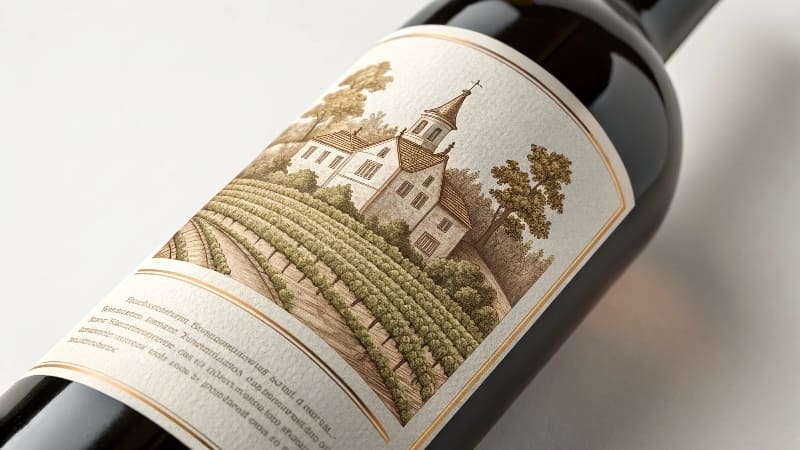
A wine bottle label11 is a perfect example. It combines all four label types: the winery's brand, a description of the wine (grape, region), its grade (vintage year), and informational facts (alcohol content).
Let's look at a different and exciting example. I had a client who was launching a new line of high-tech computer accessories. They wanted a futuristic, premium feel. A standard paper label was not going to work. For them, we decided to make a holographic label12 to give customers a different experience!.
This holographic, or "laser," label did several things at once.
- It Grabbed Attention: The shifting rainbow colors of the holographic foil made the package stand out immediately on a crowded shelf.
- It Communicated "Tech": The effect felt modern and advanced, perfectly matching the product inside.
- It Increased Perceived Value: The special finish made the product feel more expensive and exclusive. It looked like something special.
- It Provided Security: Holographic labels are very difficult to copy, which helps prevent counterfeiting.
This is a great example of how the label material itself can tell a huge part of your brand's story before the customer has even read a single word of text.
Conclusion
A packaging label1 is a vital part of your product. A well-designed label serves as an example of strong branding, communicates key information, and creates an unforgettable customer experience.
Explore this resource to understand how packaging labels enhance product identity and customer experience. ↩
Learn why high-quality materials can elevate your product's perception and boost sales. ↩
Find out how Brand Labels play a crucial role in product recognition and marketing. ↩
Understand the importance of Descriptive Labels in conveying product information to consumers. ↩
Explore how Grade Labels communicate product quality and standards to consumers. ↩
Learn about the essential details that Informational Labels must convey for compliance and safety. ↩
Explore ways to enhance customer experience through thoughtful packaging design. ↩
Learn how embossing adds a tactile element to packaging that can elevate brand perception. ↩
Discover how gift box labels enhance the presentation and perceived value of gifts. ↩
Explore the benefits of hot stamping for creating luxurious and eye-catching labels. ↩
Learn how wine bottle labels combine various elements to communicate quality and brand. ↩
Find out how holographic labels can make your product stand out and convey a premium feel. ↩
More to read
# Which is Better for Packaging Mockups: Laser or Inkjet?
Which is Better for Packaging Mockups: Laser or Inkjet? You need to create a physical
2025 year the most welcome packaging box color trends
This year, packaging trends are making a bold statement with Radiant Red taking the limelight
5 Important Things to Consider for Luxury Products Packaging?
5 Important Things to Consider for Luxury Products Packaging? You've created a premium product, but