

Custom Packaging Solutions
Premium quality packaging tailored to your brand. From cosmetic boxes to luxury rigid packaging, we deliver excellence since 2010.
This is the title

Hey there, I'm Mike!
What do I need in a silk screen print kit1?
You want to prototype custom packaging designs, but buying a screen printing kit is confusing. You're afraid you'll waste money on the wrong supplies and end up with a mess instead of a professional-looking box.
A good starter silk screen kit2 includes the essentials: a screen and frame3, a squeegee4, photo emulsion5 with a scoop coater, transparency film6 for your design, and the correct ink for printing7 on paper or cardboard.
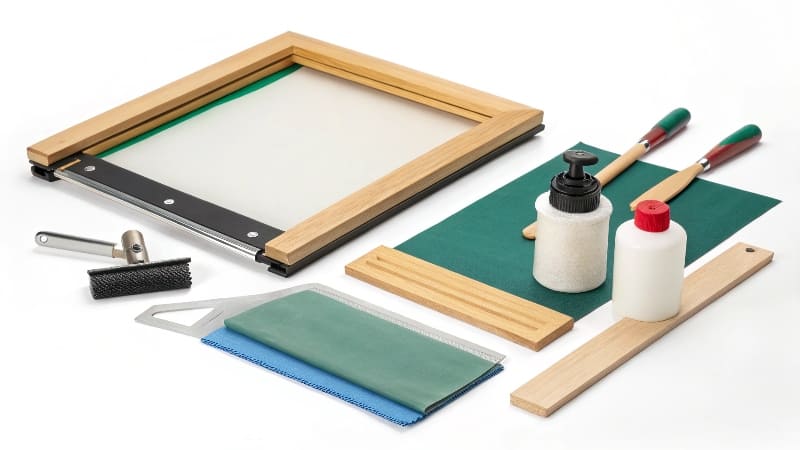
When I first started working on the factory floor, long before I founded Wansa Packaging, I spent countless hours at the screen printing station. I learned that having the right tools isn't a luxury; it's a necessity. A screen with the wrong tension or a squeegee4 with a dull edge can ruin an entire batch of prints. Today, I make sure designers like Jacky understand these basics. A simple kit with the right components is all you need to turn a great idea on your computer into a physical sample you can hold in your hands.
Is silk good for screen printing?
You hear the term "silk screen" and think you actually need to use expensive silk. This sounds impractical and makes you question if the process is right for your packaging needs.
Actual silk is not used for modern screen printing. The term is historical. Today, we use durable and consistent polyester mesh8, which is far superior for creating sharp, high-quality prints on packaging.
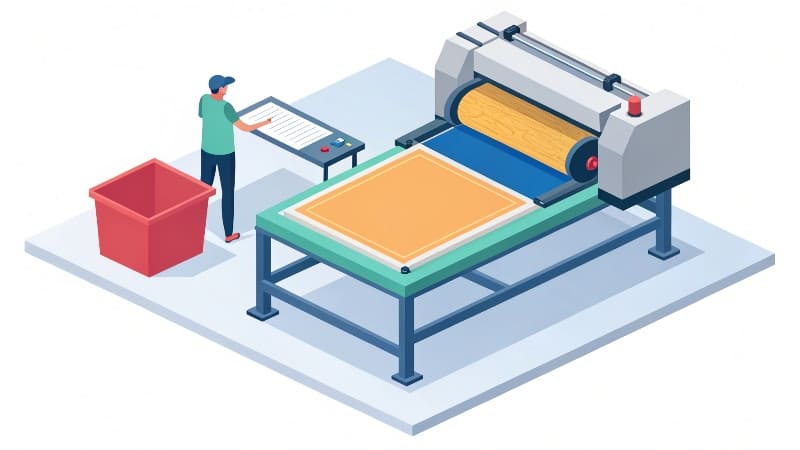
The name "silk screen" is a perfect example of how technology changes but the name sticks around. The original process, which dates back centuries in China, literally used screens made from silk fabric stretched over a wooden frame. It was a revolutionary process at the time. However, silk has its problems. It can stretch or distort when it gets wet, and it isn't as durable as modern materials.
Today, every professional screen printing operation uses screens made from synthetic fabrics, almost always polyester. Polyester is the industry standard for a few key reasons:
- Durability: It can withstand the tension and chemical exposure needed for thousands of prints.
- Stability: It doesn't stretch or warp, ensuring every print is sharp and perfectly aligned.
- Cost-Effective: It is much cheaper and more reliable than silk.
- Versatility: It comes in various mesh counts to control the level of detail.
So, while we still call it silk screening9, you can be sure we are using modern, high-tech materials to get the job done right.
Which is better, silk screen or DTF?
You need to choose a printing method, but you don't know the pros and cons. Picking the wrong one can lead to overpaying for a big job or getting poor results on a custom design.
Silk screen is much better and cheaper for large runs (50+ pieces) with one or two colors. DTF (Direct-to-Film) is better for printing single items or small batches that have complex, multi-color images.
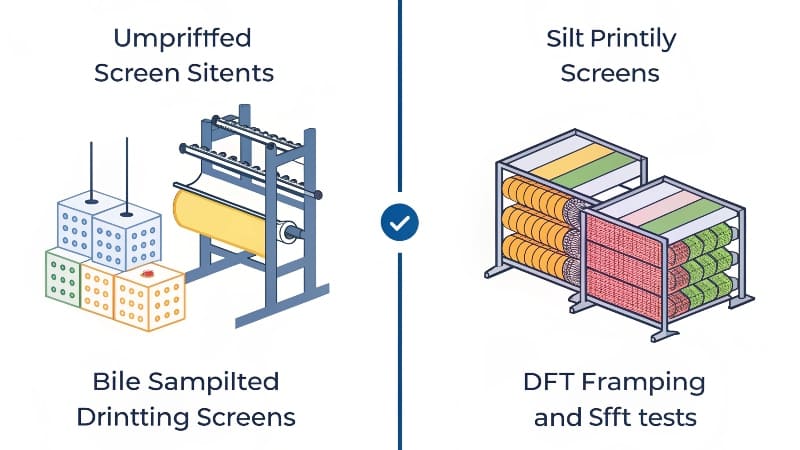
This is a question about picking the right tool for the job. At my company, we handle many types of printing, and each one has its strengths. My experience has taught me that silk screening9 is a process where ink is pushed through a screen. It has a low cost, is fast, and the print quality is standard for bold graphics . This makes it perfect for logos and branding on shipping boxes.
In contrast, offset printing is done on a large printing press; the quality is excellent, but the cost is high . DTF is a digital process, similar to offset in its ability to print many colors, but without the high setup cost. The setup is the key difference. For silk screen, we have to create a separate screen for each color, which has an upfront cost. For DTF, there's no screen. This trade-off is clear when you look at the numbers.
| Feature | Silk Screen | DTF (Digital) | Offset |
|---|---|---|---|
| Best For | 50 - 5,000 pieces | 1 - 50 pieces | 1,000+ pieces |
| Setup Cost | Medium (for screens) | None | Very High |
| Cost Per Item | Very Low (at scale) | High | Lowest (at very high scale) |
| Color Ability | Limited, best for 1-4 colors | Unlimited colors | Unlimited, photorealistic |
How much does a screenprinting setup cost?
You want to start experimenting with screen printing for your designs. However, you're worried that the equipment will be too expensive for you to even get started.
A very basic beginner's screen printing kit can cost as little as $100 to $300. This is enough to start making single-color prints for prototypes. A professional setup for business costs thousands.
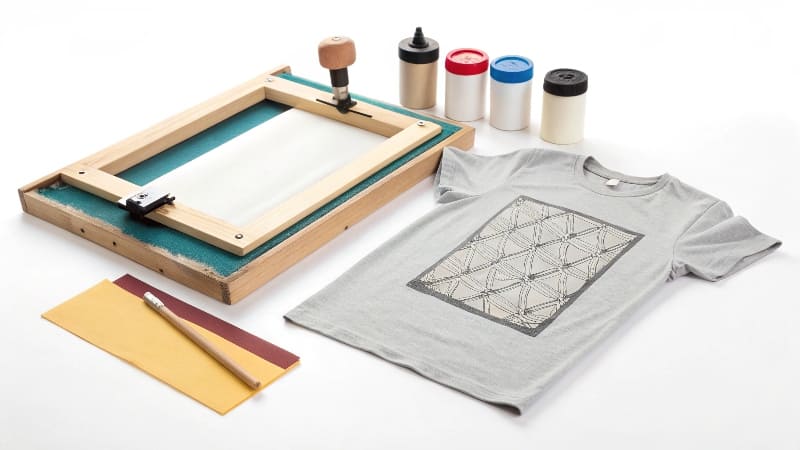
The good news is that you don't need a huge investment to begin. Screen printing is very scalable. A designer like Jacky doesn't need the same equipment that we use in my factory to produce thousands of boxes a day. He just needs the tools to test an idea. You can think about the cost in different tiers, depending on your goals.
-
Tier 1: The Hobbyist Kit ($100 - $300) This is the perfect starting point. It will include one screen, a squeegee4, a light-sensitive emulsion, and a few small pots of ink. You'll have to use your own light source, like a powerful lamp, for exposure. This is all you need to learn the process and print single-color designs on paper or cardboard.
-
Tier 2: The Small Business Setup ($1,500 - $5,000) This is for someone who wants to start producing small batches of products to sell. This setup typically includes a multi-station printing press (for printing multiple colors), a dedicated UV exposure unit for making perfect stencils, and a flash dryer to cure the ink quickly.
-
Tier 3: The Industrial Operation ($20,000+) This is the level of a factory like Wansa Packaging. We use large, semi-automatic flatbed presses that ensure speed and perfect consistency for thousands of units.
What is the difference between screen printing and silk screen printing10?
You see the terms "screen printing" and "silk screen printing" used online. You assume they are two different techniques, which makes it confusing when talking to suppliers.
There is absolutely no difference. "Silk screen printing" is the old name for the process, and "screen printing" is the modern, more accurate term. They refer to the exact same printing method.
<sup id=](https://wansapackaging.com/wp-content/uploads/2025/10/what-is-the-difference-between-scre.jpg) 9 next to a modern photo of the same process with polyester screens." title="Evolution from Silk Screen to Screen Printing" />
9 next to a modern photo of the same process with polyester screens." title="Evolution from Silk Screen to Screen Printing" />
This question comes up a lot, and the answer is refreshingly simple. They are the same. The name has just evolved with the technology. Think of it like a "cell phone" versus a "smartphone". We all know what you mean, but one term is more modern and descriptive.
Here in the factory, we use the terms interchangeably. When I first started, my old boss only ever called it silk screening9, even though we hadn't used actual silk in decades. It's a habit that sticks around in the industry. The technical, modern name is screen printing because the screen is the key part of the process, and it's no longer made of silk. Some artists also call it serigraphy11.
So, when you're talking to a manufacturer or looking for supplies, don't worry about using the "wrong" term. Whether you ask for "silk screening9" or "screen printing," we will know exactly what service you need. The important part is communicating your design, not the historical name of the process.
Conclusion
A basic silk screen print kit1 is an affordable, powerful tool for creating packaging prototypes. Understanding the process and terms helps you communicate clearly and bring your unique designs to life.
Explore this resource to ensure you have all the essential tools for successful screen printing. ↩
Learn about the must-have items in a starter kit to kickstart your screen printing journey. ↩
Understanding the role of the screen and frame can enhance your printing quality and efficiency. ↩
Discover tips on selecting the best squeegee to achieve smooth and even ink application. ↩
Learn how photo emulsion is crucial for creating stencils and achieving detailed prints. ↩
Find out how transparency film is used to transfer designs onto screens effectively. ↩
Explore the different inks available to ensure vibrant and lasting prints on your materials. ↩
Understand the advantages of polyester mesh over silk for high-quality and durable prints. ↩
Delve into the historical context of silk screening and how it has evolved over time. ↩
Clarify the terminology and understand the nuances between these two commonly used terms. ↩
Discover the artistic side of screen printing through the lens of serigraphy and its techniques. ↩
More to read
# Which is Better for Packaging Mockups: Laser or Inkjet?
Which is Better for Packaging Mockups: Laser or Inkjet? You need to create a physical
2025 year the most welcome packaging box color trends
This year, packaging trends are making a bold statement with Radiant Red taking the limelight
5 Important Things to Consider for Luxury Products Packaging?
5 Important Things to Consider for Luxury Products Packaging? You've created a premium product, but