


Custom Packaging Solutions
Premium quality packaging tailored to your brand. From cosmetic boxes to luxury rigid packaging, we deliver excellence since 2010.
This is the title

Hey there, I'm Mike!
What are counters display packaging boxes?
Your product is fantastic, but it's lost on a crowded retail shelf. You're missing out on valuable impulse buys1 because customers simply don't see your items at the crucial point of sale.
Counter display packaging boxes, often called PDQ boxes2, are dual-purpose containers. They act as a shipper to get your products to the store and then convert into an attractive point-of-sale display3 for the checkout counter.
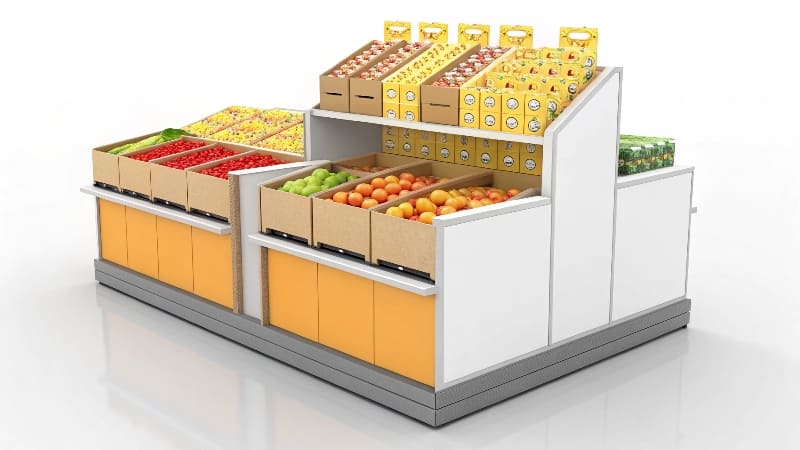
In the packaging world, I've seen brands make huge leaps just by changing how they present their products in-store. A standard brown shipping box4 gets unpacked in a back room, and your products are placed on a shelf by a store employee—if you're lucky. A counter display box, on the other hand, is your brand's ambassador. It arrives ready-to-go, ensuring your products are displayed exactly as you designed them, right where customers are making their final buying decisions. It's one of the smartest tools in retail packaging.
What is a counter packaging box?
You've been told you need a "PDQ" for your new product launch. The term is new to you, and you're worried about looking inexperienced or choosing the wrong packaging for your retail strategy5.
A counter packaging box is a "Pretty Darn Quick" (PDQ) display. It's a self-contained unit that serves as a shipping box4 and quickly converts into an open-faced tray6 to display products on a counter.
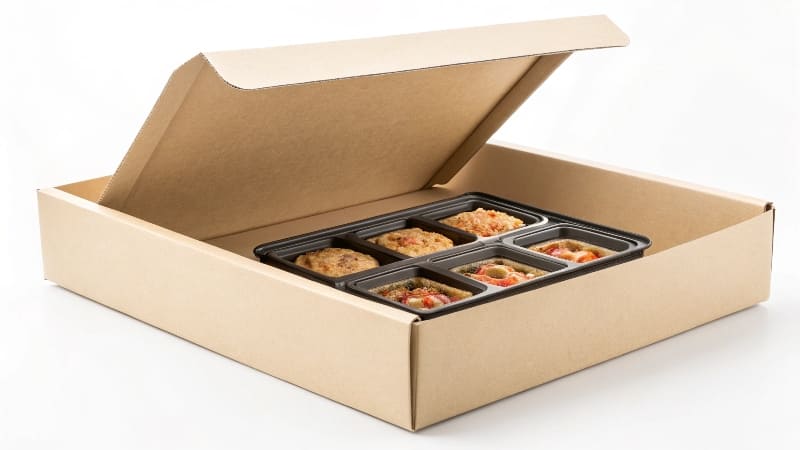
In my factory, we have a specific name for these. We usually call counter display boxes PDQ display boxes . The name "Pretty Darn Quick" comes from the ease of setup for retailers. They just tear off the perforated top and place the whole unit on the counter. It's a "set box7" . The genius of it is its dual function. It's one box that both ships and sells. A PDQ can hold multiple inner boxes8, allowing you to showcase a variety of products more directly . This system eliminates the need for retailers to handle individual items, saving them time and ensuring your products are presented beautifully and consistently every time. It’s a win for the retailer's efficiency and a big win for your brand's visibility.
What are the three types of boxes?
The packaging world seems full of jargon like primary, secondary, and tertiary. You're not sure where a display box fits, making it hard to communicate your needs clearly to a manufacturer.
The three types are Primary (the packaging touching the product), Secondary (the box that groups products, like a display box), and Tertiary (the outer case for bulk shipping).
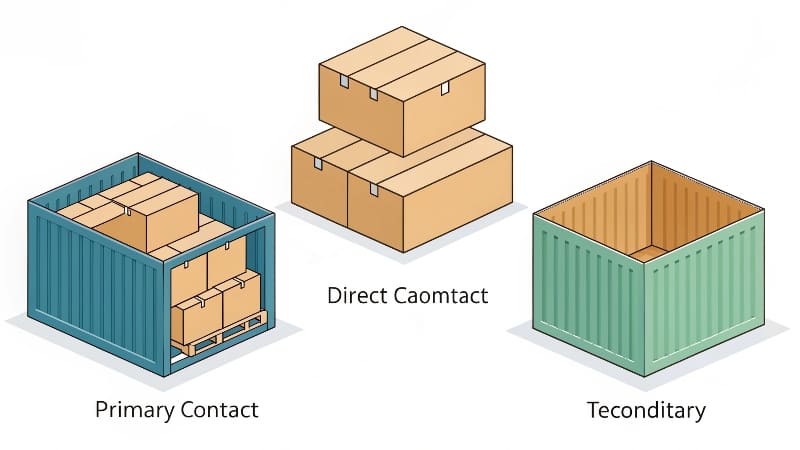
Understanding this hierarchy helped me immensely when I was learning the business. It helps you see how everything fits together, from my factory to your customer's hands. As a designer like Jacky, knowing this helps you design with the entire journey in mind.
1. Primary Packaging
This is the layer that directly contains your product. Think of the lipstick tube itself, the wrapper on a candy bar, or the bottle holding a cosmetic serum. Its main jobs are to protect the product from contamination and provide essential user information.
2. Secondary Packaging
This is where your counter display box lives. Secondary packaging groups multiple primary-packaged goods together. A PDQ box is a perfect example. Other examples include the retail box a tube of toothpaste comes in or a six-pack beer carrier. Its main job is to provide branding at the point of sale and make it easier to handle groups of products.
3. Tertiary Packaging
This is the workhorse behind the scenes. It's the large, plain brown shipping carton used to transport your secondary packages in bulk. For example, a tertiary box might hold six PDQ displays. Its only purpose is logistics: to move a large volume of products from the manufacturer to the distribution center or retail store safely and efficiently.
What are display boxes made of?
You're ready to design an eye-catching display, but you don't know what material to use. Choosing one that's too weak could lead to a collapsed display, while one that's too heavy could be expensive.
Most counter display boxes are made from corrugated cardboard9, often E-flute10 or B-flute11. This material is the perfect mix of lightweight, strong, and highly printable for vibrant graphics.
<sup id=](https://wansapackaging.com/wp-content/uploads/2025/09/what-are-display-boxes-made-of-you.jpg) 9." title="Close-up of Corrugated Cardboard Material" />
9." title="Close-up of Corrugated Cardboard Material" />
The material choice is critical. Your display box has to survive a bumpy truck ride and then look perfect for weeks on a busy retail counter. For this reason, corrugated cardboard9 is the industry standard. It’s not just any cardboard; it’s an engineered material with a layer of wavy paper (the "flute") sandwiched between two flat liners. This structure gives it impressive strength for its weight.
Common Materials for Display Boxes
| Material | Strength | Print Quality | Best Use Case |
|---|---|---|---|
| E-Flute Corrugated | Good | Excellent | Lightweight products where graphics are key. Very common for PDQs. |
| B-Flute Corrugated | Better | Good | Heavier items that need more support, like glass bottles or jars. |
| Paperboard/Cardstock | Lower | Excellent | Very small, lightweight displays or internal components. Not ideal for shipping. |
For most clients, I recommend E-flute10. It offers a smooth, premium surface that allows for beautiful, high-resolution printing, making your brand's colors and graphics pop. It's the perfect canvas to grab a customer's attention.
What are counters in visual merchandising12?
You have a great product in a display box, but where should you tell retailers to place it? You need to understand the store layout from a sales perspective to maximize your impact.
In visual merchandising12, counters are the most valuable real estate in a store. They are high-traffic "hot spots" for generating impulse buys1 as customers wait to check out and make last-minute decisions.
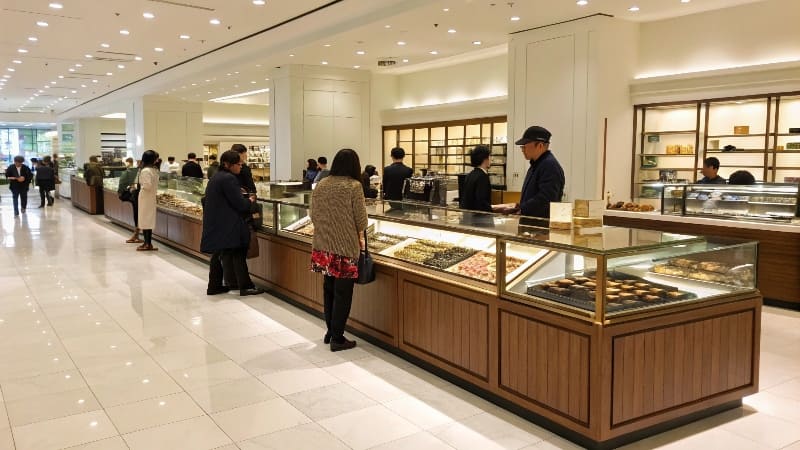
This is where your PDQ becomes a powerful sales tool. The checkout counter is where a customer’s wallet is already open. They are in a waiting mindset, and their eyes wander. Placing a well-designed display here is your chance to make one last sale. A PDQ can contain individual outer boxes, allowing you to showcase 10-20 products at once . This density is key. Furthermore, the outer PDQ allows our customers to directly purchase the set of products if they choose . This works perfectly for collectibles or items where a customer might want a variety. You're not just offering one item; you're presenting an organized, attractive collection that's easy to browse and even easier to buy. By using a PDQ, you are making a strategic move to capture the most valuable space in the entire store.
Conclusion
Counter display boxes, or PDQs, are more than containers. They are strategic tools that merge shipping logistics with powerful retail marketing, turning your package into an effective silent salesperson at the point of purchase.
Understand the concept of impulse buys and strategies to encourage them at checkout. ↩
Learn about PDQ boxes and how they serve as effective dual-purpose packaging solutions for retailers. ↩
Discover the importance of point-of-sale displays in retail and how they influence customer purchasing decisions. ↩
Find out the role of shipping boxes in product distribution and how they differ from display packaging. ↩
Discover effective retail strategies that can enhance product placement and sales. ↩
Understand the concept of open-faced trays and their benefits for product visibility in retail. ↩
Explore the advantages of set boxes and how they streamline product presentation at checkout. ↩
Learn about inner boxes and their role in organizing products within display packaging. ↩
Discover the benefits of corrugated cardboard in packaging and its suitability for display boxes. ↩
Find out why E-flute is a popular choice for display boxes and its advantages in printing. ↩
Learn about B-flute and its applications in packaging heavier items. ↩
Explore the principles of visual merchandising and how it impacts retail sales. ↩
More to read
# Which is Better for Packaging Mockups: Laser or Inkjet?
Which is Better for Packaging Mockups: Laser or Inkjet? You need to create a physical
2025 year the most welcome packaging box color trends
This year, packaging trends are making a bold statement with Radiant Red taking the limelight
5 Important Things to Consider for Luxury Products Packaging?
5 Important Things to Consider for Luxury Products Packaging? You've created a premium product, but
