

Custom Packaging Solutions
Premium quality packaging tailored to your brand. From cosmetic boxes to luxury rigid packaging, we deliver excellence since 2010.
This is the title

Hey there, I'm Mike!
Soft Touch Coating vs. Lamination: Which is Best For Your Box?
You want your packaging to feel luxurious and velvety, but you're lost in the jargon. Choosing between a "soft touch coating" and "soft touch lamination" is confusing, and picking the wrong one could mean a finished product that feels cheap or blows your budget.
The main difference is application and durability. Soft touch coating is a liquid varnish applied during printing, making it faster and cheaper. Soft touch lamination is a separate plastic film bonded to the paper, offering superior smoothness and protection.
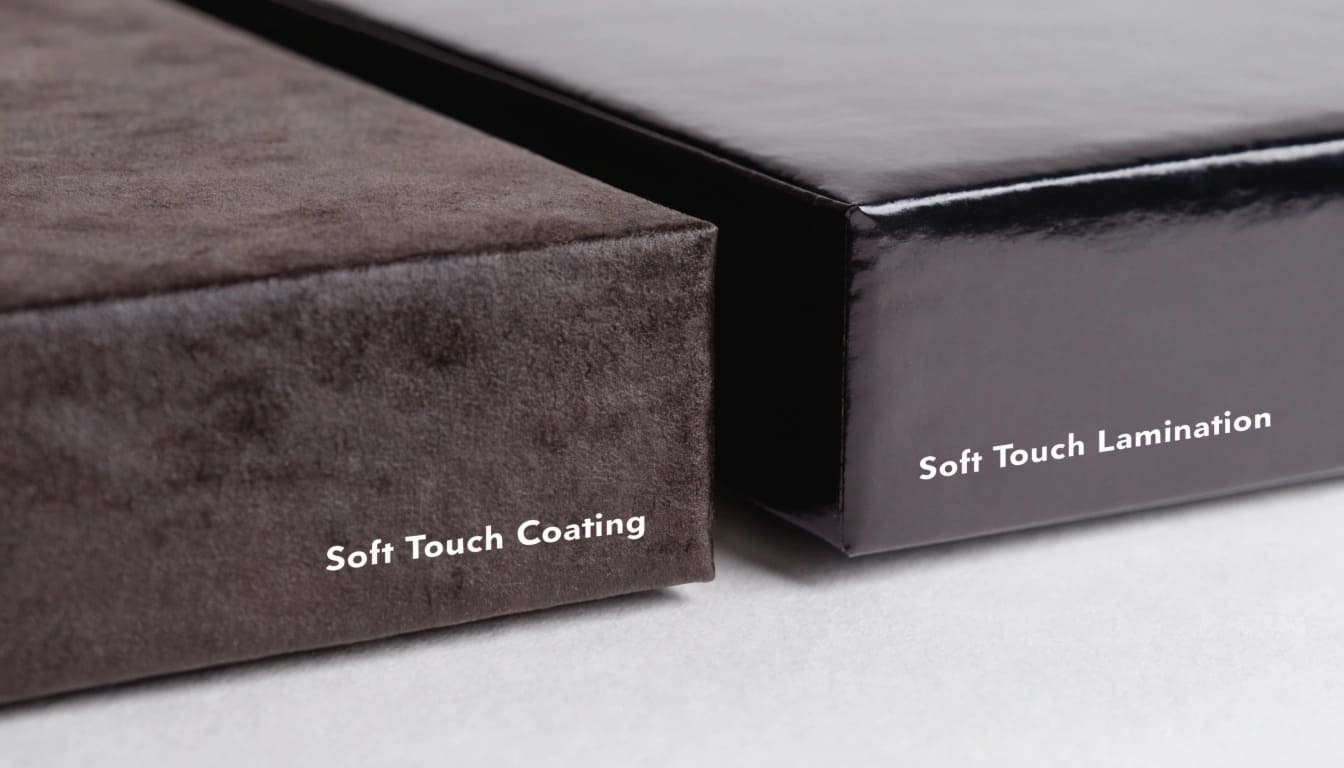
As the founder of Wansa Packaging, this is one of the most common questions I get from clients. A customer's first physical interaction with your brand is often the feel of the box. Both soft touch finishes aim to create a premium, tactile experience, but they are not the same. They have different costs, different levels of durability, and even a slightly different feel. Understanding these distinctions is key to making the right choice for your brand's image and your budget. Let's break it down so you can choose with confidence.
What is the difference between coating and lamination?
You're trying to discuss options with your printer, but the terms "coating" and "lamination" seem interchangeable. This confusion can lead to quoting errors and getting a result you didn't expect.
Coating is a liquid varnish applied directly onto the paper surface and then dried. Lamination is a separate, solid layer of plastic film that is bonded onto the paper using heat and pressure, adding significant durability.
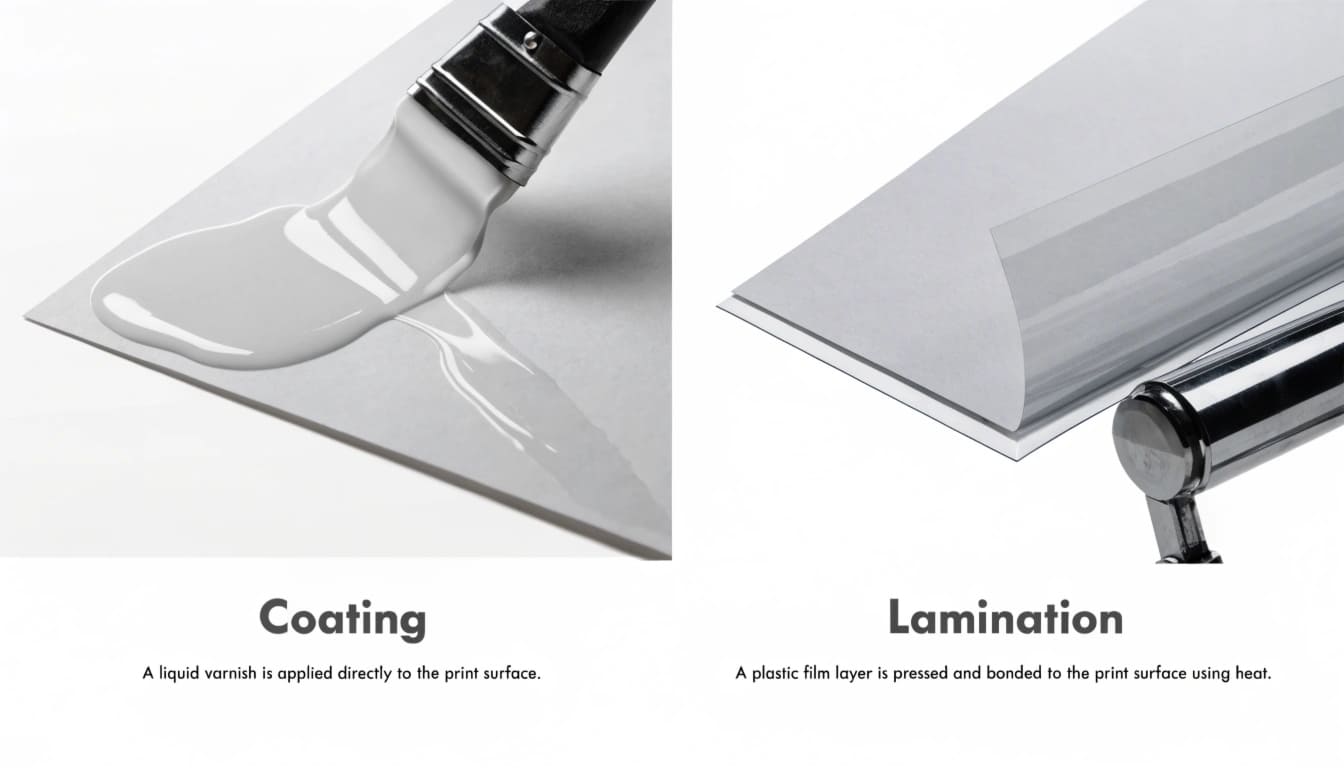
Think of it like painting a wall versus applying wallpaper. A coating is like a layer of paint—it protects the surface and changes its look, but it's very thin and conforms to the wall's texture. Lamination is like wallpaper—it's a completely separate layer that you apply on top, providing a new, durable surface and covering imperfections underneath. This fundamental difference in process is what creates the different costs, levels of protection, and best-use cases for each. For any designer, like Jacky, knowing this difference is the first step to specifying the right finish for a project.
| Feature | Coating (Aqueous/Varnish) | Lamination (Film) |
|---|---|---|
| Process | A liquid is applied on press and cured/dried. | A solid film is bonded to the paper in a separate process. |
| Protection | Protects ink from scuffing and fingerprints. | Excellent protection from scuffs, tearing, and moisture. |
| Thickness | Adds minimal thickness or weight. | Adds noticeable thickness, rigidity, and weight. |
| Cost | Generally lower, especially for high volumes. | Higher due to materials and an extra production step. |
| Best For | Brochures, inside prints, cost-sensitive projects. | Premium boxes, book covers, menus, high-wear items. |
What is soft touch coating?
You want that premium "soft touch" effect but are working with a tight budget. You're wondering if there's a more affordable way to achieve this premium texture without the high cost of lamination.
Soft touch coating is a liquid varnish that, when cured, creates a velvety, matte, and slightly rubbery texture on the paper. It is a faster and more cost-effective method to achieve a tactile feel, though it offers less durability than lamination.
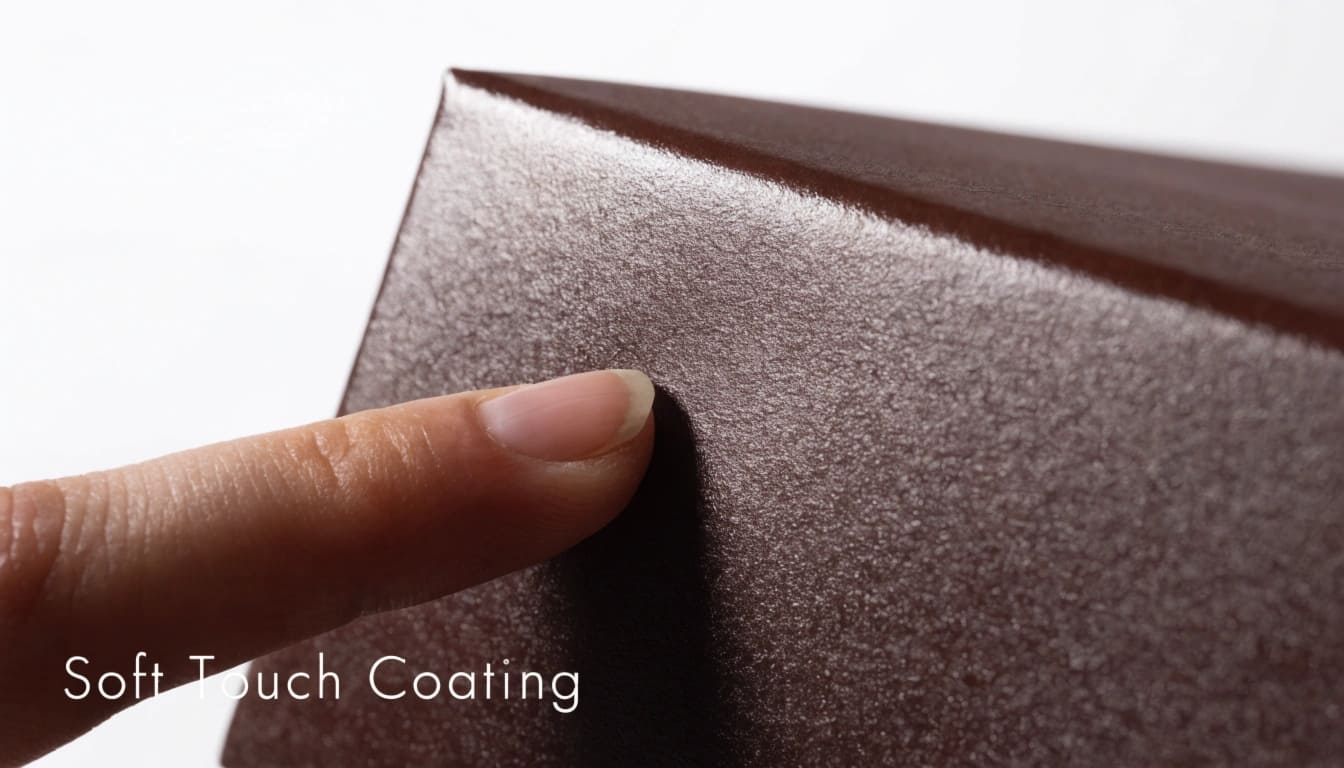
Based on my experience producing thousands of boxes, I can explain the specific feel. The surface of a soft touch coating feels slightly rougher and isn't as perfectly smooth as a soft touch laminate. However, the cost is lower, making it suitable for standard corrugated mailers and gift boxes. The tactile effect is still much better than a plain matte varnish and gives customers a unique tactile experience for the price! This finish is an excellent middle ground. It's applied in-line during the printing process, which saves time and money. While it’s not as robust against heavy wear, it provides that desirable soft, matte appearance and a distinct feel that elevates a standard box into something more special.
What is a soft touch laminate?
Your brand is positioned as a luxury, and your packaging has to reflect that. You need the absolute best, most durable, and most premium-feeling finish available, and you worry a simple coating won't be enough.
Soft touch laminate is a special type of matte plastic film that is bonded to paper stock. It gives the surface an incredibly smooth, rose-petal-like feel that is completely fingerprint-resistant while adding significant durability.
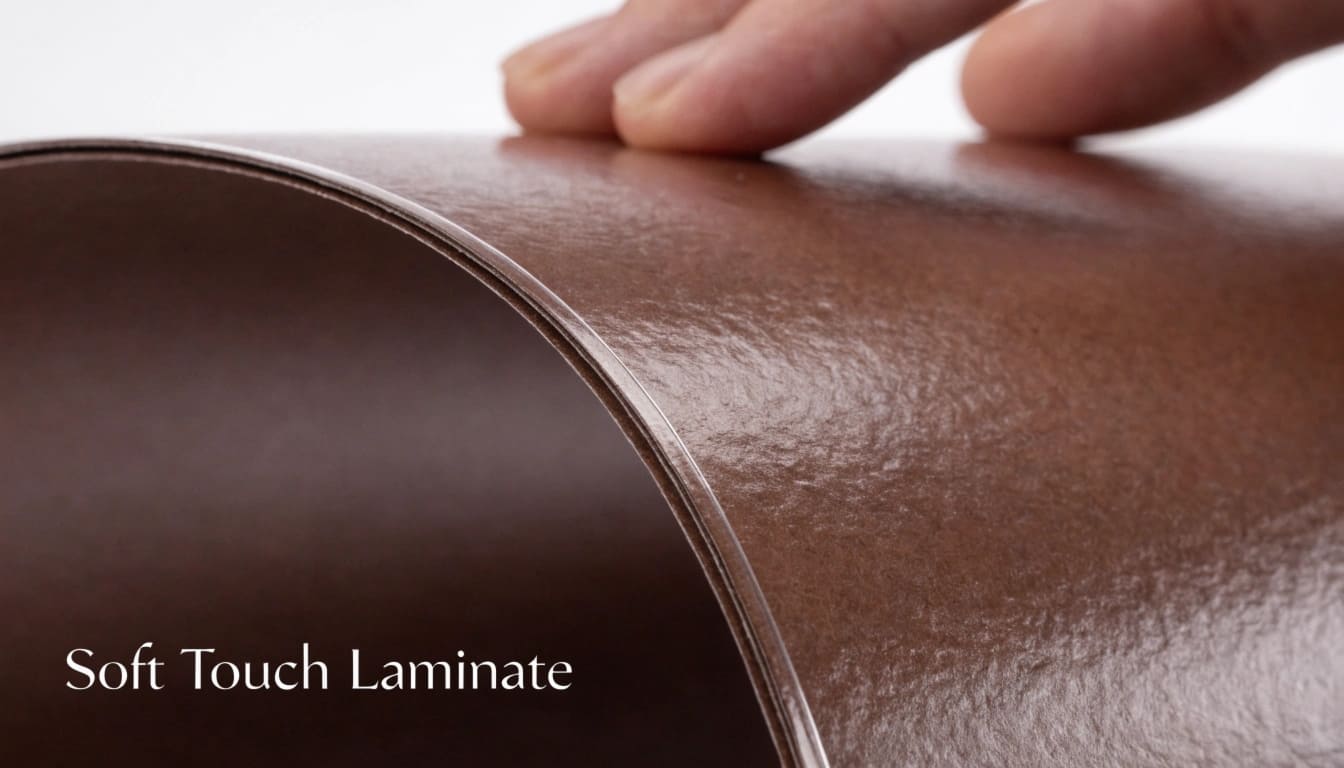
This is the top-tier choice for a tactile finish. When a client wants the ultimate premium feel, this is what I recommend. The surface of a soft touch laminate is exceptionally smooth to the touch, and the tactile effect gives a high-end feeling. It's often used for luxury cosmetic boxes and brand packaging to elevate the product's class. For example, packaging for brands like Nike and Rare Beauty uses this soft touch matte lamination The lamination process adds a protective plastic layer, making the box much more resistant to tearing, moisture, and scuffs. The feel is unmistakable—it's a deep, rich smoothness that you can't get from a liquid coating. It instantly signals quality and luxury.
What is the difference between soft touch coating and soft touch laminate?
You know both options provide a soft feel, but you need to make a final decision. You must weigh the subtle differences in texture, durability, and cost to see which one truly fits your project.
Soft touch lamination is a film that provides a smoother, more durable, and more luxurious feel, but at a higher cost. Soft touch coating is a liquid varnish that is cheaper and faster but offers less protection and a slightly rougher texture.
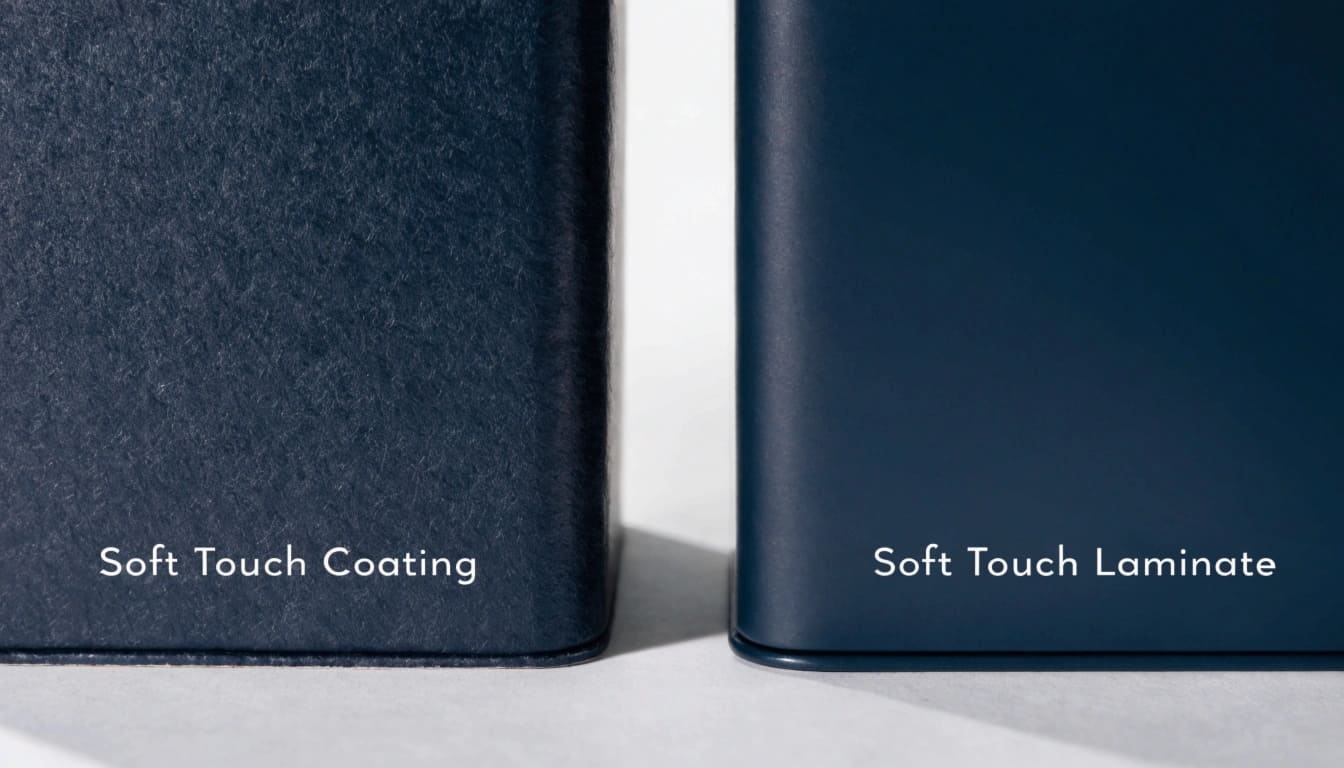
This is the final comparison I walk my clients through. The choice really comes down to three things: budget, brand perception, and the product's journey. A high-end cosmetic box that sits on a shelf at Sephora needs the perfect, durable finish of lamination. An e-commerce shipper for a subscription box, which needs to feel special but also be cost-effective at high volumes, is a great candidate for soft touch coating. One is not universally "better" than the other; they are tools for different jobs. Understanding your specific needs is what allows you to choose the right tool to create that perfect first impression with your customer. Both are great options, but they serve different strategic purposes.
Conclusion
Choosing between soft touch coating and lamination depends on your priority: cost-effectiveness and speed (coating) versus ultimate durability and the most luxurious feel (lamination). Both can elevate your packaging's tactile experience.
More to read
# Which is Better for Packaging Mockups: Laser or Inkjet?
Which is Better for Packaging Mockups: Laser or Inkjet? You need to create a physical
2025 year the most welcome packaging box color trends
This year, packaging trends are making a bold statement with Radiant Red taking the limelight
5 Important Things to Consider for Luxury Products Packaging?
5 Important Things to Consider for Luxury Products Packaging? You've created a premium product, but