

Custom Packaging Solutions
Premium quality packaging tailored to your brand. From cosmetic boxes to luxury rigid packaging, we deliver excellence since 2010.
This is the title

Hey there, I'm Mike!
How to Ship Large Items Safely and Affordably?
Shipping large items is a headache. You worry about your product getting damaged in transit, and the shocking shipping costs1 can destroy your profit margins with a single invoice.
Ship large items affordably and safely by using a custom-sized corrugated box2 to minimize dimensional weight3, securing the item with proper internal cushioning, and comparing rates between ground shipping4 and LTL freight5.
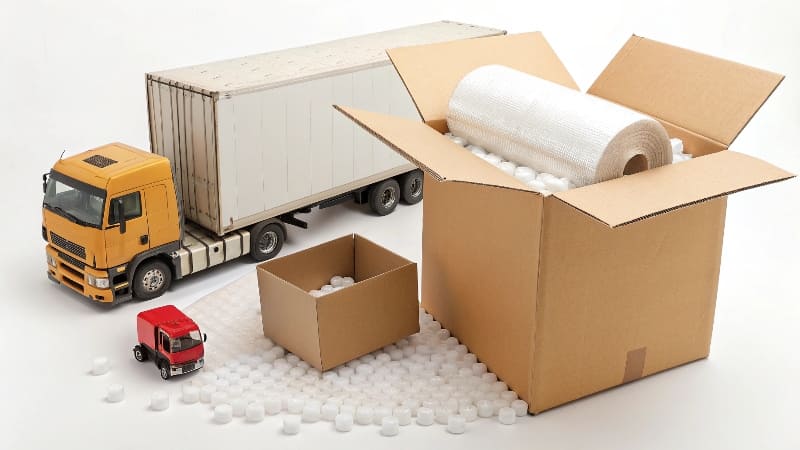
I’ve seen clients spend a fortune on amazing products, only to lose money because of their shipping strategy. They use oversized stock boxes filled with packing peanuts, which is both unsafe and incredibly expensive. The solution is to think about shipping before the product is ready to go out the door. By integrating smart packaging design from the start, you can protect your product and your bottom line. It's about combining your knowledge of the product with a manufacturer's knowledge of materials and logistics.
What is the least expensive way to ship a large package?
You just calculated the shipping cost for your new product. The price is so high that it makes your product completely uncompetitive in the market, putting your launch in jeopardy.
The cheapest way is to minimize "dimensional weight3." Use the smallest possible custom box that still protects your item, and compare prices for ground services from carriers like UPS, FedEx, or USPS.
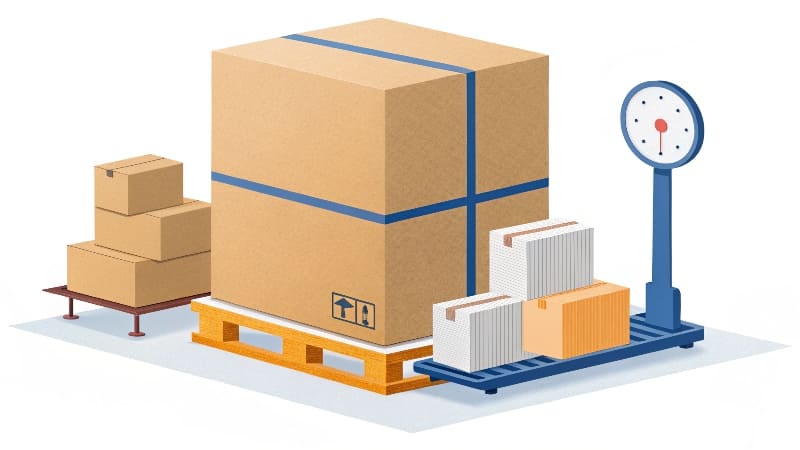
Shipping carriers charge for the space a box takes up on their truck, not just its actual weight. This is called dimensional weight3. As a packaging manufacturer, my number one piece of advice is that we can customize the outer box packaging to save costs. Using a stock box that's too big is like paying for air. Even a few inches of empty space can dramatically increase your shipping costs1 on every single unit you send.
Let’s look at an example. Imagine your product is 15" x 9" x 9".
| Box Type | Dimensions (L x W x H) | Dimensional Weight* | Result |
|---|---|---|---|
| Stock Box | 16" x 10" x 10" | 12 lbs | You pay for 12 lbs of weight, even if the item is lighter. |
| Custom Box | 15.5" x 9.5" x 9.5" | 10 lbs | You save money on every single shipment. |
Calculated with a standard DIM divisor of 139.
By creating a box that fits your product perfectly, you reduce its dimensional weight3. Over hundreds or thousands of shipments, this simple change can save you a fortune.
What is the safest way to ship expensive items?
You're about to ship a high-value item. The fear of it arriving broken, resulting in a total loss and a very angry customer, is keeping you up at night.
The safest way is to use a double-boxing method6. Place your product in a custom-fit inner box7 with foam cushioning, then put that inside a slightly larger, sturdy shipping box.
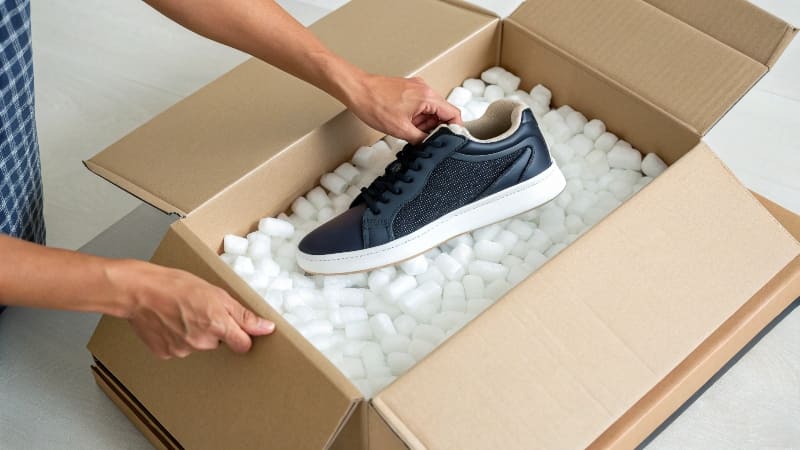
When safety is the top priority, you need to create a system of layers. Don't just rely on a single box. The goal is to build a protective shell around your valuable item. For designers like Jacky who are shipping expensive prototypes or high-end products, I always recommend a "box-in-a-box" approach. Inside the main shipping box, the product should be completely immobilized. Custom-cut foam inserts are the gold standard here because they prevent any movement. Loose fills like peanuts allow the item to shift, increasing the risk of damage.
Finally, secure the box itself. Use a strong, pressure-sensitive packing tape8 and apply it using the "H-tape method"—taping down the center seam and then across both edge seams. This makes the box stronger and helps prevent it from breaking open. For larger business-to-business shipments, the ultimate safety measure is to stack the cartons on a pallet. We always remind clients that we can palletize the cartons9 to ensure their safety , which protects them during freight transit.
What is the cheapest way to transport large items?
You need to move something really big, like furniture or equipment. It's too large for standard carriers like UPS, and you're worried that freight shipping will be incredibly complicated and expensive.
For items too big for parcel services, the cheapest method is usually Less-Than-Truckload (LTL) freight. This is where you pay for a portion of the space on a large truck trailer.
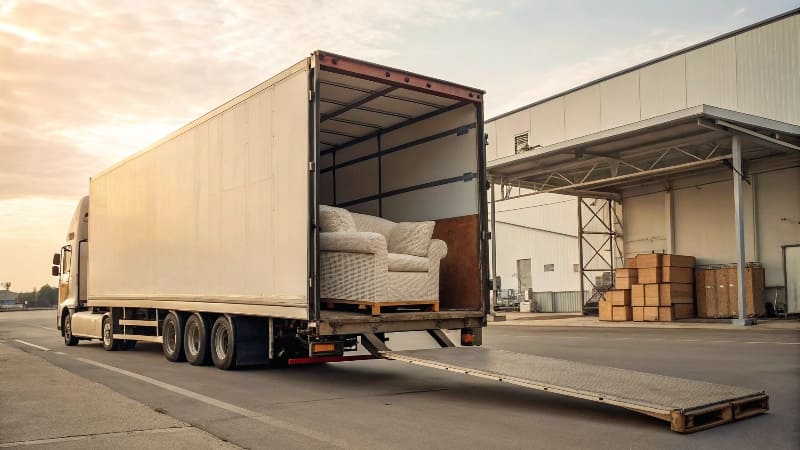
Think of LTL freight5 as carpooling for your cargo. You have an item that needs to go from City A to City B, and so do many other people. A freight company fills one large truck with everyone's shipments, and you each pay for the space your item uses. This is far cheaper than hiring an entire truck for yourself. To do this properly, your item must be secured to a pallet. This is fundamental for safety and handling in the freight system. As I often tell my clients, the first step is to palletize the boxes to keep them secure. It makes them easy to move with a forklift and protects them from damage.
| Shipping Method | Best For | Cost Basis |
|---|---|---|
| Parcel (UPS/FedEx) | Individual boxes under 150 lbs. | Based on weight and dimensional weight3. |
| LTL Freight | Items over 150 lbs, or multiple boxes. | Based on "Freight Class," weight, and space. |
To get started with LTL, you'll need the dimensions and weight of your palletized item. Then, you can get quotes from freight brokers10 online.
How to ship a really large item?
You're faced with shipping a single, very large object, like a piece of machinery or a trade show display. The sheer size is intimidating, and you have no idea where to begin.
First, secure the item to a pallet or build a wooden crate around it. Next, get multiple LTL freight5 quotes from freight brokers10. Finally, schedule the pickup and prepare your shipping documents11.
Shipping a massive item is a logistics project, but it can be broken down into simple, manageable steps. Don't let the size scare you; the process is very straightforward once you know it.
Step 1: Crate or Palletize
For ultimate protection, a custom-built wooden crate12 is the best option. For most large items, securing them to a standard pallet is sufficient. Use strong nylon straps13 or banding to hold the item firmly in place on the pallet, then wrap the entire thing tightly with stretch wrap.
Step 2: Measure and Weigh
Once the item is fully packed on its pallet or in its crate, get the final, exact dimensions (Length, Width, Height) and the total weight. Accuracy is critical here, as your shipping cost will be based on these numbers.
Step 3: Get LTL Freight Quotes
Contact a few freight brokers10 online. They are like travel agents for shipping. You give them the origin, destination, dimensions, and weight, and they provide quotes from several different freight carriers. This lets you compare prices and transit times easily.
Step 4: Schedule and Prepare
Once you choose a carrier, you'll schedule a pickup. The carrier will provide a document called a Bill of Lading (BOL)14. This is the master contract for your shipment. Print it, attach it to your crate or pallet, and make sure your pickup location is accessible for a large truck.
Conclusion
Shipping large items effectively comes down to two things: smart packaging to control costs and robust preparation to ensure safety. By using custom boxes and understanding freight options, you can ship anything securely.
Find effective strategies to minimize shipping costs while ensuring safe delivery. ↩
Explore how custom-sized boxes can minimize shipping costs and protect your items during transit. ↩
Understanding dimensional weight can help you save significantly on shipping costs. ↩
Learn about the advantages of ground shipping and how it can be cost-effective for large packages. ↩
Discover how Less-Than-Truckload (LTL) freight can save you money on shipping large items. ↩
Find out how the double-boxing method can enhance the safety of your high-value shipments. ↩
Learn how custom-fit inner boxes can provide better protection for fragile items during shipping. ↩
Explore the benefits of using pressure-sensitive packing tape for securing packages. ↩
Understand the importance of palletizing cartons for safe and efficient freight transport. ↩
Learn how freight brokers can help you find the best shipping rates and options. ↩
Discover the essential shipping documents needed for a smooth freight shipping process. ↩
Explore how custom-built wooden crates can provide superior protection for large items. ↩
Learn about the role of strong nylon straps in securing items for safe transport. ↩
Understand the significance of the Bill of Lading in the shipping process and its role in logistics. ↩
More to read
# Which is Better for Packaging Mockups: Laser or Inkjet?
Which is Better for Packaging Mockups: Laser or Inkjet? You need to create a physical
2025 year the most welcome packaging box color trends
This year, packaging trends are making a bold statement with Radiant Red taking the limelight
5 Important Things to Consider for Luxury Products Packaging?
5 Important Things to Consider for Luxury Products Packaging? You've created a premium product, but