

Custom Packaging Solutions
Premium quality packaging tailored to your brand. From cosmetic boxes to luxury rigid packaging, we deliver excellence since 2010.
This is the title

Hey there, I'm Mike!
How to make awesome custom packaging1 boxes?
You have a fantastic product, but your packaging is bland and forgettable. It fails to stand out on the shelf, leaving customers unimpressed and costing you valuable sales.
To make awesome custom packaging1, you need a smart structural design2, compelling graphics, and special finishes. Focus on creating a memorable unboxing experience3 that communicates quality and tells your brand's story effectively.
<sup id=](https://wansapackaging.com/wp-content/uploads/2025/10/how-to-make-awesome-custom-packaging-.jpg) 1 boxes in various shapes and sizes." title="Awesome Custom Packaging Boxes" />
1 boxes in various shapes and sizes." title="Awesome Custom Packaging Boxes" />
As the founder of Wansa Packaging, I have seen millions of boxes go from an idea to a finished product. I've learned that an "awesome" box is more than just a pretty design. It's the perfect combination of solid structure, a great user experience4, and a powerful brand message. It’s a silent salesperson for your product. The journey to creating that perfect box involves understanding the basics, getting creative, and making smart choices to build something that feels truly special. Let's explore how you can do that.
How to make your own packaging box?
You need a box prototype5 for a presentation right now. But your handmade attempts look unprofessional and flimsy, failing to do your incredible design idea justice.
To make your own box, draw the unfolded shape (a "net") on cardstock. Add small tabs for gluing. Use a craft knife to cut it out, score the fold lines with a ruler for clean creases, then fold and glue it together.
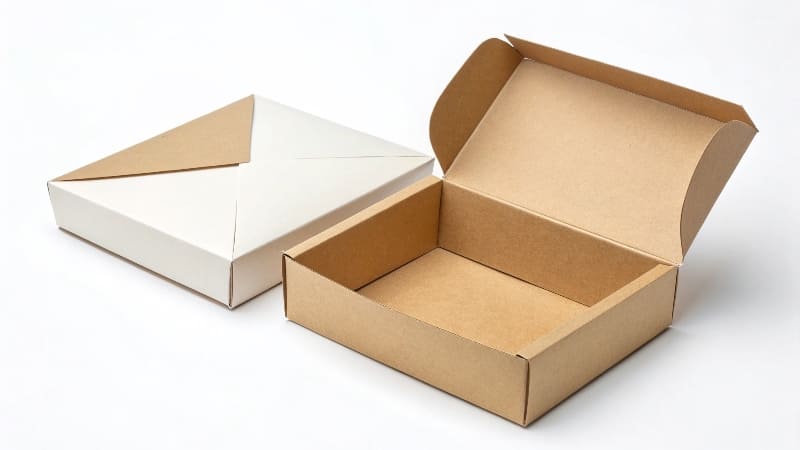
Creating a physical mock-up is a critical step for any designer like Jacky. It's the best way to get a real-world feel for the size and proportions of your packaging before you commit to a huge and expensive production run. This DIY method is perfect for creating a sample for internal review, a photoshoot, or just to test how your product fits. It’s all about creating a tangible version of your idea.
Three Steps to a Simple Prototype
- Draft Your Dieline: This is the technical term for the box's flat, unfolded pattern. For a simple cube, this looks like a cross made of six squares. Draw this shape carefully on your cardstock using a pencil and ruler. Don't forget to add small, angled tabs to the edges that will be glued inside.
- Cut and Score: This step requires precision. Use a sharp craft knife and a metal ruler to cut out the entire shape. Then, score the fold lines. This means lightly pressing a dull edge (like the back of your knife blade or an empty ballpoint pen) along the fold lines. Scoring creates a clean crease and prevents the cardboard from cracking.
- Fold and Assemble: Carefully fold along all your scored lines to form the box shape. Apply a thin line of strong craft glue to the tabs you created. Tuck the tabs inside the box and press the seams together firmly until the glue sets.
How to make an interesting packaging?
Your box is just a container; it's totally forgettable. On a crowded shelf, your product is practically invisible because its packaging fails to grab attention or tell a compelling story.
Make packaging interesting with unique structures, like rigid boxes or cylinders. Use graphics to tell a story and create an interactive unboxing experience6 with special finishes, inserts, or a surprising reveal inside.
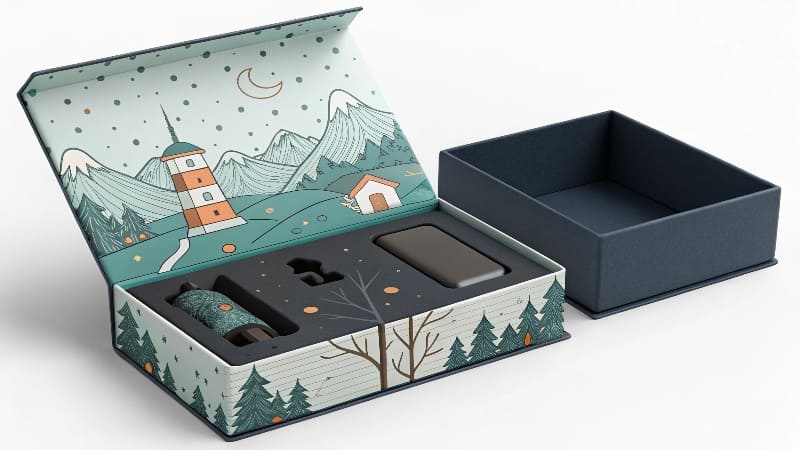
An interesting package engages more than just the eyes. It should be a tactile and emotional experience. The goal is to make the customer feel excited from the moment they pick it up. The best way to do this is to add layers of detail. To make the packaging more eye-catching, we can add other surface treatments besides just printing. Finishes like hot stamping or spot UV7 make the box look and feel completely different! .
Beyond the Standard Box
Think outside the simple folding carton. Consider a structure that tells a story about your product.
- Mailer Boxes: Perfect for e-commerce, you can print on the inside for a "ta-da!" moment when the customer opens it.
- Rigid Boxes: These heavy, substantial boxes signal luxury and are an experience in themselves.
- Sleeves: A printed paper sleeve can add a layer of branding and information to a simpler box, creating a reveal.
Finishes That Add Interest
The texture of a box can make a huge impact. It’s the difference between a standard product and a luxury gift.
| Finish | Effect |
|---|---|
| Hot Foil Stamping | Adds a metallic, reflective shine (gold, silver, copper) for a touch of luxury. |
| Spot UV | Applies a high-gloss coating to specific areas (like a logo) to make it pop. |
| Embossing/Debossing | Creates a raised (emboss) or indented (deboss) texture that customers can feel. |
What is the strongest cardboard box design?
Your products are arriving damaged, leading to unhappy customers. You're losing money on returns because your current boxes simply aren't strong enough to survive shipping.
For shipping, a mailer box made from corrugated cardboard8 is one of the strongest designs. Its double-layered walls and interlocking tabs create a crush-resistant structure that protects products during transit.
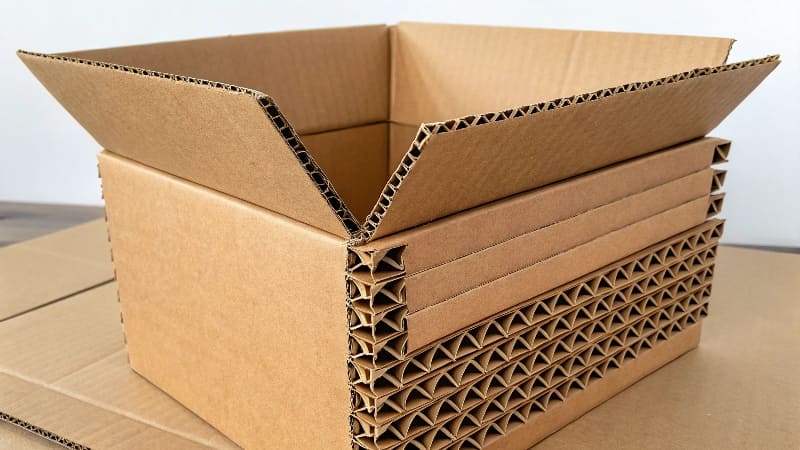
When it comes to strength, not all cardboard is created equal. I’ve seen firsthand how choosing the right material and structure can prevent costly shipping disasters. The strength comes from two key elements: the material itself and the engineering of the box design. For any product that will be shipped directly to a customer, you cannot use a simple folding carton. You need the built-in protection of corrugated cardboard8.
The Material: Corrugated Board
The secret to corrugated cardboard8's strength is its construction. It consists of three layers of paper: an inside liner, an outside liner, and a wavy, fluted layer sandwiched between them called the "flute." This fluted layer acts like a series of arches, providing amazing cushioning against impacts and resistance to crushing.
The Structure: The Mailer Box
The most popular style for e-commerce is technically called a Roll-End Tuck-Front (RETF) box. When assembled, its design creates double or even triple layers of corrugated board on the front and sides. This makes the box incredibly rigid and difficult to crush, ensuring the contents inside are well-protected from the bumps and drops of the shipping journey. It’s the standard for subscription boxes and e-commerce brands for a reason: it works.
How to make packaging look expensive?
Your product is high-quality, but its packaging looks cheap. This creates a disconnect that devalues your brand and makes it difficult to justify a premium price to your customers.
To make packaging look expensive, use thick, high-quality materials, elegant finishes like matte lamination and hot foil stamping9, and a clean, minimalist design10 with precise, sharp edges.
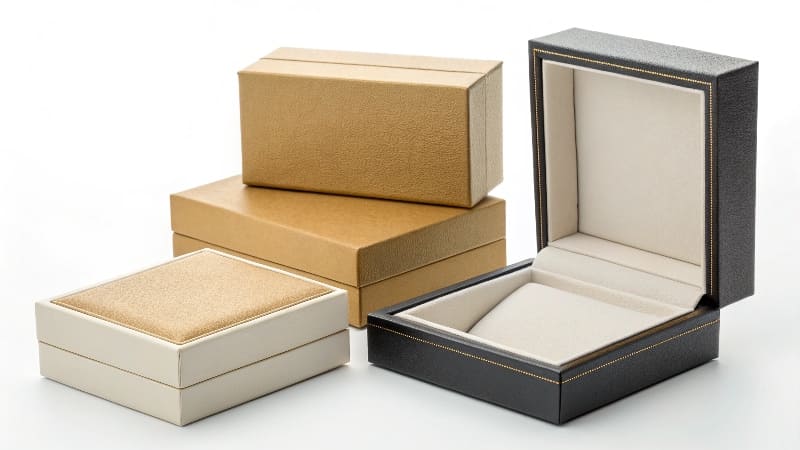
Creating a premium look is all about perception. It's about signaling quality through subtle cues. You don't always need to spend a fortune to achieve a high-end feel. Smart design choices can make a huge difference. Based on your own budget, you can choose a suitable gift box. You can then print your company's logo and brand message on the outer box to build your brand identity11 . It's about investing in the right details.
Premium Cues and Finishes
An expensive look often comes from combining a few key elements. A thick, heavy paper stock immediately feels more substantial and valuable. Pairing it with a sophisticated finish creates a powerful one-two punch.
| Technique | Why it Looks Expensive |
|---|---|
| Rigid Box Construction | The heavy, non-collapsible structure feels permanent and valuable, like a jewelry box. |
| Hot Foil Stamping | A touch of gold, silver, or copper foil adds a classic, luxurious metallic element. |
| Matte Lamination | A smooth, non-glare finish looks modern, sophisticated, and feels soft to the touch. |
| Minimalist Graphics | Lots of empty "white space" and simple typography suggests confidence and elegance. |
A great supplier can help you achieve this look within your budget. For example, instead of a fully custom rigid box, you might use a high-quality folding carton with a soft-touch matte finish and a small, embossed logo. This smart combination can deliver that premium feel for a fraction of the cost.
Conclusion
Making awesome custom packaging1 is about making smart, deliberate choices. Combine a strong structure, interesting design, and elegant finishes to create a box that protects your product and powerfully builds your brand.
Explore this resource to learn effective strategies for designing custom packaging that stands out. ↩
Understanding structural design can enhance your packaging's functionality and appeal. ↩
Discover tips on creating an unboxing experience that delights customers and boosts brand loyalty. ↩
Understand the connection between packaging design and customer satisfaction. ↩
Learn the steps to create a professional box prototype that accurately represents your design. ↩
Discover innovative ideas for making your unboxing experience engaging and memorable. ↩
Discover how spot UV can enhance specific areas of your packaging for a striking effect. ↩
Find out why corrugated cardboard is a top choice for durable and protective packaging. ↩
Learn how hot foil stamping can elevate your packaging's visual appeal and luxury feel. ↩
Learn how minimalist design can create a sophisticated and elegant packaging look. ↩
Discover how effective packaging design can communicate your brand's message and values. ↩
More to read
# Which is Better for Packaging Mockups: Laser or Inkjet?
Which is Better for Packaging Mockups: Laser or Inkjet? You need to create a physical
2025 year the most welcome packaging box color trends
This year, packaging trends are making a bold statement with Radiant Red taking the limelight
5 Important Things to Consider for Luxury Products Packaging?
5 Important Things to Consider for Luxury Products Packaging? You've created a premium product, but