

Custom Packaging Solutions
Premium quality packaging tailored to your brand. From cosmetic boxes to luxury rigid packaging, we deliver excellence since 2010.
This is the title

Hey there, I'm Mike!
How Do You Get Custom Packaging for a Small Business?
You run a small business with an amazing product. But you're shipping it in generic, off-the-shelf boxes that scream "amateur," making your brand look smaller and less professional than it is.
Getting custom packaging involves defining your needs, setting a realistic budget, creating a print-ready design, and finding a manufacturing partner who can turn your vision into a physical box. It's a clear process, not a guarded secret.
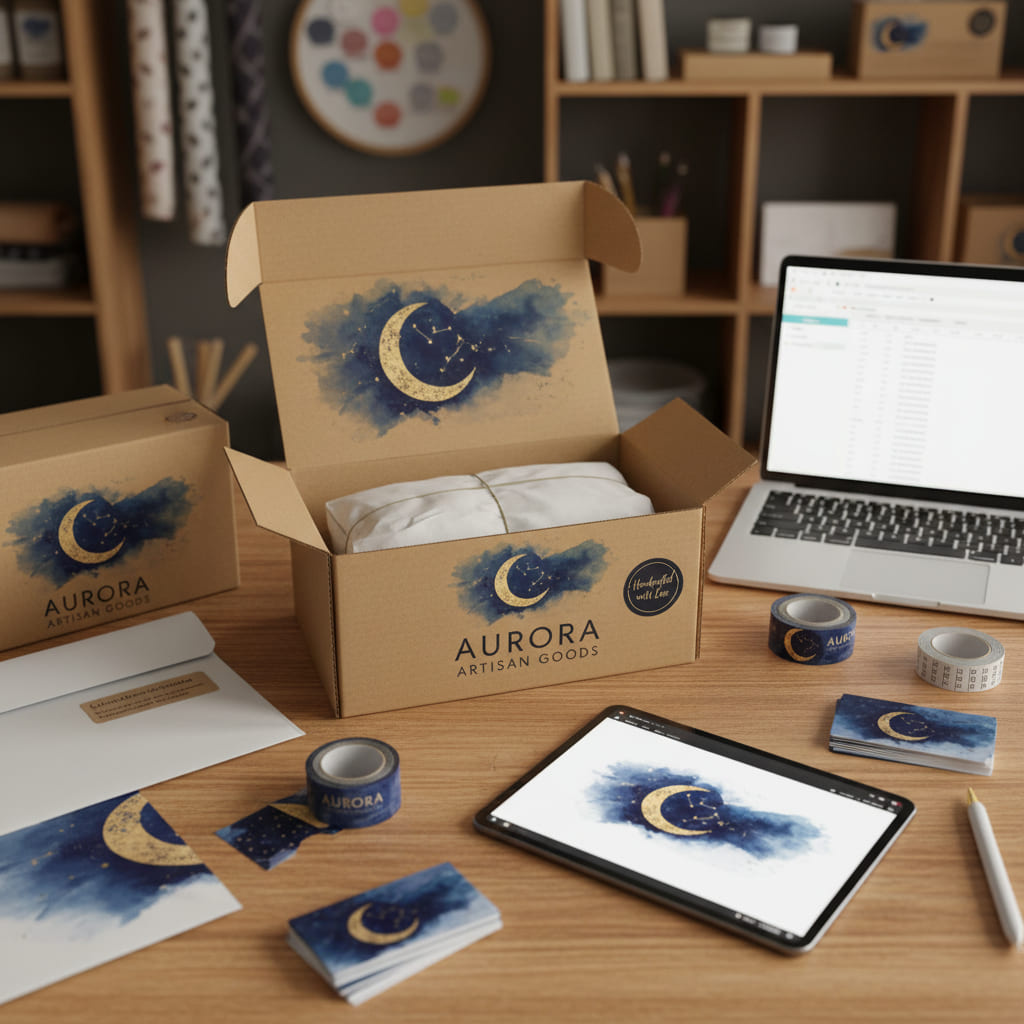
I've talked to hundreds of small business owners. They all have this idea that custom packaging is some complex, Mount Everest-level challenge reserved for huge corporations. It's just not true. I started my own journey in this industry as an employee, and I've seen firsthand how a small, strategic investment in good packaging can totally transform a business. My goal is to demystify this process for you. With the right plan, anyone can have packaging that makes their product shine. Let's walk through the steps together.
What are the 7 basic steps to packaging design?
The idea of designing a box from scratch feels overwhelming. You don’t know where to start, what to do first, and you are afraid of making a costly mistake that you can't undo.
The process follows a logical sequence: Define needs, understand your brand, choose a style, design the graphics, create a dieline, find a manufacturer, and approve a final sample before the full production run.
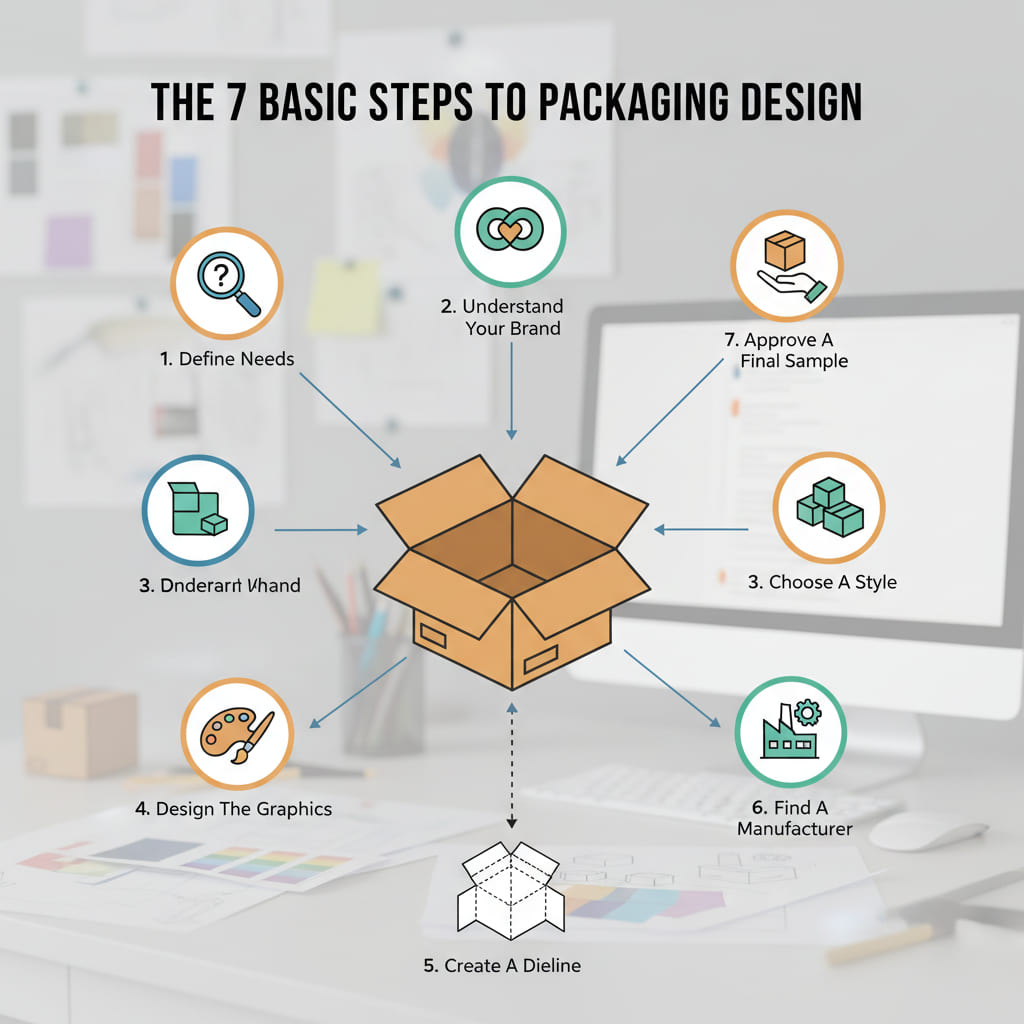
Breaking it down makes everything more manageable. A professional designer like Jacky would follow these steps, and you should too, even if you’re doing it yourself or with a freelancer. Think of it as a checklist to ensure you don't miss anything critical. Each step builds on the last, moving you from a vague idea to a real, physical box. This methodical approach removes the guesswork and gives you the confidence to move forward.
| Step | Action You Need to Take |
|---|---|
| 1. Define Requirements | Measure your product's size and weight. Decide how many you'll ship in a single box. |
| 2. Set Your Budget | Determine how much you can afford to spend per box. This will guide all other decisions. |
| 3. Know Your Brand | What is your brand's personality? Eco-friendly? Luxurious? Fun? Your box must reflect this. |
| 4. Choose a Box Style | Mailer box? Folding carton? Rigid box? Pick a style that fits your product and brand. |
| 5. Create the Design | Develop the graphics, colors, and text that will go on the box. Use a vector format! |
| 6. Get a Dieline | Your manufacturer will provide this template to ensure your design fits the box perfectly. |
| 7. Approve a Sample | Always, always get a physical sample to test before you order thousands. |
How do you package items for a small business?
As a small business, you believe you're stuck between two bad options: boring, generic boxes or expensive packaging that will destroy your profit margins. This leaves you feeling defeated.
Start smart and simple. Focus on cost-effective styles like folding cartons or custom mailer boxes. Use strong graphic design on a simple structure to create a professional look without a premium price tag.
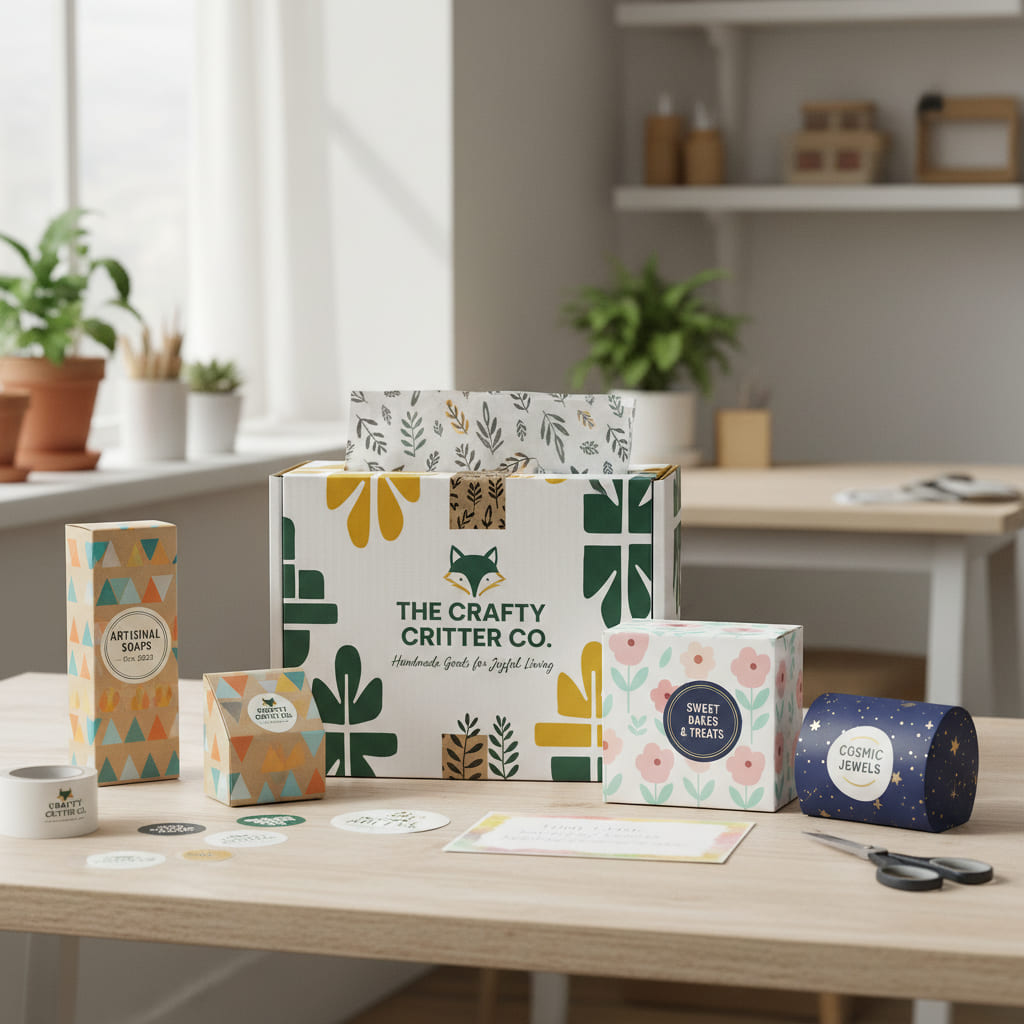
This is where small businesses can be really clever. You don't need a complex, multi-part magnetic box to look good. Common packaging includes kraft paper bags and regular paper bags. Expensive packaging includes premium gift boxes. For box design, we can use rich colors and special box designs to attract customers' eyes. The key is to pick the right tool for the job. Often, a beautifully printed mailer box or a custom-stamped paper bag delivers a fantastic experience at a fraction of the cost of a rigid box. Considering cost, we can choose regular paper bags, tuck-end boxes, and top-and-base boxes as simple packaging designs. . These styles are efficient to produce, which means they are friendly to a small business budget.
What are the 5 requirements of packaging?
You’ve spent all your time making the box look pretty. But when your first customers get their orders, the boxes are crushed and the products inside are broken, leading to angry emails and costly returns.
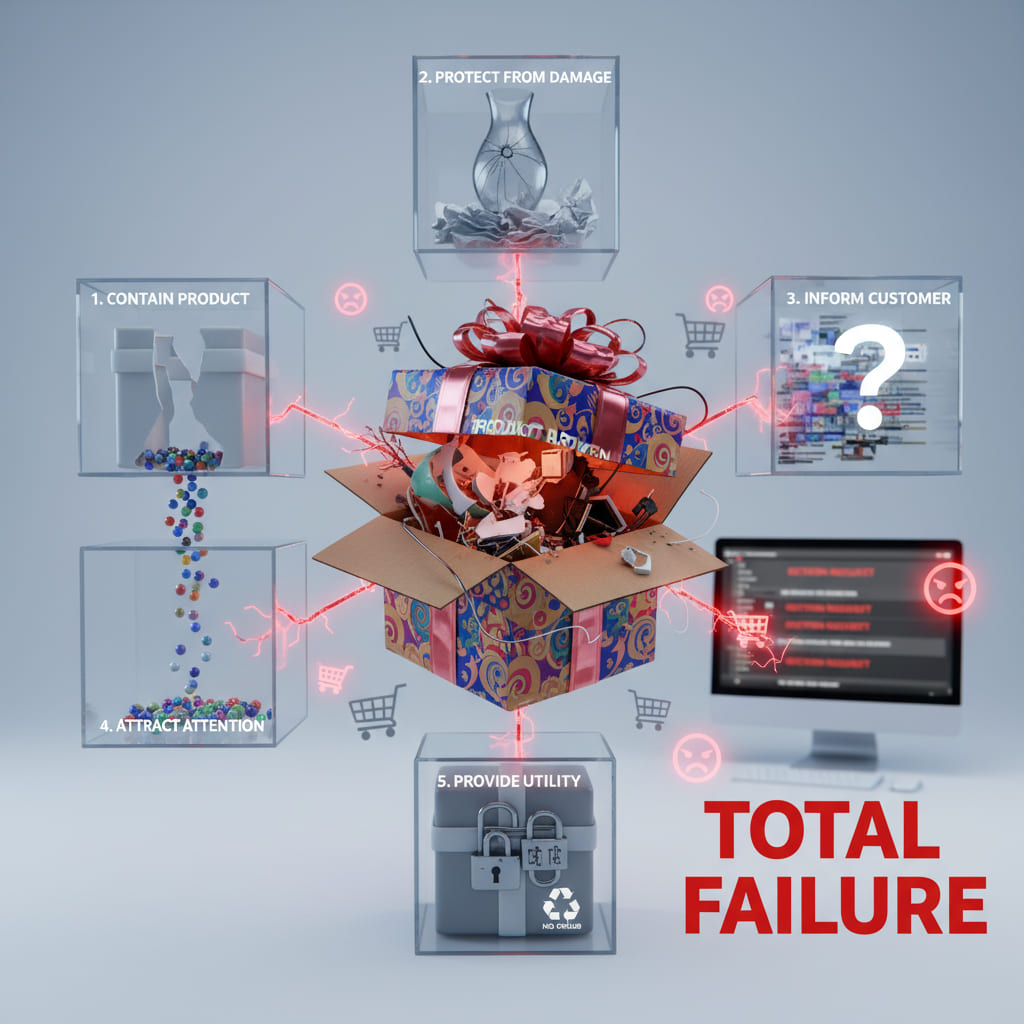
Great packaging must do five things: contain the product, protect it from damage, inform the customer, attract their attention, and provide utility in opening and disposal. A failure in any one area is a total failure.
I can’t stress this enough: a beautiful box that fails to protect the product is just expensive trash. As a mold and packaging enthusiast, I know that function must come first. A professional packaging designer understands that aesthetics are important, but they work within the frame of these five essential requirements. For your small business, getting this right means happier customers and a stronger bottom line. Think of these as a non-negotiable checklist for your packaging project.
- Containment: The box must be the right size and shape to hold your product without it sliding around.
- Protection: It must be strong enough to survive shipping and handling. This might mean choosing a thicker cardboard or adding an insert.
- Information: It must clearly display your brand name, product name, and any legally required information (like ingredients or warnings).
- Attraction: This is the look and feel. It should grab a customer's eye and communicate your brand's quality.
- Utility: Can a customer open it easily without needing tools? Is it easy to break down for recycling? A frustrating experience taints the entire brand.
How much does it cost to get custom packaging made?
You're afraid to even ask for a quote because you think it will be too high. This fear prevents you from taking the first step, keeping your business stuck with generic, unprofessional packaging.
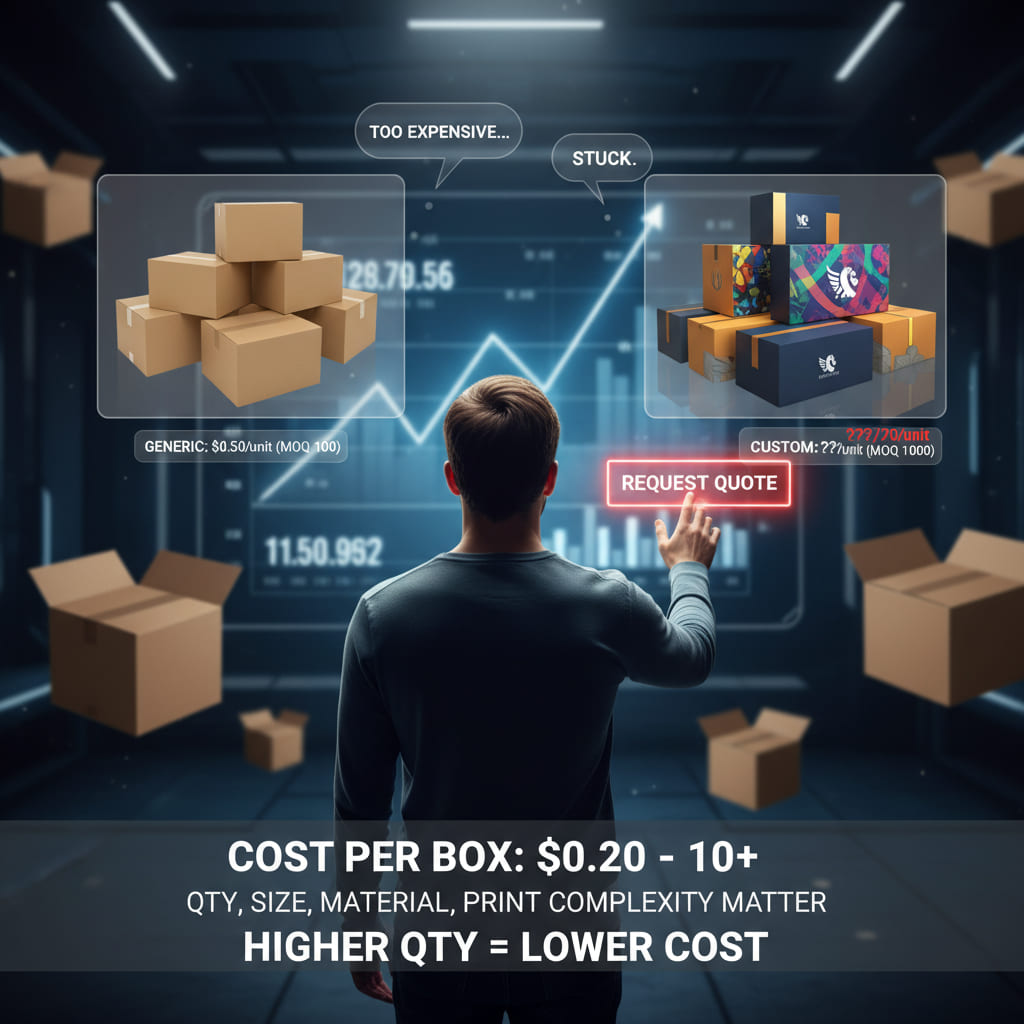
The cost per box is driven by quantity, size, material, and print complexity, ranging from under $1 to over $10. The most powerful way to lower the cost is to order a larger quantity.
This is the most common question, and the answer is always "it depends." But let's make it more concrete. The purpose of custom packaging is to sell the product better. Starting from cost and packaging concepts, we should choose low-cost yet good-looking boxes to drive sales. To get a real quote, you need to know the specifications. The manufacturer needs to know what they are quoting. Here are the key levers that control the cost.
| Cost Driver | How it Impacts Price | Tip for Small Businesses |
|---|---|---|
| Quantity | The #1 factor. Ordering 5,000 boxes is far cheaper per box than ordering 500. | Start with the Minimum Order Quantity (MOQ), but ask for quotes at higher tiers to see the savings. |
| Size & Weight | Larger, heavier boxes use more material and cost more to ship. | Design the box to be as small and light as functionally possible. |
| Material | Thicker corrugated cardboard or premium paper stocks cost more. | Start with a standard material. A great design can make any stock look good. |
| Print Style | A simple one-color logo is cheaper than full-color photographic printing. | A bold, one-color design on kraft paper is a classic, cost-effective look. |
| Finishes | Things like foil stamping or spot UV add cost. | Save these premium touches for later, or use them very sparingly. |
Conclusion
Getting custom packaging is a straightforward process, not a barrier. By following these steps and focusing on what matters, your small business can have packaging that protects your product and builds your brand.
More to read
# Which is Better for Packaging Mockups: Laser or Inkjet?
Which is Better for Packaging Mockups: Laser or Inkjet? You need to create a physical
2025 year the most welcome packaging box color trends
This year, packaging trends are making a bold statement with Radiant Red taking the limelight
5 Important Things to Consider for Luxury Products Packaging?
5 Important Things to Consider for Luxury Products Packaging? You've created a premium product, but