

Custom Packaging Solutions
Premium quality packaging tailored to your brand. From cosmetic boxes to luxury rigid packaging, we deliver excellence since 2010.
This is the title

Hey there, I'm Mike!
How do I pack and ship plants safely?
Worried your precious plant will arrive damaged or dead? Shipping a living thing is stressful, but it doesn't have to be a disaster if you know the right steps.
To ship plants safely, secure the root ball1 in a plastic bag, wrap the pot and foliage carefully, and place it snuggly inside a sturdy, well-ventilated shipping box2 with plenty of padding.
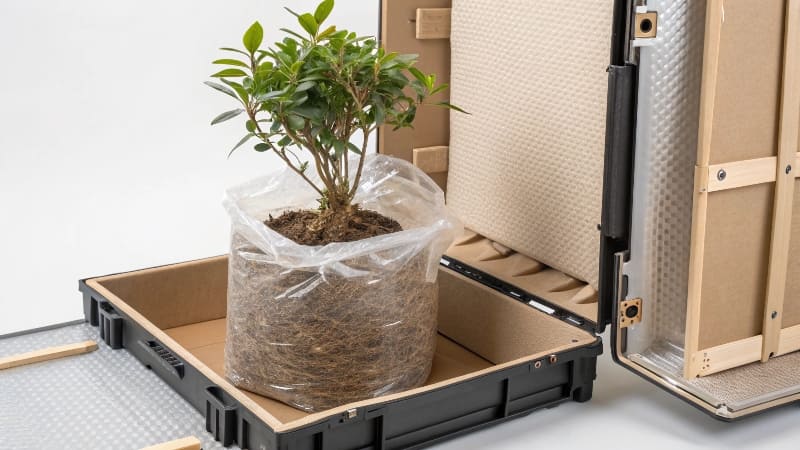
From my perspective as a packaging expert, shipping something as fragile and alive as a plant is the ultimate test of good packaging. It's not just about the box; it's about creating a complete life support system for the journey. The principles of protecting a delicate product are the same, whether it's a piece of glassware or a living ficus. It's a combination of smart preparation3, the right materials, and secure placement. Let's break down how to do it right.
How do you properly package plants for shipping?
You have the perfect box, but how do you prepare the plant itself? The wrong preparation can lead to a mess of soil and broken stems upon arrival.
Water the plant 1-2 days beforehand. Secure the soil by wrapping the pot and base in plastic. Wrap the leaves gently with paper, then anchor the entire plant inside a sturdy box.
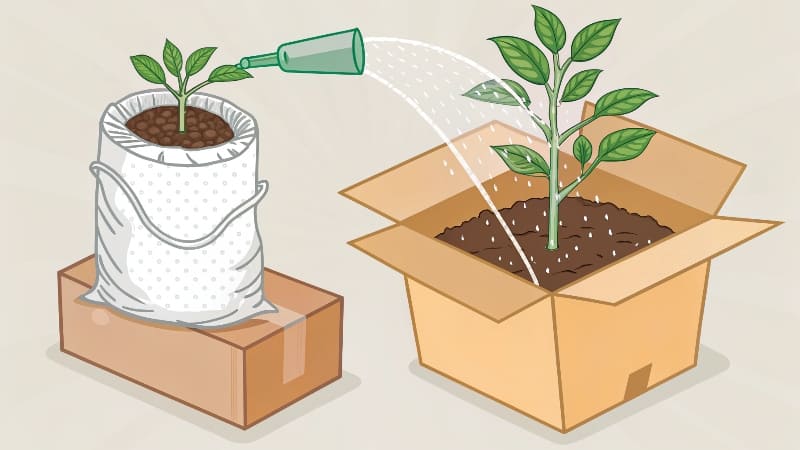
Properly packaging a plant is a step-by-step process. In my business, we call this creating a "shipping system4." Each layer has a specific job. The goal is to control moisture5, prevent movement, and protect from impact.
Step 1: Health and Preparation
First, you need to analyze the plant's health. A stressed or sick plant will not survive the journey, so only ship healthy specimens6. About two days before shipping, water the plant well. You want the soil to be moist, but not soaking wet. A waterlogged plant can lead to root rot in a dark box. Prune any dead or yellowing leaves. This cleans up the plant and helps it focus its energy on staying healthy during transit. This first step of preparation is the foundation for a successful shipment.
Step 2: Secure and Wrap the Plant
Next, you must contain the soil. This is critical. Place a plastic bag around the pot and bring it up over the soil, securing it around the base of the plant's stem with a rubber band or twine. This keeps the soil and moisture in the pot, not all over the box. Then, wrap the pot itself with paper or bubble wrap for cushioning. For the foliage, gently wrap it in thin packing paper to keep the leaves from breaking. For tall or delicate plants, a bamboo stake7 can provide extra support.
How do you ship plants without them dying?
Your plant is packed perfectly, but now it faces its biggest threat: the journey itself. Time, temperature, and handling can all lead to a dead plant on arrival.
To ensure survival, check the weather at the destination and avoid extreme temperatures8. Choose a fast shipping service9 like express or 2-day, and clearly label the box10 "Live Plant."
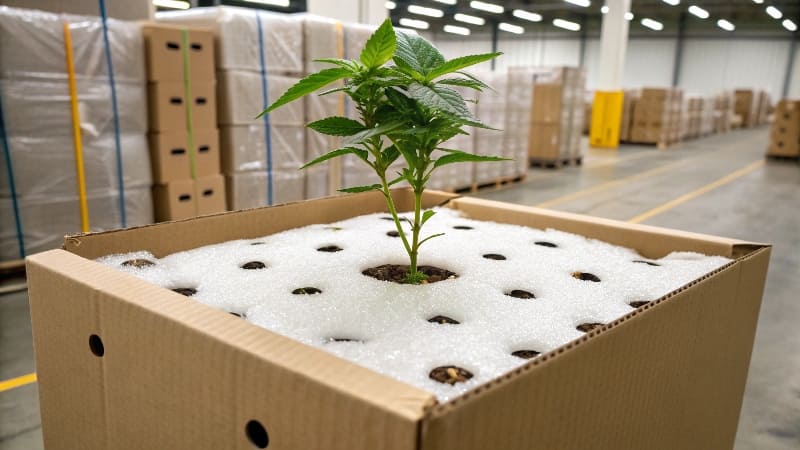
Once the plant is packed, logistics become the most important factor. A perfectly packed plant can still die if it's stuck in a hot warehouse for a week. Success depends on smart planning.
The Importance of Timing and Temperature
Timing your shipment is everything. First, you must learn about the weather conditions at the destination. Don't ship a tropical plant if it's going to sit on a porch in freezing temperatures. Likewise, avoid shipping during a heatwave. If the weather is extreme, it's better to wait. The best practice is to ship on a Monday or Tuesday. This gives the package the best chance of arriving before the weekend, avoiding the risk of it sitting in a non-climate-controlled facility for two extra days.
Choosing a Courier and Labeling
Using the correct materials and choosing reliable couriers are essential. For living things, speed is your friend. Choose a shipping service that will deliver in 3 days or less. USPS Priority Mail11 is a popular and cost-effective choice. For more valuable plants, UPS or FedEx 2-Day services offer more reliability. No matter which you choose, you must communicate what's inside. Clearly mark the box on all sides with "Live Plant" or "Perishable" and add "This Side Up" arrows. This helps handlers treat the package with a bit more care.
Can plants survive being mailed?
It seems impossible for a fragile plant to survive days in a dark box. You might be hesitant to even try, fearing you're just sending it to its doom.
Yes, plants can absolutely survive being mailed. Millions are shipped successfully every year. Survival depends entirely on proper packaging, fast shipping, and favorable weather. A few days in a box is fine for a healthy plant.
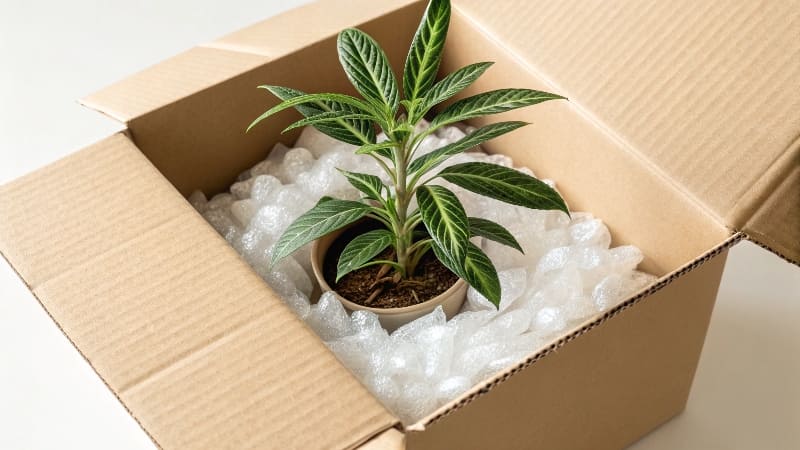
It can feel strange to put a living thing in a box, but you have to trust the process. Plants are more resilient than we often think. They are designed to survive periods of stress. Your job is simply to make that period of stress as short and gentle as possible.
What Makes Survival Possible?
A healthy plant is prepared for a short period of darkness. The key survival factors are already in your packing. The moist soil you prepared provides the plant with water for its journey. The careful wrapping protects its delicate leaves and stems from physical damage. And the sturdy box is its shield against being crushed by heavier packages around it. When all these elements work together, you create a small, temporary biosphere that can easily sustain the plant for a few days. The plant isn't thriving in the box, but it is surviving, and that's the goal.
Embracing Better Packaging
By using the correct materials and choosing reliable couriers, you can ensure your plants reach their destination safely. I also encourage people to embrace eco-friendly packaging12 options. Instead of plastic bubble wrap, consider paper-based alternatives like crinkle paper or hex-wrap. These not only protect your plants but also protect the environment. It shows a level of care that customers appreciate. Adding a small care card13 inside the box is also a great touch. It tells the recipient exactly what to do when the plant arrives, helping it recover from its journey faster.
Can you ship plants through the mail?
You want to mail a plant, but you're unsure about the rules. It feels like something that might be restricted or even illegal, causing you to hesitate before going to the post office.
Yes, you can legally ship plants through the mail using carriers like USPS, UPS, and FedEx. However, there are state-specific restrictions, so you must always check local regulations before shipping.
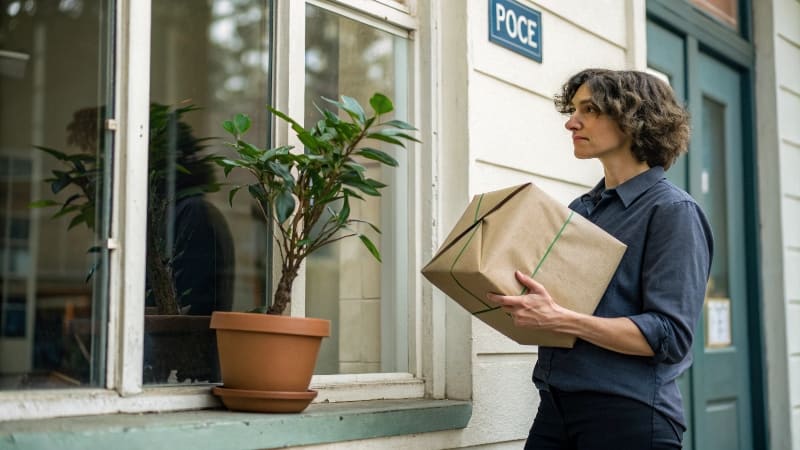
This is a really important question, because the answer is "yes, but." While shipping plants domestically is common, you can't just send any plant anywhere. You have to do a little homework first to make sure you are following the law.
Understanding the Rules and Regulations
The main reason for these rules is to prevent the spread of invasive pests14 and diseases. The regulations are managed by the USDA and individual state departments of agriculture. Here’s a quick guide:
- Most States: Shipping common houseplants between most states is perfectly fine.
- Strict States: Some states, like California, Arizona, Florida, and Hawaii, have very strict rules. They may prohibit certain types of plants or require them to be shipped "bare root" (with all soil removed).
- Where to Check: Before you ship, you must check the destination state's Department of Agriculture website. A quick search for "[State Name] plant shipping regulations15" will usually give you the information you need.
- International Shipping: Shipping plants internationally is a completely different world. It requires customs forms and a phytosanitary certificate16. For most individuals, this is too complex and expensive. Stick to domestic shipping.
Never try to sneak a plant past these regulations. It is illegal and can cause serious harm to the local ecosystem.
Conclusion
With careful preparation, the right materials, and a fast courier, you can ship plants safely. Your green friends will arrive healthy, ready to thrive in their new home.
Find out the best methods to secure a plant's root ball to prevent damage during transit. ↩
Learn why proper ventilation is crucial for the health of plants during shipping. ↩
Understand the steps of smart preparation to ensure your plants survive the shipping process. ↩
Understand the concept of a shipping system and its importance in plant shipping. ↩
Explore techniques to maintain the right moisture levels for plants during transit. ↩
Learn how to choose the healthiest plants for successful shipping. ↩
Find out how using a bamboo stake can provide extra support for delicate plants. ↩
Learn about the impact of temperature on plant health during shipping. ↩
Find out which shipping services are most reliable for delivering plants quickly. ↩
Get tips on how to label your plant shipment to ensure careful handling. ↩
Discover the benefits of using USPS Priority Mail for shipping your plants. ↩
Discover sustainable packaging alternatives that protect both your plants and the environment. ↩
Get ideas for creating a care card that helps recipients care for their new plants. ↩
Understand the role of invasive pests in shaping plant shipping laws and regulations. ↩
Explore the regulations you need to know before shipping plants to ensure compliance. ↩
Learn about the importance of a phytosanitary certificate for international plant shipping. ↩
More to read
# Which is Better for Packaging Mockups: Laser or Inkjet?
Which is Better for Packaging Mockups: Laser or Inkjet? You need to create a physical
2025 year the most welcome packaging box color trends
This year, packaging trends are making a bold statement with Radiant Red taking the limelight
5 Important Things to Consider for Luxury Products Packaging?
5 Important Things to Consider for Luxury Products Packaging? You've created a premium product, but