

Custom Packaging Solutions
Premium quality packaging tailored to your brand. From cosmetic boxes to luxury rigid packaging, we deliver excellence since 2010.
This is the title

Hey there, I'm Mike!
How Can You Create True Luxury Secondary Packaging?
Your high-end product sits in a box that feels flimsy and cheap. This disconnect disappoints customers, cheapens your brand's image, and completely ruins the premium unboxing experience you envisioned.
Creating luxury secondary packaging means choosing premium materials like rigid board, designing custom inserts for a perfect fit, and applying sophisticated finishes like embossing, foil stamping, and soft-touch lamination to delight the senses.
I remember a client who had developed an incredible, high-potency face serum. The formula was worth over $150 a bottle. But they put it in a standard, thin paper box you'd find at a drugstore. It just sat on the shelves of high-end boutiques. The problem wasn't the product; it was the promise. The packaging made a cheap promise that the product couldn't overcome. We redesigned it into a heavy, soft-touch rigid box with a custom-molded insert that held the bottle perfectly. Sales tripled in six months. That experience taught me that for luxury goods, the secondary packaging isn't just a box—it's the first chapter of the product's story. Let's explore how to write that chapter well.
What are examples of secondary packaging?
You hear the term "secondary packaging" but can only picture a simple shipping box. This limited view prevents you from seeing its potential as a powerful tool for branding and sales.
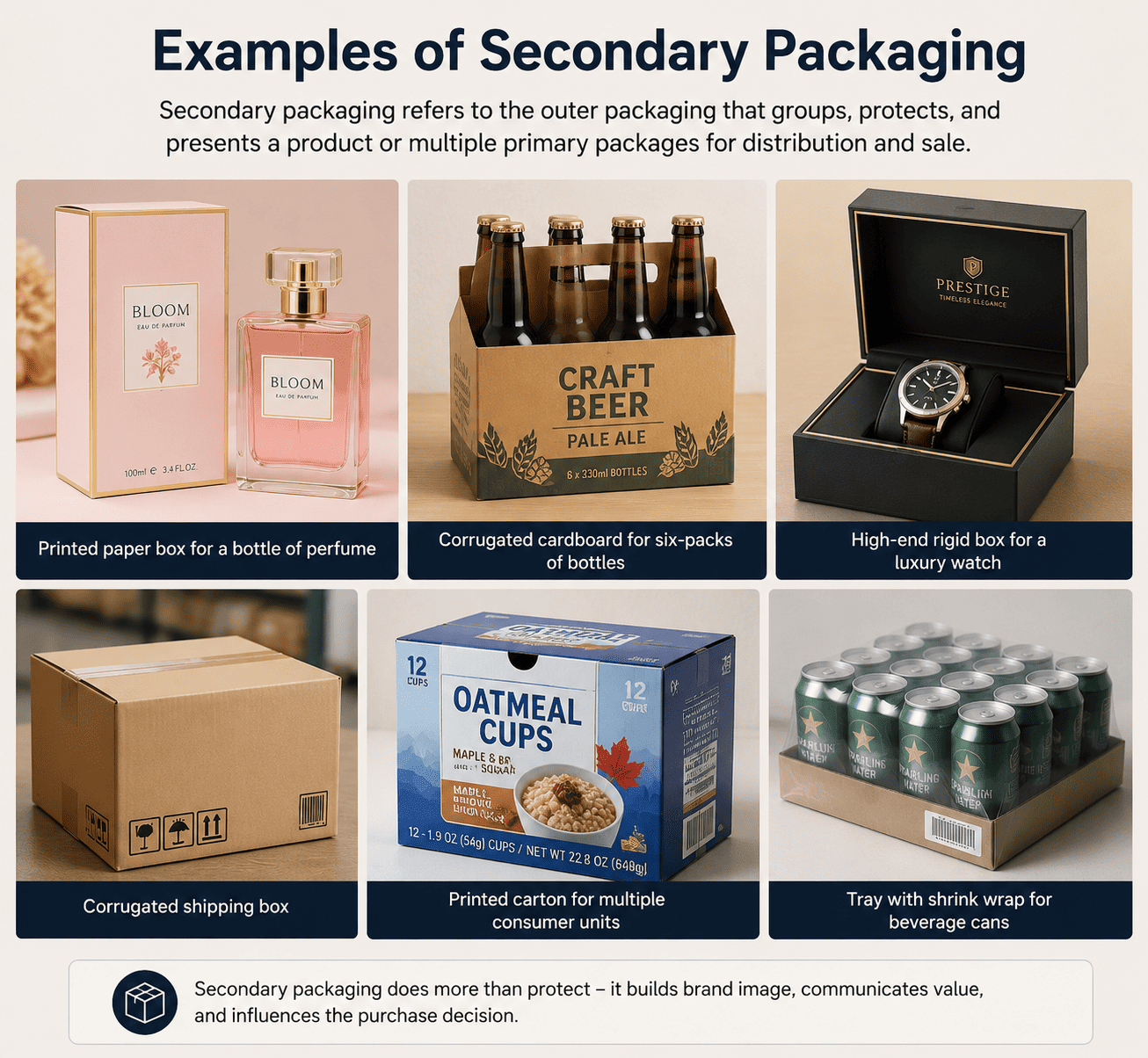
Examples range from the everyday to the exquisite. Think of the printed paper box for a bottle of perfume, the corrugated cardboard holding six-packs of bottles, or a high-end rigid box for a luxury watch.
This is a question I get all the time, and the answer is all around us. Secondary packaging refers to the outer packaging apart from the main packaging, for example, a beautiful paper box It's the layer that the customer removes to get to the primary package holding the product. Luxury brands have mastered using this layer not just for protection, but for presentation. For the outer packaging, we will design an exquisite paper product box, including a gift box insert, to package the product and enhance its grade Think of the heavy, textured box an iPhone comes in, with its satisfyingly snug fit. That is a perfect example of secondary packaging used to build anticipation and communicate quality.
| Level of Packaging | Example | Main Purpose |
|---|---|---|
| Everyday | The folding carton a tube of cream is in. | Protection, information, and retail display. |
| Mid-Tier | A gift set box with a plastic window. | Grouping products, enhancing gift appeal. |
| Luxury | A heavy rigid box for a face serum. | Creating a premium experience, building value. |
What is considered secondary packaging?
You are developing a product and are confused by the different packaging layers. This confusion makes it hard to communicate your needs clearly to a designer like Jacky or a manufacturer like me.
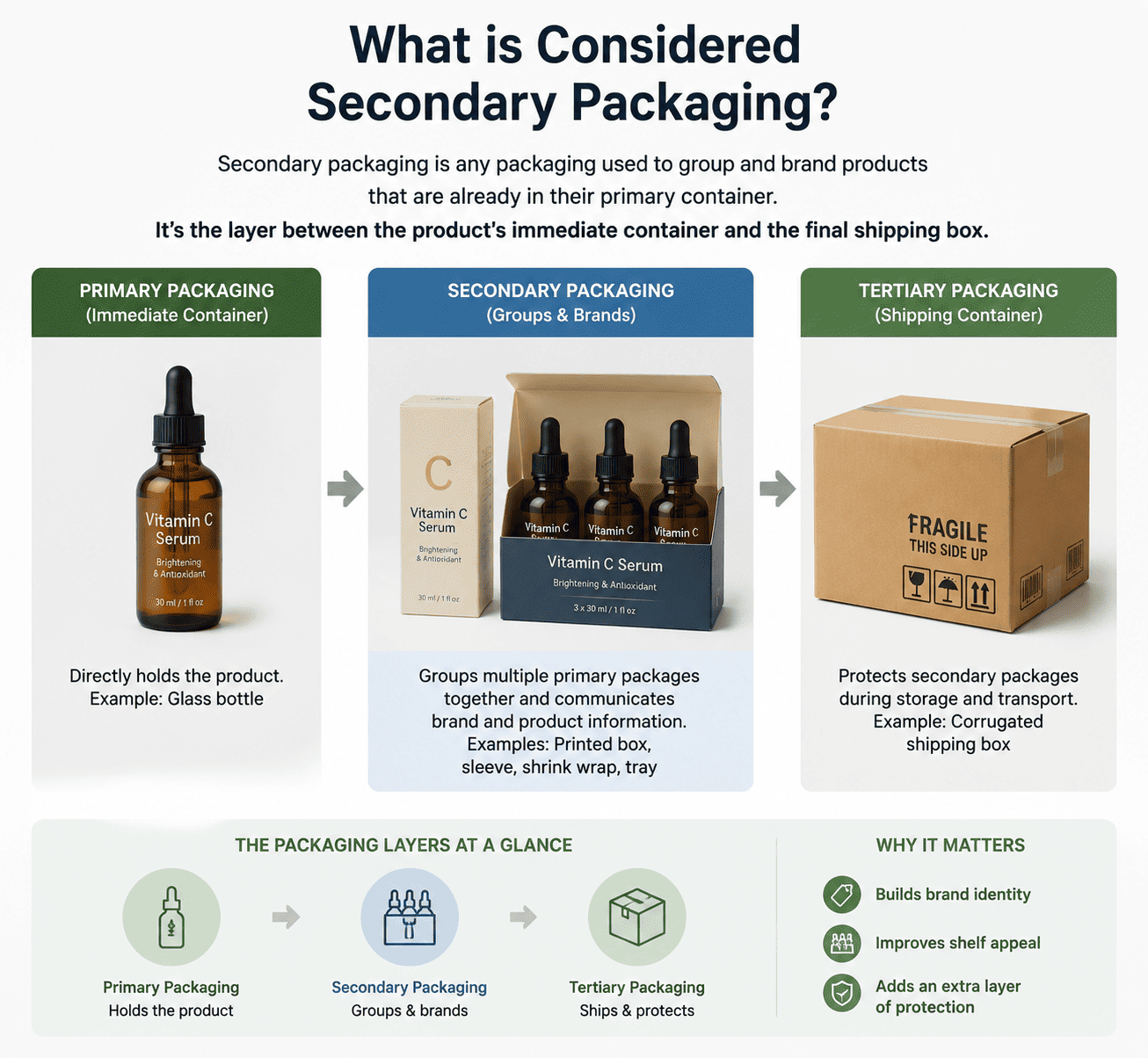
Secondary packaging is any packaging used to group and brand products that are already in their primary container. It's the layer between the product's immediate container and the final shipping box.
Let's clear this up with a simple explanation I use with all my clients. The key is understanding what touches the product. Generally, primary packaging directly wraps the product, like various glass or plastic bottles. To increase the product's added value, beautiful outer packaging is often used to boost sales . This beautiful outer packaging is the secondary packaging. It's not essential for holding the product itself, but it is absolutely essential for selling it, especially in a competitive retail environment. It's your product's outfit—the first thing a customer sees and judges. It adds value, provides a billboard for your marketing message, and protects the primary container.
What are the 4 types of packaging?
You think of packaging as just the box your product comes in. This simplistic view means you are not thinking about the entire journey your product takes from the factory to your customer's hands.
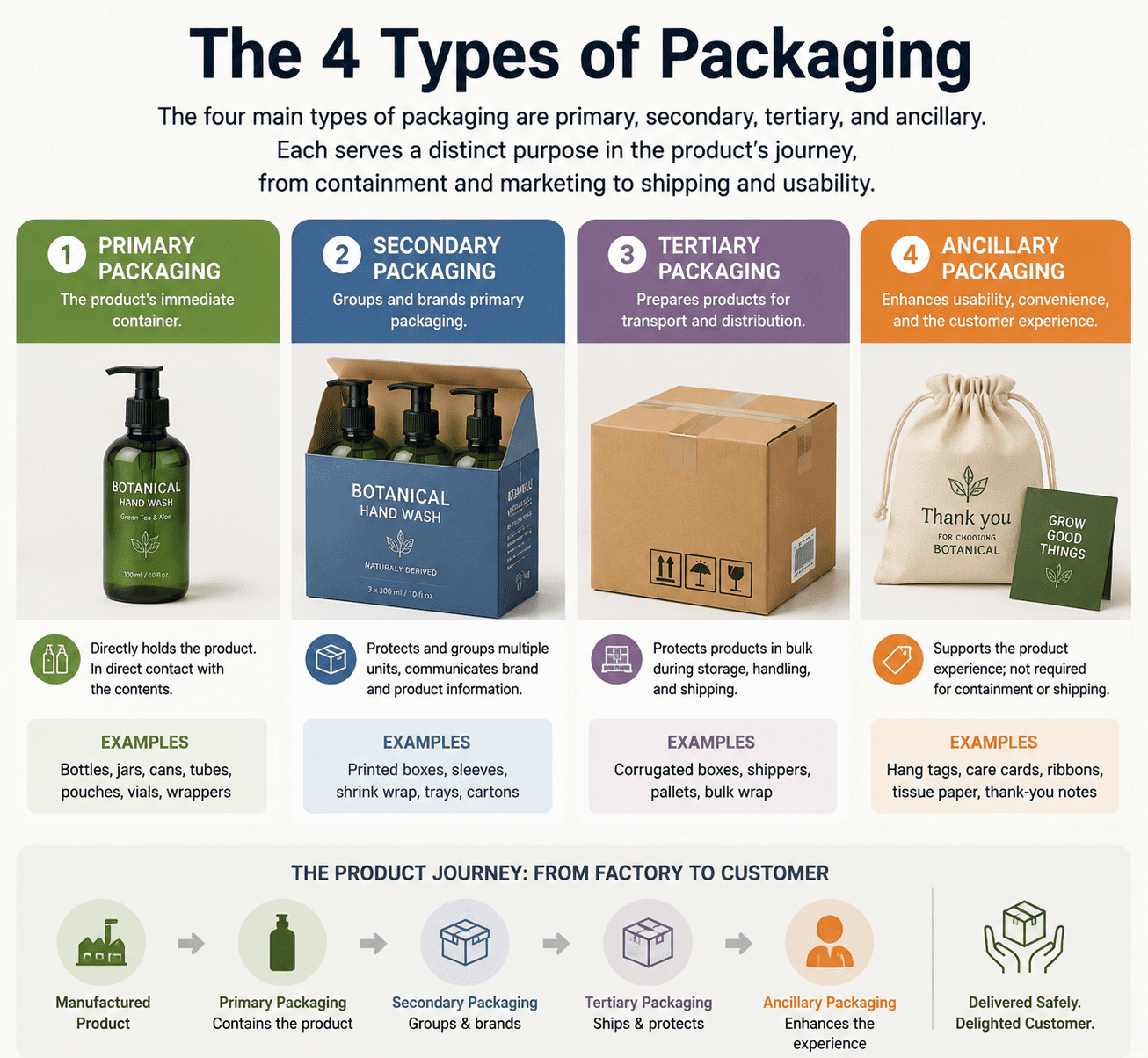
The four main types of packaging are primary, secondary, tertiary, and ancillary. Each serves a distinct purpose in the product's journey, from containment and marketing to shipping and usability.
As a manufacturer, I deal with all these layers, and understanding them helps a brand owner plan their strategy and budget. Each layer solved a different problem, and for a luxury product, you have to get them all right. For example, a cheap, damaged shipping carton (tertiary packaging) can ruin the unboxing experience of a beautiful rigid box (secondary packaging) inside. They all work together to deliver the final experience to your customer. It’s a system where every part matters. Let's break down what each type does.
| Packaging Type | Definition & Purpose | Example for a Perfume Product |
|---|---|---|
| Primary | The material that first contains the product. It is in direct contact with it. | The glass bottle that holds the perfume. |
| Secondary | The outer wrapping or container for the primary packaging. Used for branding and display. | The beautifully printed box the perfume bottle is in. |
| Tertiary | Used to group secondary packages for shipping and handling. It's what retailers see. | The large cardboard carton holding 12 perfume boxes. |
| Ancillary | Items used to support the packaging, but are not part of the core structure. | The "try me" scent strip or instruction booklet. |
What is the secondary packaging process?
You have a great idea for a luxury box, but you have no idea how it goes from a concept to a finished product. This makes the thought of working with a factory seem intimidating.
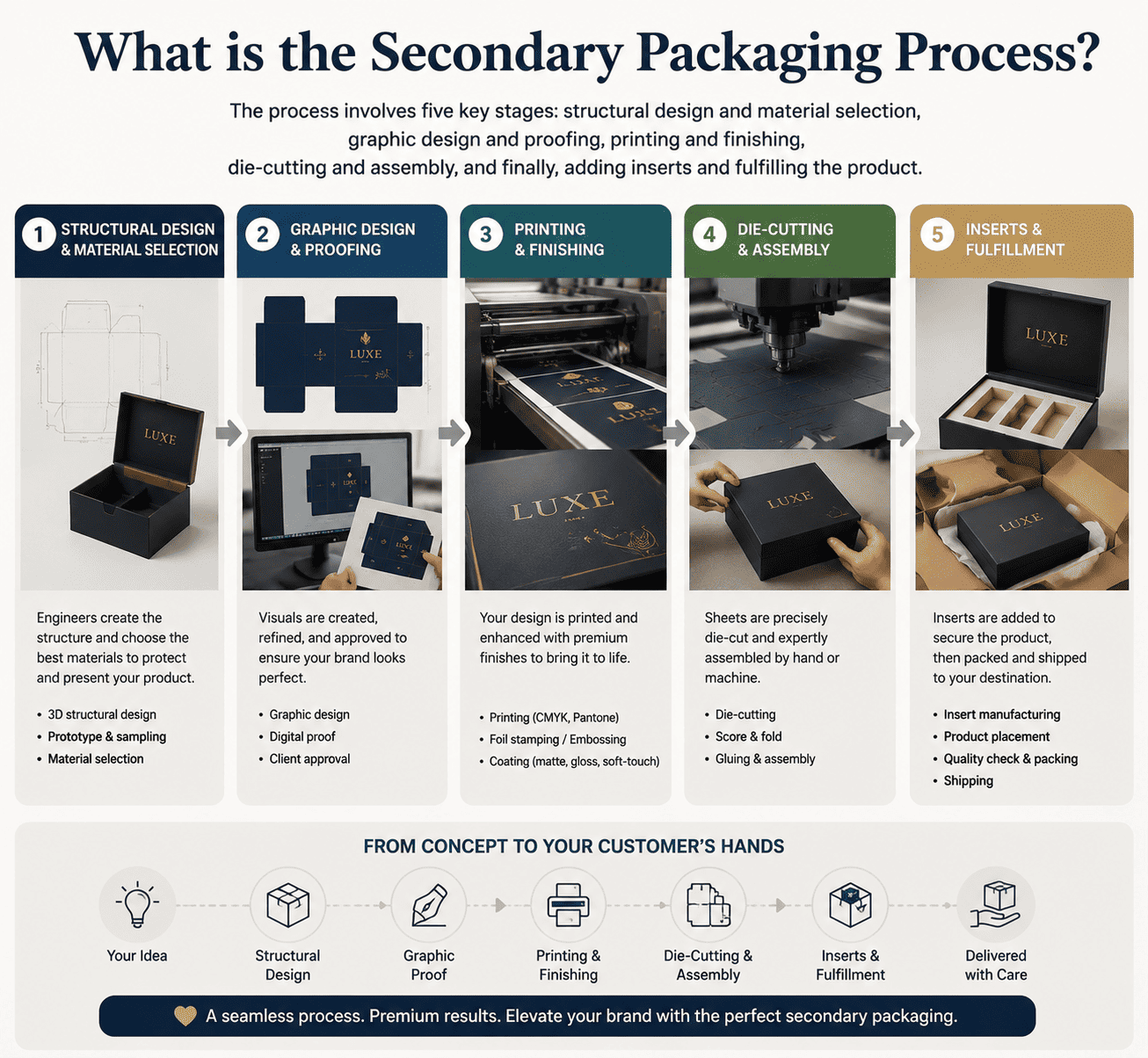
The process involves five key stages: structural design and material selection, graphic design and proofing, printing and finishing, die-cutting and assembly, and finally, adding inserts and fulfilling the product.
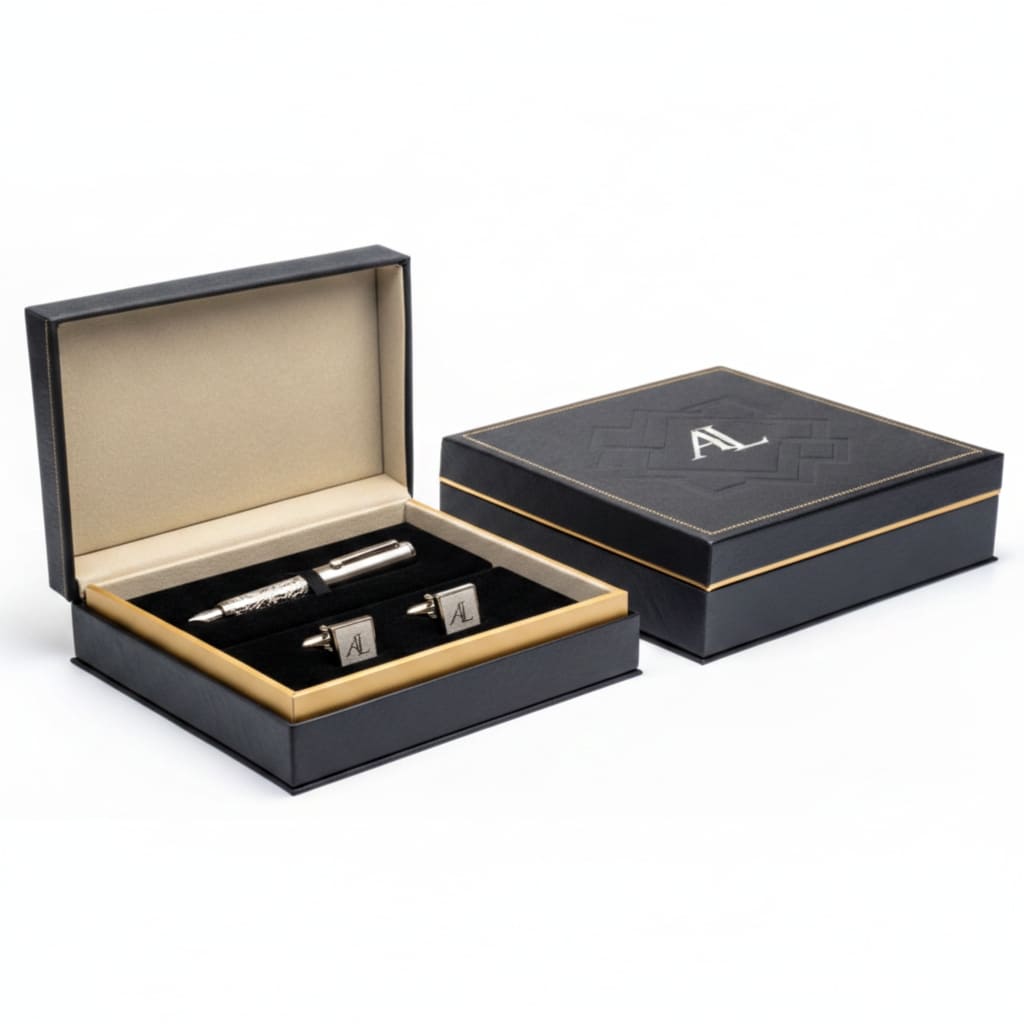
I've guided hundreds of clients through this process, from small startups to large brands. It's my job to make it simple. The journey from an idea to a finished box is a collaboration between the brand's vision and the factory's technical execution. It starts with a conversation. What is the product? What is the feeling you want to create? What is your budget? From there, we move into a structured process that ensures the final product is perfect. It's a step-by-step journey, not a big, scary leap.
The 5 Stages of Production
- Structural Design: My team and I work with the client to create a physical template, or "dieline." We choose the material—for luxury, this is often thick rigid board—and design how the box will fold, open, and close.
- Graphic Design & Proofing: The client's designer, like Jacky, places the artwork onto the dieline. We then produce a printed, assembled prototype for approval. This is the most critical step to check colors and fit.
- Printing & Finishing: Once approved, we begin mass production. This is where we print the large sheets and apply luxury finishes like matte lamination, spot UV, or gold foil.
- Die-Cutting & Assembly: The printed sheets are cut and creased using a die. For rigid boxes, the paper is then expertly wrapped and adhered to the greyboard structure by skilled workers or machines.
- Inserts & Fulfillment: Finally, we create the custom inserts—from foam, paper, or molded pulp—that hold the product securely. The finished boxes are then shipped flat or assembled, ready for the product.
Conclusion
Luxury secondary packaging is an investment that transforms your product into an experience. By carefully selecting materials, designs, and finishes, you create a powerful statement of quality that captivates customers and builds brand value.
More to read
# Which is Better for Packaging Mockups: Laser or Inkjet?
Which is Better for Packaging Mockups: Laser or Inkjet? You need to create a physical
2025 year the most welcome packaging box color trends
This year, packaging trends are making a bold statement with Radiant Red taking the limelight
5 Important Things to Consider for Luxury Products Packaging?
5 Important Things to Consider for Luxury Products Packaging? You've created a premium product, but