

Custom Packaging Solutions
Premium quality packaging tailored to your brand. From cosmetic boxes to luxury rigid packaging, we deliver excellence since 2010.
This is the title

Hey there, I'm Mike!
Eco-friendly vs. Durability & Aesthetics — Where Would You Compromise for Packaging?
You want sustainable packaging, but you're scared it will look cheap or fall apart. Your premium product deserves better, but you cannot ignore the growing demand for eco-friendly options. It feels like an impossible choice.
You no longer have to compromise. The world now sees packaging from eco-friendly materials as more important than just traditional durability and aesthetics! Modern sustainable options offer strength and beauty, making sustainability itself a premium feature for your brand.
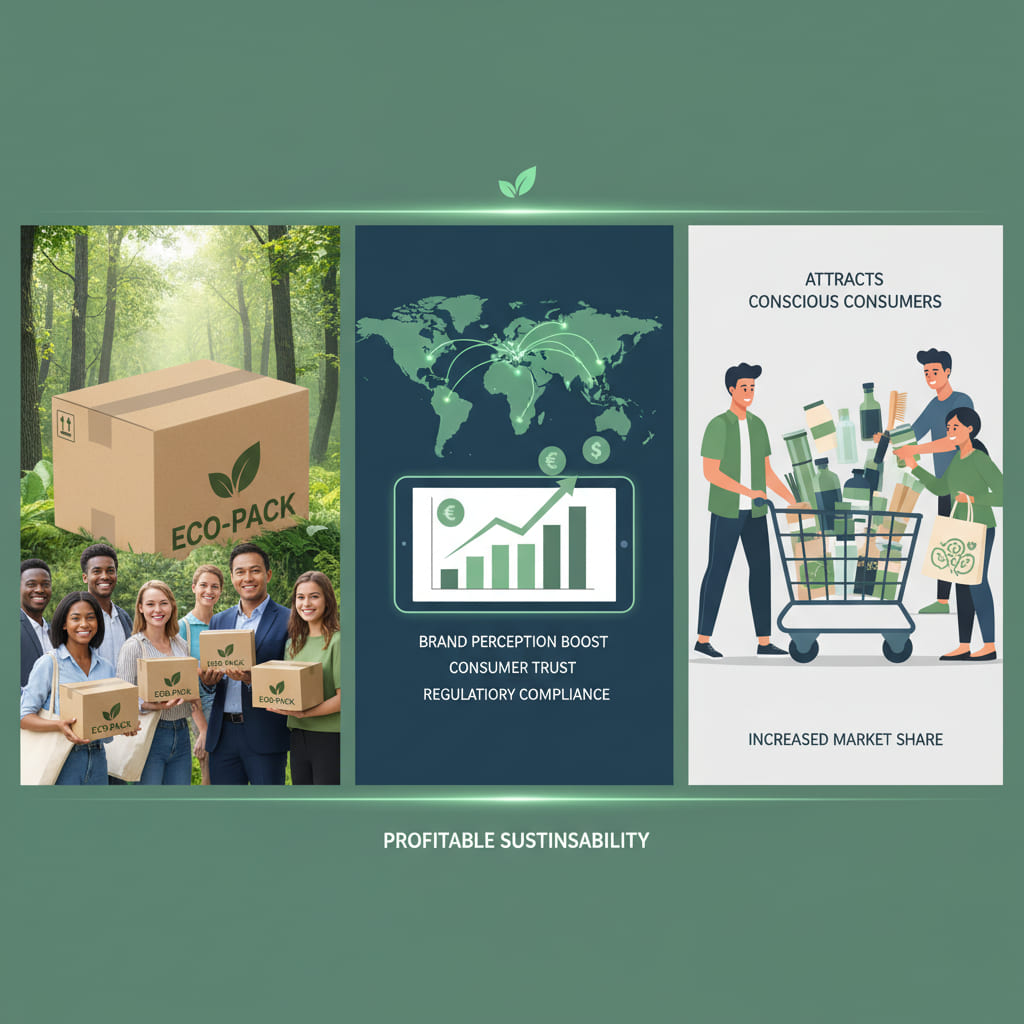
I see this dilemma every day with clients, especially those in the cosmetic and beauty space. They're torn between their brand's luxury image and their commitment to the planet. For years, "eco-friendly" meant flimsy, brown, and boring. But I'm here to tell you that is a false choice. The conversation has completely changed. Technology and consumer expectations have evolved. Let me break down how you can get packaging that is good for the Earth, protects your product, and looks absolutely stunning.
What is considered eco-friendly packaging?
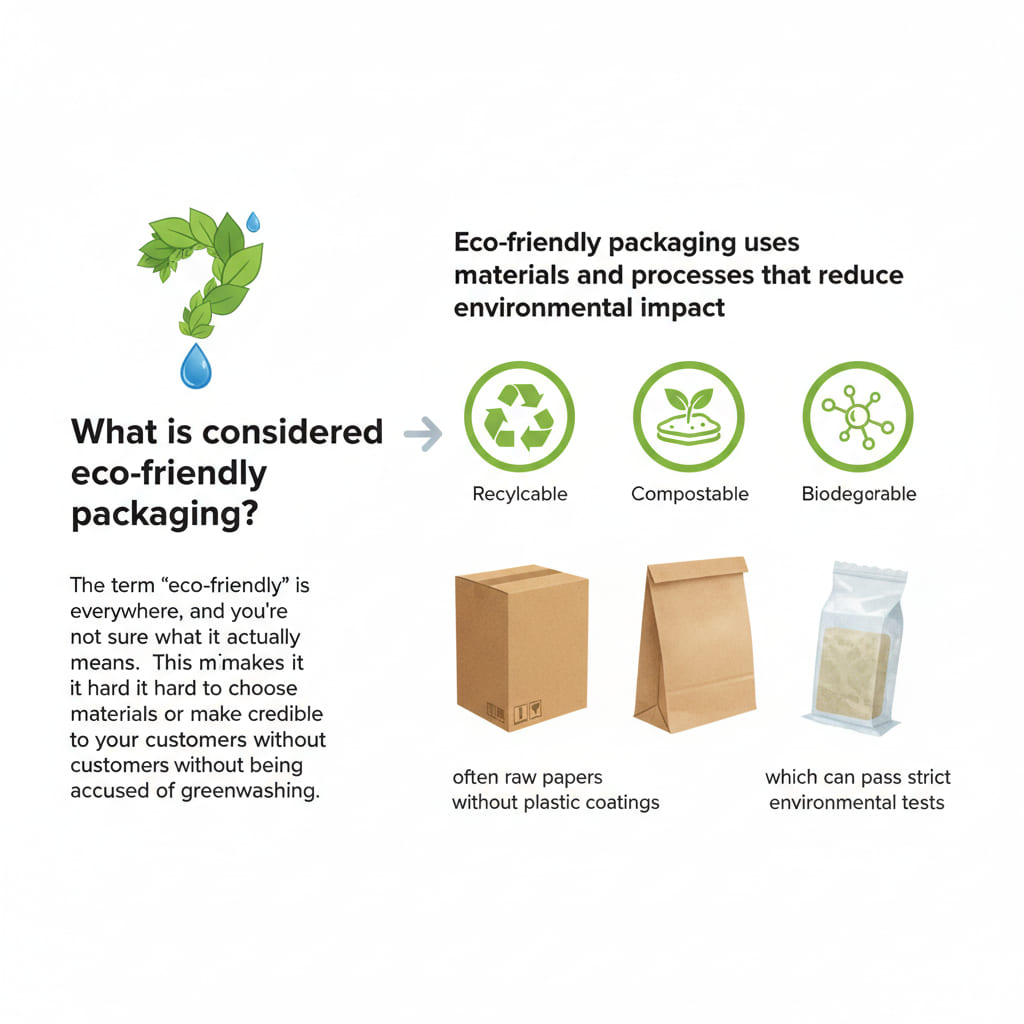
The term "eco-friendly" is everywhere, and you're not sure what it actually means. This makes it hard to choose materials or make credible claims to your customers without being accused of greenwashing.
Eco-friendly packaging uses materials and processes that reduce environmental impact. This includes recyclable, compostable, or biodegradable materials, often raw papers without plastic coatings, which can pass strict environmental tests.
Let's simplify this. "Eco-friendly" isn't one single thing; it’s a commitment to reducing your footprint. I always guide my clients to think about a few key areas. The most significant is the material itself. Eco-friendly products generally use raw paper like kraft or specialty papers without any coating or lamination This is crucial. Plastic laminations (like matte or gloss finishes) make a box look nice, but they make it difficult or impossible to recycle. True eco-packaging avoids these. The benefit is clear: Eco-friendly packaging boxes can generally pass European and American environmental tests like ROHS and REACH . This isn't just a label; it's a verifiable standard that proves your commitment to safety and sustainability, giving you real credibility.
What are some sustainable or eco-friendly packaging options for fragile items?
You need to protect a fragile glass jar or bottle. You think of plastic inserts or foam, then immediately worry about the environmental impact. It seems you must choose between product safety and sustainability.
Molded pulp, corrugated inserts, and custom-engineered paperboard structures are excellent eco-friendly options. They provide strong, shock-absorbent protection for fragile items while being fully recyclable and plastic-free, maintaining a premium feel.
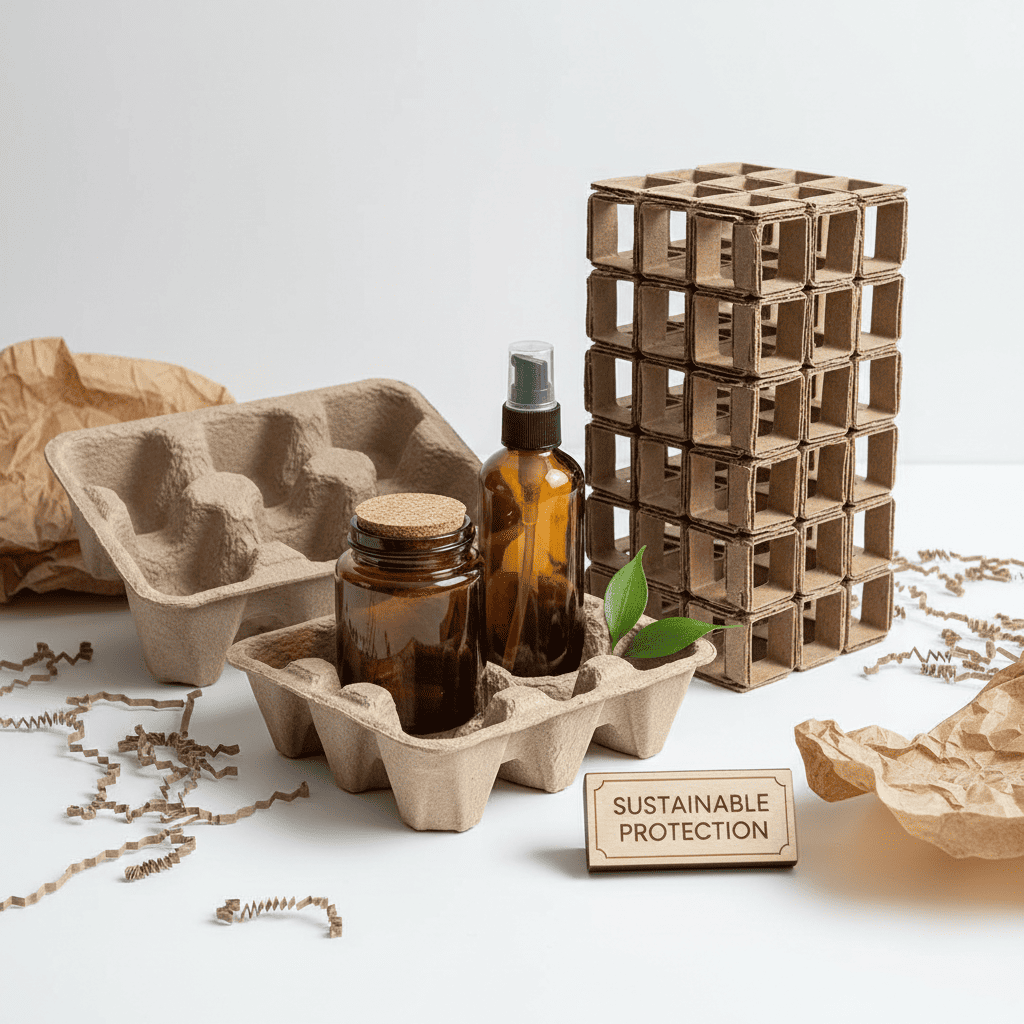
This is where smart design makes all the difference. You absolutely do not need plastic to protect fragile items. I've helped brands move away from foam and plastic trays to far more elegant and sustainable solutions.
Smart Structural Design
Instead of relying on plastic, we can create intricate inserts from the same paperboard as the box. These are custom-cut and folded to create a cradle that holds your product perfectly. It's like custom tailoring for your product, using 100% recyclable material.
Molded Pulp Inserts
Think of egg cartons, but elevated for luxury. Molded pulp is made from recycled paper and water. It can be formed into any shape, offering incredible shock absorption. It has a raw, organic texture that signals 'natural' and 'eco-conscious' to your customer, and it can even be dyed to match your brand colors. These options are often stronger and provide a better unboxing experience than their plastic counterparts.
What are the benefits of eco-friendly packaging?
You know eco-friendly packaging is "good," but you need a solid business case. You're worried the investment won't pay off and might just be a cost with no real return on your bottom line.
The main benefit is brand perception. Eco-friendly packaging promotes the environmental safety of your product, a factor now highly valued in European and American markets. It builds trust, meets regulatory standards, and attracts conscious consumers.
The benefits go far beyond just "doing the right thing." It is a powerful business strategy. When I work with brands targeting Western markets, this is one of the first things we discuss. Eco-friendly packaging promotes the environmental safety of the product, which is a factor that European and American markets now value very much Customers in these regions are actively looking for brands that align with their values. Your packaging is your most visible proof of that alignment. Choosing sustainable materials is a direct message to them that you care. This builds a level of brand loyalty that traditional marketing struggles to achieve. It can be the deciding factor that makes a customer choose your product over a competitor's on a crowded shelf. It's not a cost; it's an investment in your brand's reputation and future.
What are environmentally friendly packaging ideas?
You're sold on going green, but you need concrete ideas that still look beautiful. You're looking for inspiration beyond just a plain brown box to create a memorable and premium brand experience.
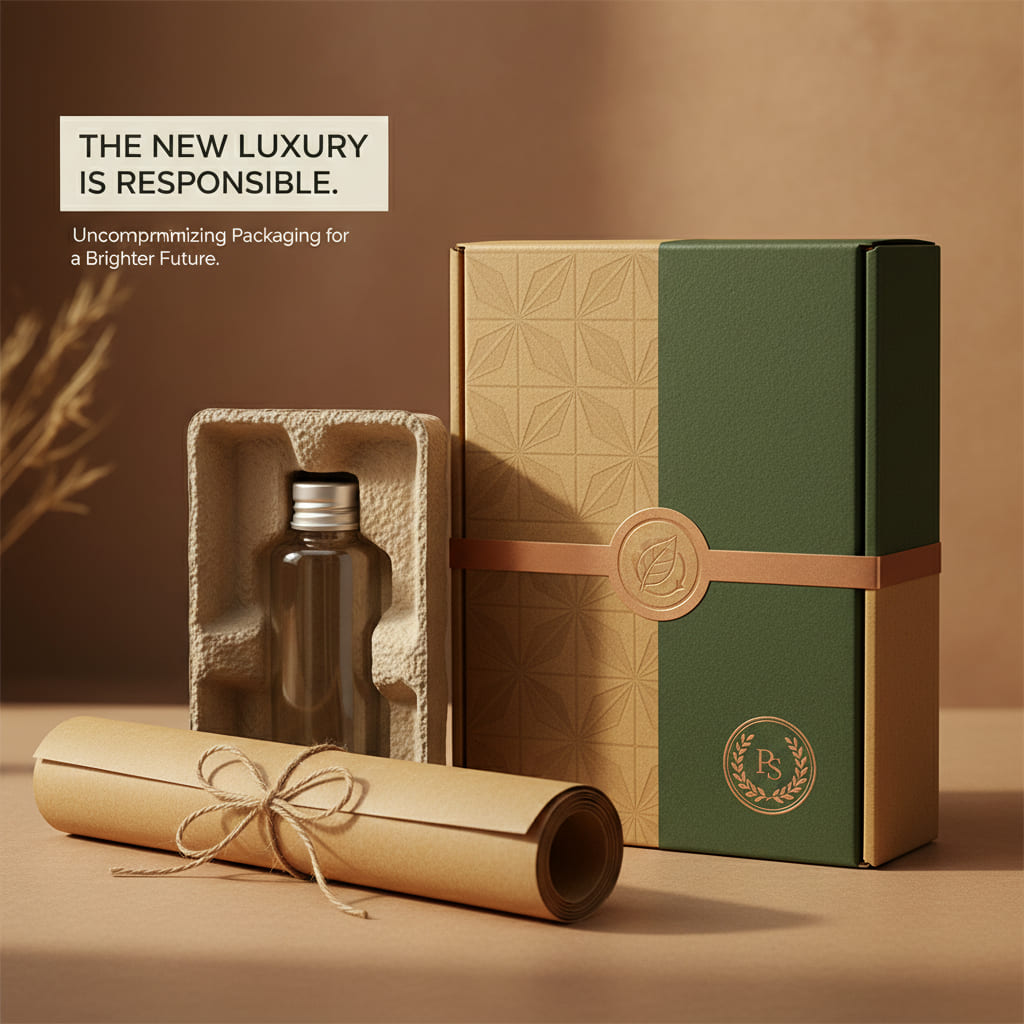
Combine raw materials with sophisticated design. Use textured, unlaminated specialty papers paired with minimalist debossing or foil stamping. Focus on smart structural designs that eliminate plastic inserts and create a unique unboxing experience.
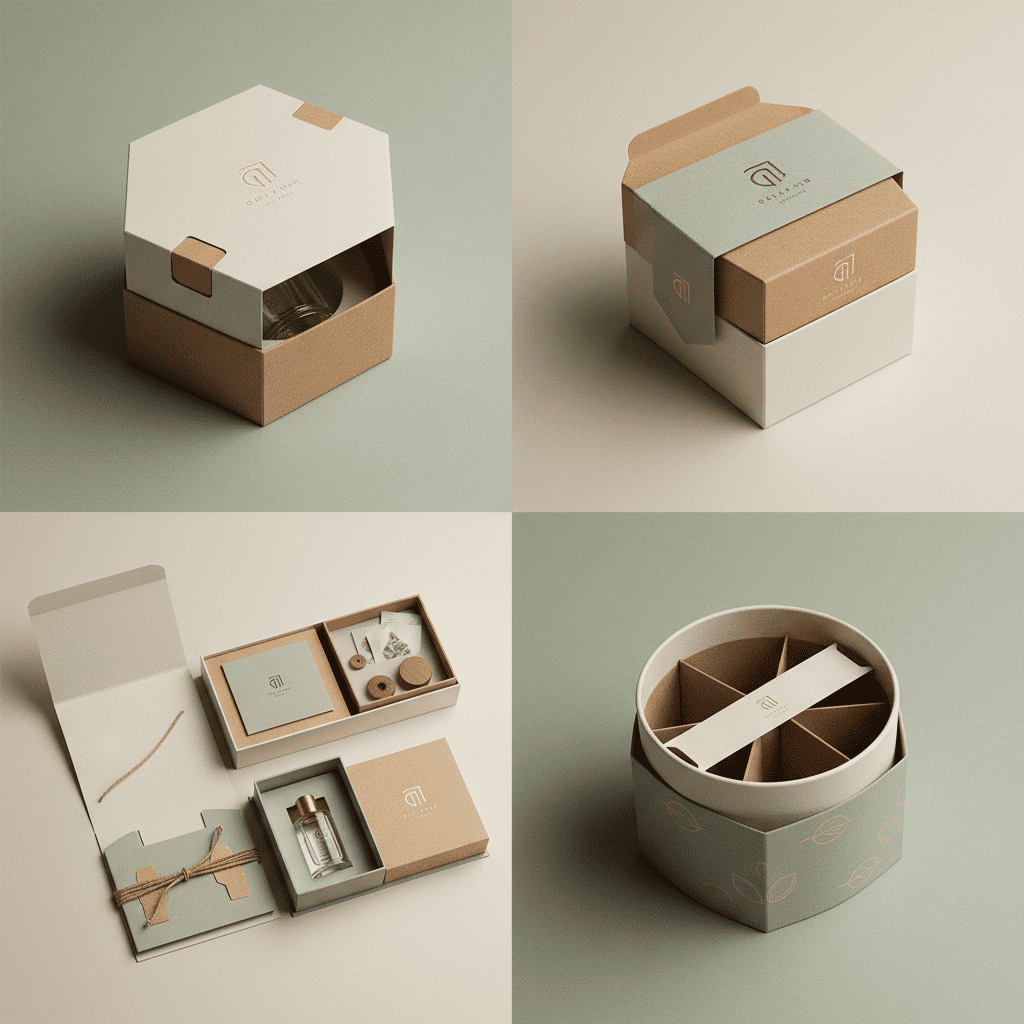
This is the fun part, where we get creative. Eco-friendly does not mean boring. It means a different kind of beautiful—one that feels more authentic and modern.
Here are some ideas I regularly use with my clients:
- Embrace Texture: Instead of a plastic lamination for a smooth feel, choose a beautiful, uncoated specialty paper with a natural texture. It provides a tactile experience that feels more luxurious than a generic gloss finish.
- Minimalist Finishes: Instead of full-color printing everywhere, use elegant finishes like debossing (pressing the design into the paper) or hot foil stamping with a single metallic color. The contrast against the raw paper is stunning.
- Structural Unboxing: Design a box that unfolds in a unique way. Use clever paper engineering to reveal the product, creating a moment of delight for the customer without needing a single piece of plastic.
These techniques communicate premium quality and a deep consideration for both the customer and the planet.
Conclusion
The choice between eco-friendly, durability, and aesthetics is a thing of the past. Today, sustainability is the new luxury. By choosing the right materials and smart design, you create packaging that is strong, beautiful, and a powerful statement for your brand.
More to read
# Which is Better for Packaging Mockups: Laser or Inkjet?
Which is Better for Packaging Mockups: Laser or Inkjet? You need to create a physical
2025 year the most welcome packaging box color trends
This year, packaging trends are making a bold statement with Radiant Red taking the limelight
5 Important Things to Consider for Luxury Products Packaging?
5 Important Things to Consider for Luxury Products Packaging? You've created a premium product, but